Insight
In 2026, UAE cargo routes are changing due to security risks around the Gulf, Red Sea and Strait of Hormuz. Shipping lines are using different routes, ports and landbridge connections to move cargo. Jebel Ali, Khor Fakkan and Fujairah may be part of these alternative routes.
Transit time, freight costs, storage, shipments, & delivery dates may all be affected by these changes. Before shipping cargo, importers should check the entire route, the port of delivery, & the most recent UAE import regulations. This helps avoid unexpected delays and extra costs.
Why Are UAE Cargo Routes Changing?
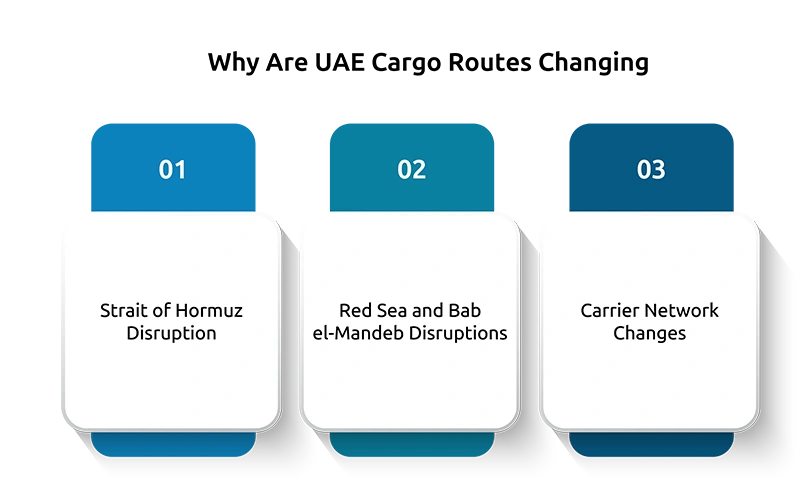
In 2026, UAE cargo routes are changing because security conditions around the Strait of Hormuz, Red Sea and Gulf region remain uncertain. Shipping lines are changing routes when needed to protect vessels, cargo and supply chains.
Strait of Hormuz Disruption
The Strait of Hormuz is an important route for cargo moving into and out of the Gulf. Security concerns can lead carriers to pause crossings or change services to UAE ports. This can affect cargo schedules and create the need for alternative transport plans.
Red Sea and Bab el-Mandeb Disruptions
Changes in the Red Sea and Bab el-Mandeb can affect shipping between Asia, the Middle East and Europe. Some services have been moved around the Cape of Good Hope, while other services have gradually returned to the Suez route as conditions changed. This means transit plans can change based on current security conditions.
Carrier Network Changes
Shipping lines are also changing their carrier networks by using alternative hubs, landbridge transport and different feeder connections. For example, some cargo bound for the United Arab Emirates has been routed through Salalah and Khor Fakkan, then shipped by land to Sharjah before its delivery. Different types of cargo, such as dry freight, reefer, or large-scale cargo, can have different restrictions.
How UAE Cargo Is Being Rerouted
Thus, to keep goods moving, maritime lines will change ports and UAE cargo routes in 2026. Some cargo can be delivered by road or rail routes from Khor Fakkan and Fujairah to other places in the UAE. Salalah and Jeddah can also support alternative regional routes. The final route depends on the carrier, cargo type and current conditions. Some shipments may now use a mix of sea freight, land transport and feeder services before reaching the UAE destination.
How Route Changes Affect UAE Customs Clearance
A change in the UAE cargo route can change the port where cargo is handled. Importers should ensure the customs declaration and shipping documents match the actual shipment and import location. The importer, customs broker and logistics provider should coordinate before arrival. For UAE customs clearance, documents may include the commercial invoice, packing list, Bill of Lading or AWB, HS code, country of origin, customs value and required import permits.
Importers should also understand transshipment vs UAE import clearance. Transshipment cargo may pass through the UAE without being imported, while cargo cleared in the UAE must follow UAE customs requirements.
Which UAE Cargo Is Most Affected by Route Changes?
IT and data center equipment such as servers, GPUs, storage, networking equipment, racks, UPS and cooling equipment can be affected by route changes, especially when delivery dates are important. High-value and time-sensitive equipment such as telecom equipment, industrial equipment, aviation parts, medical equipment and critical replacement parts may also need careful route planning.
Oversized and special cargo, including OOG cargo, heavy equipment and project cargo, may need special handling. UAE cargo route availability can be different for dry, reefer, dangerous goods and out-of-gauge cargo.
How Importers Can Reduce UAE Shipping Delays
Importers can reduce UAE shipping delays by checking alternative ports such as Khor Fakkan or Fujairah before shipping. Keep all customs documents ready, including the invoice, packing list and transport documents. Before booking, check carrier and route availability for the cargo and destination. Use multimodal transport when needed, such as sea freight with road or feeder services. Keep checking port and carrier updates because routes can change quickly.
Importers should also plan extra time for possible delays and confirm the final delivery route in advance. Working with local customs and logistics partners can also help manage route and clearance changes.
Role of a Freight Forwarder During UAE Route Changes
A freight forwarder can help importers manage changing UAE cargo routes. They can support route planning, carrier coordination and alternative port selection based on the shipment. They can also arrange landbridge transport, prepare shipping documents, coordinate with customs, track cargo and manage final-mile delivery.
When a route changes, a freight forwarder can help find another transport option and update the shipment plan. However, a freight forwarder does not automatically become the legal importer. The Importer of Record (IOR) remains responsible for the legal import process when an IOR is required.
Conclusion – Plan for Flexible UAE Cargo Routes
In 2026, UAE cargo routes are changing because of regional security and shipping network changes. Jebel Ali and other UAE gateways may use different ports and land routes. Before shipping, importers should check the complete route, freight cost, UAE customs process, and final delivery time. Handling changes and reducing delays can be handled with early planning and flexible routing.
Did You Know
According to the UAE import data, the UAE imported a total of $470.53 billion in 2025, with an increase of 12% from the previous year.
FAQ
Why are UAE cargo routes changing in 2026?
UAE cargo routes are changing because of security risks around the Gulf, Red Sea and Strait of Hormuz.
Do route changes affect UAE customs clearance?
They can. If the port or import location changes, importers should check that the customs documents and shipment details are correct.
What documents should UAE importers check before shipping?
The commercial invoice, packing list, Bill of Lading or AWB, HS code, country of origin, and required import licenses are types of common documents.
Can a freight forwarder help when a UAE cargo route changes?
Yes. Route planning, carrier support, different ports, land bridge transit, tracking, and final delivery are all tasks where a freight forwarder can help.
Can alternative routes affect final-mile delivery in the UAE?
Yes. A different arrival port can change the trucking distance, delivery schedule and handling arrangements for the final destination.