Overview
As aircraft change flight paths and routes, air cargo capacity in some parts of the Middle East is getting more limited. The availability of air freight across many trade routes can be affected by changes in the major Eastern hubs that link goods between Asia, Europe, Africa, & other markets. While the need for technology equipment, electronics, e-commerce, and other time-sensitive shipping is still high, airspace limits, aircraft delays, and rerouting have reduced some of the available cargo space. As a result, on multiple Middle East air freight routes, shippers could face restricted cargo space, changing transit times, & stricter planning requirements routes.
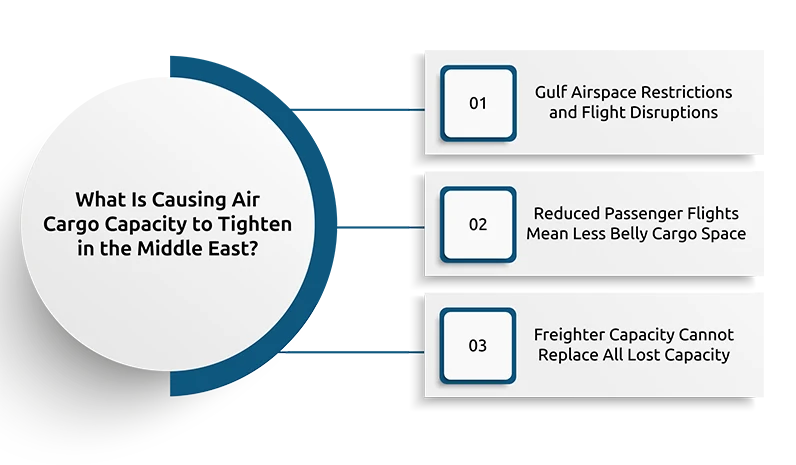
What Is Causing Air Cargo Capacity to Tighten in the Middle East?
Middle East air cargo capacity is under pressure in 2026 due to a variety of reasons. On some routes, there is reduced space due to schedule changes, airspace rules, and aircraft disruptions. This is affecting cargo connections between the Middle East, Asia, Europe and other markets.
Gulf Airspace Restrictions and Flight Disruptions
Airspace restrictions can force airlines to cancel flights, reduce frequencies or use longer routes. These changes can reduce air freight availability and affect cargo connections through major Gulf hubs. Shippers may have fewer flight options and longer transit times.
Reduced Passenger Flights Mean Less Belly Cargo Space
Passenger aircraft carry freight in their lower-deck holds. When passenger flights are reduced, belly cargo capacity also falls. This can limit passenger flight cargo options and reduce available airline cargo space on some routes.
Freighter Capacity Cannot Replace All Lost Capacity
Dedicated freighters can provide extra freighter capacity, but they cannot replace all lost space immediately. Airlines need aircraft, crews, schedules and airport access before adding new services. This means freighter capacity can support some routes while other routes continue to have limited space.
How Middle East Hub Disruptions Are Changing Air Cargo Routes
Airports act as important aviation cargo centers connecting Asia, Europe, Africa, the Middle East, & North America. When flights are reduced or changed, shippers may have fewer air freight connections and different routing options. Airlines may use alternative flight paths when normal routes are affected. This can lead to longer journeys, fewer direct connections and higher air freight transit times. It can also increase operating costs for some shipments.
The impact is different on each trade lane. Asia–Middle East air freight and Europe–Middle East air freight may face different capacity levels depending on the airport, airline and available routes. Recent industry data also shows Gulf-area capacity remains below earlier levels on some major corridors.
Which Cargo Is Most Affected by Tight Middle East Air Capacity?
Technology and data center equipment can face limited space because these shipments often need planned delivery and careful handling. This includes air freight for servers, GPU shipping, networking equipment, data center shipments and IT equipment logistics. Aviation shipments can also need quick transport for maintenance needs. Aircraft components, AOG parts, MRO equipment and urgent replacement parts may be affected when cargo space is limited.
Medical equipment and other time-sensitive goods may also need early planning. The available options depend on the cargo type, destination and delivery needs.

How Businesses Can Plan Middle East Air Freight During Capacity Constraints
Businesses can plan Middle East air freight better by checking available cargo space before fixing shipment dates. Compare direct and connecting services to find suitable air freight routes. Before making an order, make sure the cargo weight and measures are correct and prepare the required trade and customs documents.
If the normal route has limited capacity, it is often useful to look into other airports. For suitable shipments, sea-air freight or another transport option can provide more flexibility. To avoid issues at the location, final delivery & customs clearance should be planned before the cargo is shipped.
How Air Freight Capacity Constraints Affect Middle East Supply Chains
Tighter air freight capacity can make it harder for businesses to move goods on their preferred schedules. Limited cargo space may lead to fewer routing choices, longer transit times and changes to planned delivery dates. This can affect Middle East supply chains, especially when companies depend on regular movement of high-value or time-sensitive goods. Businesses may need to hold more planning flexibility, check alternative routes and coordinate inventory, customs clearance and final delivery more carefully.
Conclusion – Planning for Tighter Air Cargo Capacity in the Middle East
Air cargo capacity in the Middle East can remain tight when available space, routes and cargo connections are limited. Businesses can reduce planning problems by booking early, checking different routes and preparing documents in advance. Reviewing change airports and modes of transport can also offer more options for shipments that require delivery on time.
Did You Know
Air cargo demand fell 4.8% in March compared to the previous year. This was mostly due to severe disruptions at major Gulf hubs due to war in the Middle East.
FAQ
Why is air cargo capacity tightening in the Middle East?
Airspace restrictions, route changes, reduced services and strong cargo demand are limiting available air cargo space on some routes.
Which cargo is most affected by limited air cargo space?
Time-sensitive and high-value shipments such as servers, GPUs, networking equipment, aircraft components and urgent replacement parts may need earlier planning.
How do airspace changes affect cargo transit times in the Middle East?
Changed routes can make the journey longer and may add extra connections before the cargo reaches its destination.
What should businesses check before shipping IT equipment through the Middle East?
They should check cargo space, available routes, transit times, airport options, shipment documents and destination customs requirements.
Can sea-air freight be used when air cargo space is tight?
For suitable cargo, sea-air freight can combine sea and air transport and provide another routing option when a full air shipment is difficult to arrange.