Introduction
The Middle East conflict is impacting global supply chains in 2026, with shipping routes, transit times or cargo schedules shifting across key trade lanes. The impact can also reach organizations that have no direct operations in the region.
For importers or production, the level of risk rely on the product, route, destination and available alternatives. Understanding where these risks are focuse can help businesses prepare for possible delays and changes in transportation.
Which Supply Chains Face the Major Risks?
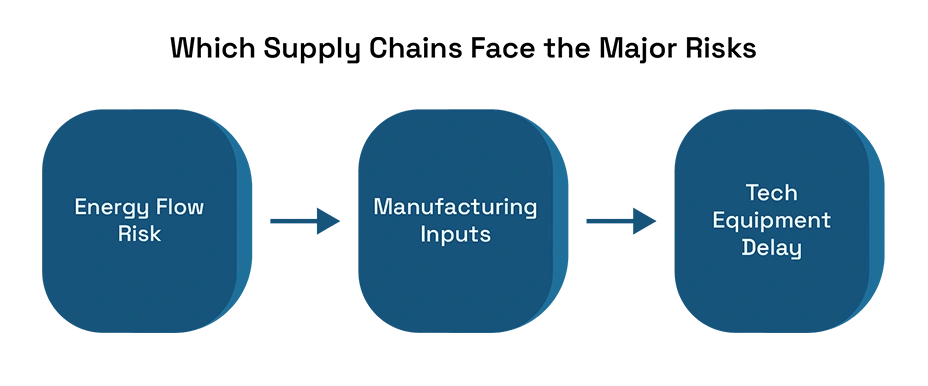
The Middle East ongoing tension is creating major risk for global shipping or global supply chains in 2026. The effect is not limited to organization operating in the region. Disruptions around the Strait of Hormuz, Bab el-Mandeb, the Red Sea or Suez Canal can affect energy movements, container transport, manufacturing inputs, technology equipment or delivery schedules across several key.
The risk is also shifting quickly. Some carriers are resuming selected Asia-Europe services across the Suez Canal, while security factors remain under close review. At the same time, traffic across the Strait of Hormuz has fallen greatly compared with levels before the conflict.
For organization, the essential question is not simply whether the Middle East conflict affects global trade. It is which supply chains have the greatest risk & how those risks can reach companies that operate far from the region.
Healthcare Equipment Supply Chains
Healthcare Device supply chains can also face delays when global shipping routes change. Medical devices, diagnostic systems, imaging equipment, monitoring systems and replacement parts may be shipped across multiple countries before reaching hospitals, laboratories or healthcare facilities.
A longer route can affect delivery schedules, customs clearance, inland transportation and equipment installation. For large healthcare projects, delays to critical equipment or replacement components can require installation schedules to be adjusted.
Automotive and Industrial Supply Chains
Automotive and industrial companies can experience disruption even when their finished products do not pass through the Middle East.
Modern manufacturing depends on multiple supplier tiers. Electronic components, control systems, industrial machinery, electrical equipment, metals and replacement parts can cross several international borders before reaching a production facility.
A longer maritime route can therefore affect the timing of a component arriving at a factory. If the component is required for a specific production stage, the delay can affect assembly schedules, maintenance activities or equipment installation.
Technology and Data Center Equipment
Technology supply chains also need to monitor developments in the region.
Servers, GPUs, storage systems, networking equipment, switches, routers, racks and replacement hardware are frequently shipped internationally for data center construction, cloud infrastructure and enterprise IT deployments.
The risk is not limited to the time spent at sea. A route change can affect the entire delivery schedule, including destination handling, customs clearance, inland transportation and installation.
For example, a data center project may have equipment arriving in several shipment waves. If one group of critical components is delayed because of a route change, installation teams may have to adjust their schedules even when other equipment has already arrived.
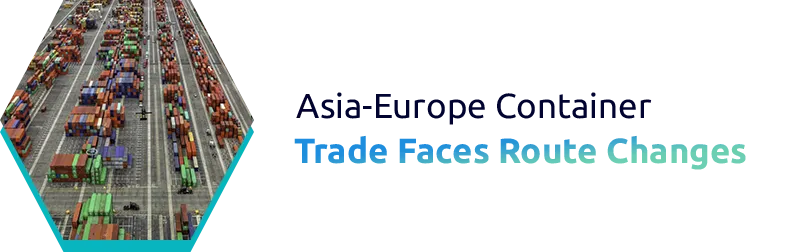
Asia-Europe Container Trade Faces Route Changes
Asia-Europe container trade has a different type of exposure.
When shipping lines avoid the Red Sea and Suez Canal, they can route around the Cape of Good Hope. This creates longer sailing distances and can alter schedules and available capacity.
However, the situation in September 2026 is changing rather than following one fixed pattern.
Maersk and Hapag-Lloyd have announced several service changes that move selected Asia-Europe services from the Cape of Good Hope back toward the Suez route. Maersk stated that four additional Gemini services would use the trans-Suez route, while future changes would remain dependent on security conditions in the Red Sea.
This creates an important planning issue for importers: the route selected when an order is booked may not be the same route used when the cargo is ready to move.
What Importers Should Review During Route Disruptions
Businesses with risk to the region should first identify which shipments depend on the Strait of Hormuz, Bab el-Mandeb, Red Sea or Suez Canal.
The next step is to calculate what happens if the planned route changes. This includes additional transit time, possible port changes, inland transportation requirements and inventory requirements for critical products.
Importers should also review customs documentation and destination requirements before rerouting shipments. Changing the transportation route does not remove the need for correct product classification, commercial documentation, valuation, permits or other import requirements.
Conclusion
The Middle East conflict is impacting global supply chains across several connected shipping and energy channels. The Strait of Hormuz creates direct risk for energy-related trade, while Bab el-Mandeb, the Red Sea and Suez Canal impact essential Asia-Europe shipping routes.
The effects can extend into automotive production , industrial projects, technology deployments, healthcare equipment, fertilizer distribution and other international supply chains. However, exposure differs according to the origin, destination, product, route and available alternatives.
Did You Know?
In August 2026, the International Maritime Organization reported that up to 400 ships carrying around 6,000 seafarers had been unable to safely leave the Persian Gulf since the conflict began.
FAQs
Which transport routes are impacted by the Middle East conflict?
The Strait of Hormuz, Bab el-Mandeb, Red Sea & Suez Canal are the main routes requiring monitoring. Their importance differs by trade lane & cargo type, with Hormuz specifically similar to energy movements or the Red Sea-Suez corridor essential for Asia-Europe trade.
Which industries are most at risk to Middle East shipping delays?
Energy supply chains have direct risk , while automotive, industrial, technology, healthcare device and other manufacturing sectors can experience secondary effects across transportation delays, higher logistics costs or changes in material availability.
Can companies use alternative routes during Middle East disruptions?
Yes. Depending on the origin and destination, shipments may be redirected around the Cape of Good Hope or use combinations of ocean, road, rail and other transportation options. Selected services have also returned to Suez in 2026.
How can the conflict affect data center equipment shipments?
Servers, GPUs, storage systems, networking equipment and racks may experience longer transit times when routes change. Delays can also affect installation schedules, inland delivery and the timing of deployment projects.
What should importers check when shipping through affected routes?
Importers should review the planned route, alternative ports, transit time, inventory levels, customs documents, destination import requirements and importer-of-record arrangements. These checks can help identify where a transportation change could affect the wider delivery process.