Overview
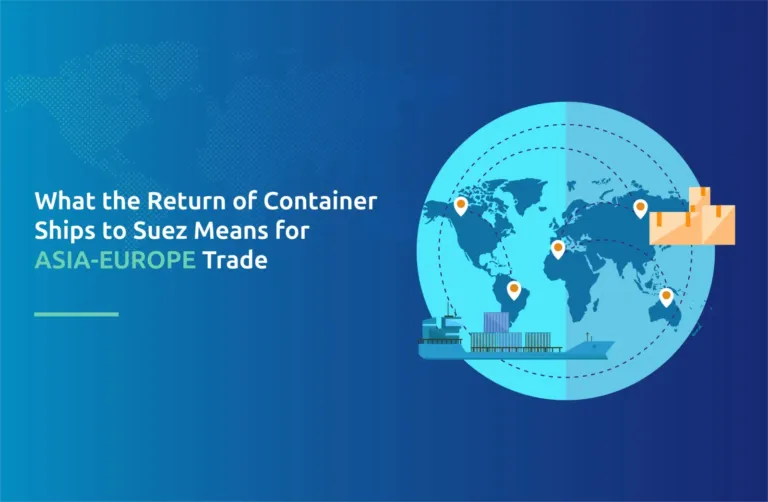
Import prices and delivery times may be directly impacted by the transit route between Asia, Europe, the Middle East, and other important markets. While the Cape of Good Hope route adds a considerable amount of sailing miles by carrying ships around the southern edge of Africa, the Suez Canal route has historically offered a faster connection between Asia and Europe.
Security conditions in the Red Sea have caused shipping lines to adjust their routes sometimes. In 2026, some carriers have mainly returned selected services to the Suez route, while other services have continued using the Cape of Good Hope depending on security conditions.
For importers, this means that a route change is not simply a vessel-routing decision. It can affect freight costs, stock management, customs timing, insurance considerations, and the whole landed cost of imported goods.
What Is the Difference Between the Suez and Cape Routes?
The Suez route connects the Mediterranean & Red Seas through the Suez Canal. Ships can bypass the need to travel around Africa when shipping cargo between Asia and Europe.
Before continuing on to Europe or other destinations, ships travel south around Africa via the Cape of Good Hope route. This mostly lengthens the time a container is in transit and increases the sailing distance.
When some carriers were hesitant to use the Suez corridor due to safety concerns in the Red Sea and around the Bab el-Mandeb Strait, the Cape route emerged as a significant alternative.
However, the routing scenario is not long-term. Maersk and Hapag-Lloyd’s September 2026 announcement that more Gemini services will resume on the Trans-Suez route demonstrates how carriers are modifying their networks in response to changing circumstances.
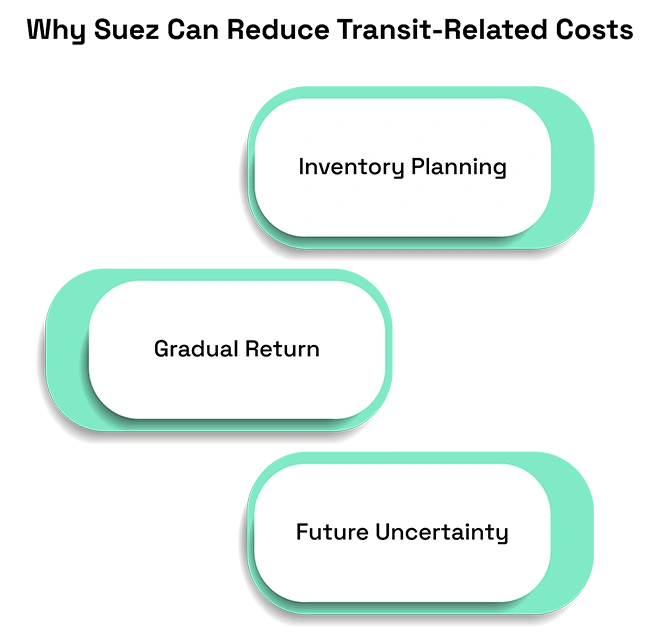
Why Suez Can Reduce Transit-Related Costs
When the Suez route is available and operationally stable, its shorter sailing distance can help reduce the time cargo spends in transit.
For businesses importing technology equipment, data center hardware, networking equipment, industrial machinery or replacement parts, shorter transit times can improve inventory planning. Faster movement can also reduce the amount of working capital tied up in goods that are still at sea.
However, a shorter route is not automatically the lowest-risk option. Security conditions remain an important consideration. In September 2026, Maersk described its return of additional services to Suez as a gradual process and noted that future changes would depend on stability in the Red Sea region.
What Importers Should Consider Before Choosing a Route
Importers should look beyond the estimated vessel arrival date when planning international shipments.
First, compare the total landed cost. This should include freight, applicable surcharges, insurance, duties, taxes, storage, inland transportation and potential inventory costs.
Second, consider the value and urgency of the cargo. A longer transit time may be manageable for standard inventory but more difficult for replacement equipment, project cargo or products required for a scheduled installation.
Third, review the customs timeline separately. Ocean transit is only one part of the import process. Documentation, customs declarations, permits, inspections and final delivery can add additional time after the vessel reaches the destination region.
Finally, build contingency time into the supply chain. Current carrier decisions demonstrate that routes can change when security conditions change. Maersk has stated that contingency plans remain available for services that may need to switch between Suez and the Cape route.

Suez vs Cape of Good Hope: What Does It Mean for Import Planning?
The choice between Suez and the Cape of Good Hope is ultimately influenced by distance, security, carrier schedules, fuel costs, and network conditions.
The Suez route can provide shorter transit times on relevant Asia-Europe and related trade lanes, while the Cape route provides an alternative when Red Sea conditions make Trans-Suez operations unsuitable. Rather than being long-term substitutes, current carrier choices indicate that both routes can be a part of a changing maritime network.
The sensible course of action for importers is to prepare for both scenarios. Verify the carrier’s confirmed route, compare the total landing cost, go over the anticipated arrival dates, and give yourself enough time for inland delivery and customs.
Route planning should therefore be treated as part of the wider import strategy. A change in the vessel’s path can influence not only when goods arrive, but also how much the company spends to receive, store and deploy those goods.
Conclusion
Changes between the Suez Canal & Cape of Good Hope routes can have a direct impact on shipping times, freight costs & stock management. While the Suez route can provide a shorter connection on relevant trade lanes, the Cape route remains an important alternative when Red Sea security conditions affect vessel operations.
For importers, the main is to look beyond the ocean freight rate. Transit time, fuel-related costs, stock requirements, customs clearance & inland delivery should all be considered when calculating the whole import cost. By handling carrier updates and preparing for possible route changes, organizations can plan shipments more easily & minimize the risk of unexpected delays & logistics costs.
Did You Know?
The Suez Canal is one of the world’s most important maritime trade routes. According to the Suez Canal Authority, the canal provides a direct maritime connection between the Mediterranean Sea and the Red Sea, avoiding the longer voyage around the Cape of Good Hope.
FAQ
Does the Cape of Good Hope route take longer than the Suez route?
Generally, yes. The Cape route requires vessels to sail around the southern tip of Africa, adding distance compared with the Suez Canal route on relevant Asia-Europe services. Actual transit times vary by origin, destination, carrier and port schedule.
Does using the Cape route increase import costs?
It can. A longer voyage may increase fuel consumption, vessel operating costs and container utilization time. Importers may also face indirect costs if longer transit times require additional inventory or affect warehouse and delivery schedules.
Why are shipping lines changing between Suez and Cape routes?
Shipping lines adjust routes based on factors such as regional security, operational conditions, vessel schedules and network planning. A carrier may use the Cape route when Red Sea conditions create additional operational risks and return to Suez when conditions allow.
How does a route change affect customs clearance?
The sailing route itself does not necessarily change the customs requirements at the destination. However, a later vessel arrival can shift the timing of import documentation, customs filing, inspections, delivery appointments and final transportation.
How can importers prepare for route changes?
Importers can monitor carrier advisories, confirm the actual vessel routing, maintain realistic delivery buffers and calculate the full landed cost. For time-sensitive shipments, businesses should also consider how a longer transit could affect inventory, installation or customer delivery schedules.