Overview
Switching suppliers can look like a simple business decision. A company may find a better price, improved product quality, faster production, or a supplier closer to its target market. On paper , switching from one country to another can minimize purchasing costs or create new prospects.The real cost, however, is often hidden in the logistics process.
A new supplier can shift shipping routes, transit times, customs requirements, packaging standards, documentation, insurance setups & taxes, & delivery schedules. Even when the product itself remains unchanged, moving it across a different country can create extra costs that are not visible in the original supplier pricing.
Why Supplier Changes Affect Logistics Costs
Each supplier handles logistics within a different environment. The location of a factory defines the available ports, airports, freight routes, shipping providers, transit times, & local shipping costs. When a company shift suppliers , it may also need to change the complete movement plan for the product.
For example, a supplier located near a major seaport may offer efficient ocean freight connections. A new supplier in an inland region may require extra road delivery before the cargo reaches the export port. The purchase price could be lower, but the additional inland transportation may reduce or completely eliminate the expected savings.
The same issue can occur with air freight. A supplier may be located close to an international airport with frequent cargo connections, while another supplier may require road transportation to a different airport. This can increase handling, transfer, and transportation costs.
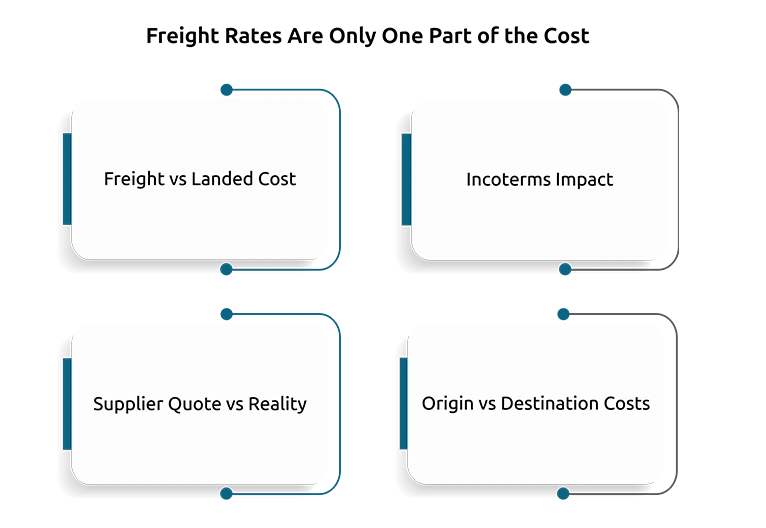
Freight Rates Are Only One Part of the Cost
Businesses often compare suppliers by looking at the product price and freight quotation. This provides only part of the picture.
The total logistics cost can involves origin shipping, export handling, documentation, freight, insurance, destination handling, customs clearance, duties, taxes, storage, and final delivery. Depending on the Incoterm used, some of these charges may already be included in the supplier’s quotation while others may become the buyer’s responsibility.
This is why a lower freight rate does not automatically mean a lower landed cost.
A supplier offering attractive pricing from one country may still be more expensive after all logistics and import-related charges are considered. Comparing the complete landed cost gives a more realistic view of the financial impact of changing suppliers.
Transit Time Has a Financial Impact
A supplier shift can also affect how quickly products reach customers.
Longer transit times may require businesses to hold more stock to avoid stock shortages. This ties up working capital & increases warehouse requirements. If a shipment misses a intended delivery window, the company may need to use rushed air freight instead of standard ocean shipping.
The cost difference can be major.
For products with short sales cycles, seasonal demand, or project-based delivery schedules, even a small increase in transit time can create working problems. A supplier that appears cheaper may therefore become more expensive when stock and emergency transportation costs are included.
New Routes May Require New Logistics Partners
Shifting suppliers can require new freight forwarders, customs brokers, trucking offering, warehouses, or delivery partners. The existing logistics network may not have the same reach in the new supplier’s location.
Businesses may also need to arrange new freight deals, confirm carrier availability, update shipping instructions, & manage documentation. These changes can add business-related work and affect the overall logistics cost.

Incoterms Can Shift the Cost to the Buyer
Supplier changes often involve renegotiating commercial terms. This is where Incoterms become important.
A previous supplier may have offered goods under terms where transportation and certain destination responsibilities were handled by the seller. The new supplier may offer a lower product price under different terms, leaving more logistics responsibilities with the buyer.
The result can be misleading if the two quotations are compared only on product price.
Businesses should compare supplier offers on the same commercial basis and identify which party is responsible for transportation, export clearance, import clearance, duties, taxes, and final delivery. This makes the financial difference between suppliers much easier to understand.
Supplier Changes Can Affect Importer of Record Requirements
A supplier change can affect how goods are imported into the destination country. If the buyer does not have a suitable local importing structure, a foreign seller, productions or project owner may need an Importer of Record arrangement for an eligible shipment.
This is similar when goods are shipped directly to a customer, warehouse, project site, or data center. Confirming the importer, buyer, end user, customs agent, product classification , & regulatory requirements before shipment can help avoid clearance delays and sudden costs.
How Businesses Can Control Hidden Costs
Organizations should review the full landed cost before shifting suppliers, involving freight, customs duties, taxes, handling, storage, & delivery. They should also review the new providers location, packaging, documentation, lead time, or shipping capacity. A trial shipment can help identify customs , packaging, transit, or delivery issues before shipping larger volumes.
Conclusion
Replacing suppliers across countries can create valuable savings, but the product price is only one part of the decision. Shipping routes, customs requirements, packaging, transit times, stock, required clearance, Incoterms, & local import duties can all change when production moves to a new country.
The goal is not simply to find the cheapest supplier. It is to find the supplier that offer the best overall value after the product reaches its final destination.
Did You Know?
The 2025 World Bank Logistics Performance Indicators are based on shipment-level data covering more than 80% of global goods trade, showing how connectivity, speed, and reliability affect international supply chains.
FAQs
Why can replacing suppliers rise logistics costs?
A new supplier can change the shipping route, freight mode, domestic fright, packaging, customs requirements, transit time, or destination handling. These extra costs may not appear in the supplier’s product price quotes.
Should businesses compare freight rates before changing suppliers?
Yes, but freight rates should not be view alone. Organizations should compare the complete landed cost, involving shipping, customs charges, duties, taxes, handling, storage, and final delivery.
Can a new supplier change customs requirements?
Yes. A change in supplier country can affect country-of-origin information, documentation, customs classification, import procedures, and product-specific regulatory requirements. The new supply route should be reviewed before shipment.
How can a company reduce the risk of a supplier transition?
A company can test the new supply route with a handle shipment before moving large volumes. Reviewing documentation, packaging, transit time, customs clearance, or final delivery results can identify problems early.
When can an IOR become relevant after changing suppliers?
An IOR may become relevant when a foreign seller, manufacturer, lessor, or project owner needs to import goods into a country but does not have an appropriate local importing structure. The specific shipment and regulatory requirements should be assessed before shipping.