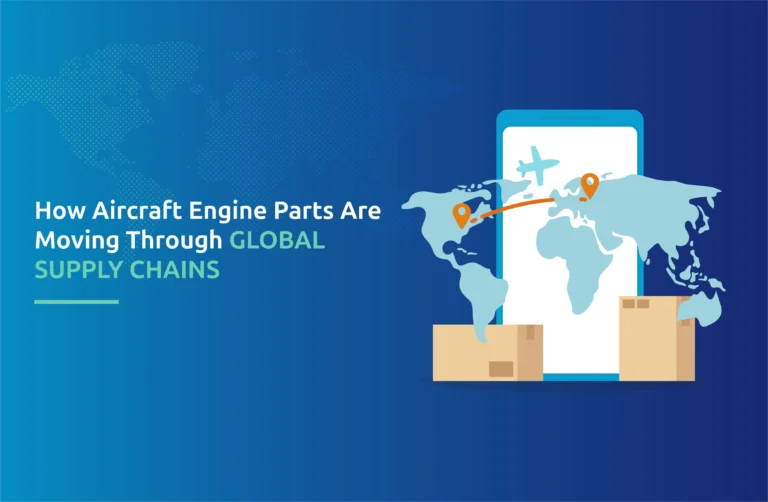
A supplier can follow all the rules & still have a shipment delayed because of the route it takes. Today, international shipments often pass through some countries before reaching the final customer. A shipment may leave one country, stop at a major shipping hub, move through another country, & then enter the final destination. Every country along this journey can have different customs & trade requirements.
This is why companies need to look beyond supplier compliance.
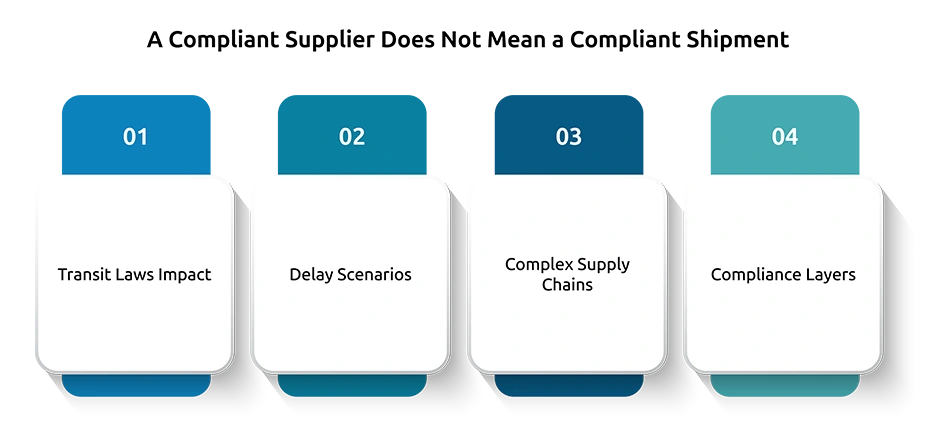
A Compliant Supplier Does Not Mean a Compliant Shipment
Let’s say a business purchases networking equipment from a Country A supplier. The supplier deals with all domestic laws & possesses the appropriate export paperwork. Everything seems to be in order.
However, before the product reaches the customers in Country C, it is planned to travel through Country B. For some goods, transit shipments, or customs processes, Country B might have its own laws & regulations. The shipment may be stopped or delayed if some conditions are not met.
It’s possible that the supplier did nothing improper. The route is the issue. As businesses employ increasingly intricate supply chains & other delivery methods, this problem is getting more difficult.
Product Type Can Add More Risk
Not every product faces the same rules. Some products need more attention during global shipping. This can include servers, networking equipment, wireless devices, medical equipment, batteries, chemicals, & other regulated products.
For example, a wireless device may need approval before it can be imported into the final country. A battery-powered product may also have transportation & safety requirements.
The supplier’s export approval does not automatically mean that the product can be imported into or transported through every country on the route.
This is why companies should check the product requirements for the whole journey.
The Cheapest Route May Not Be the Best Route
When managing shipments, companies naturally look for lower freight costs & faster delivery. But selecting a route only because it is cost-friendly can sometimes create higher costs later.
A shipment could face customs verification, incorrect paperwork, storage charges, additional costs, or additional management. In some cases, goods may even need to be returned or sent through another route.
What Should Companies Check Before Shipping?
Before goods leave the supplier, companies should review the complete shipping route. Start with the product. Make sure the model, specifications, country of origin, & intended use are clearly known.
Next, check the HS code & other product classifications. The correct classification helps determine duties, taxes, permits, & other needs. Then look at the route. Confirm every important country, port, warehouse, & customs point involved in the shipment.
Companies should confirm who will serve as the Importer of Record (IOR) at destination. The importer is in charge of handling the customs procedure & following any applicable import laws. Lastly, find out if the shipment needs any product approvals, licenses, certificates, or permissions.
Think About Compliance From Origin to Destination
The old approach was simple: check the supplier, prepare the documents, & ship the goods. Today, that may not be enough. Companies need to think about compliance from the moment the goods leave the supplier until they reach the final customer. This means procurement teams, logistics teams, customs specialists, & importers should work together before the shipment moves. Review a route not only for cost and delivery time, but also for compliance risk.

Conclusion
A compliant supplier is only one part of a successful global shipment. The route, product needs, customs procedures, & importer responsibilities also need to be checked before the goods move.
By reviewing the full journey from origin to destination, companies can identify potential compliance issues early, avoid unnecessary delays, & reduce unexpected logistics costs.
In today’s difficult supply chains, compliance should not stop at the supplier. It should follow the shipment all the way to its final destination.
Did you know?
Enforcement shows what’s at stake. In February 2026, the U.S. Bureau of Industry and Security (BIS) announced a $252.5 million settlement with Applied Materials and its Korean subsidiary, the second-highest penalty BIS has ever imposed.
FAQ
1. Can a compliant supplier still cause a shipment delay?
Yes. A supplier may meet all export requirements, but the shipment can still face delays because of the countries, ports, customs procedures, or regulations along the route.
2. What is route compliance in logistics?
Route compliance means checking whether a shipment can legally and smoothly move through every country, port, customs point, and transit location between the supplier and the final destination.
3. Why does the shipping route matter for compliance?
Different countries have different customs, trade, product, and transit requirements. A route that works for one shipment may create additional requirements or risks for another.
4. Can product type affect route compliance?
Yes. Products such as servers, networking equipment, wireless devices, medical equipment, batteries, and chemicals may have additional import, transit, safety, or regulatory requirements.
5. How can companies reduce route-related logistics risks?
Companies should review the complete route before shipping, including product classification, HS codes, transit countries, customs procedures, required permits, documentation, and the Importer of Record.