Introduction
Importing goods into the UK involves various costs, including customs duties, shipping charges, & Import VAT. For businesses involved in global trade, recovering eligible Import VAT can help reduce overall import expenses or improve cash flow management. However, businesses must follow specific HMRC Revenue & Customs requirements and maintain correct import records to successfully claim VAT back.
Import VAT recovery allows VAT-registered businesses to reclaim VAT paid when goods are imported into the UK for business purposes. The recovery process rely on correct customs declarations, proper documentation, or compliance with UK import regulations. Businesses importing technology equipment, medical devices, automotive components, & industrial products must understand these requirements to avoid extra costs & compliance issues.
What Is Import VAT Recovery in the UK?
Import VAT recovery helps approved VAT-registered organizations to reclaim the VAT paid on goods imported into the UK. After paying Import VAT during customs clearance, businesses can usually recover it across their VAT return & maintain correct import records. This helps minimize import costs, improve cash flow, & support compliant global trade.
What’s New for Import VAT Recovery in 2026?
In 2026, UK companies continue to use delay VAT Accounting (PVA) to enhanced cash flow by accounting for Import VAT across their VAT Return rather than of paying it at the border. HMRC also continues to stress correct customs declarations, complete import records, or the correct use of the Customs Declaration Service CDS. Handling correct documentation helps organizations claim approved Import VAT effectively while reducing the risk of delays or compliance issues.
Who Is Eligible to Recover Import VAT in the UK?
VAT-registered businesses are generally eligible to recover Import VAT when they import goods for business processes that are subject to VAT. Companies operating in sectors such as technology, healthcare device, automotive, production, or telecom may recover Import VAT when their imports meet HMRC requirements.
Businesses must make sure that imported goods are used for legitimate commercial purposes. If goods are used for processes that are exempt from VAT, recovery may be restricted. Handling proper financial records & import documentation is important for supporting VAT claims.
Companies that import goods under their own name must make sure that customs declarations contain correct importer details. Any incorrect information related to product value, importer details, or customs classification may create difficulties during the VAT recovery process.
How Does Import VAT Recovery Work in the UK?
The Import VAT recovery process begins when goods enter the UK and complete customs clearance procedures. Businesses must provide accurate shipment information, including product details, declared value, and importer information, to ensure correct customs processing.
After customs clearance, businesses must maintain records showing the Import VAT paid on imported goods. These records are required when submitting VAT returns and may be reviewed by HMRC to confirm that claims are accurate and valid.
Businesses using postponed import VAT accounting may account for Import VAT through their VAT return instead of paying VAT immediately when goods enter the country. This approach can help improve cash flow management for eligible businesses importing goods regularly.
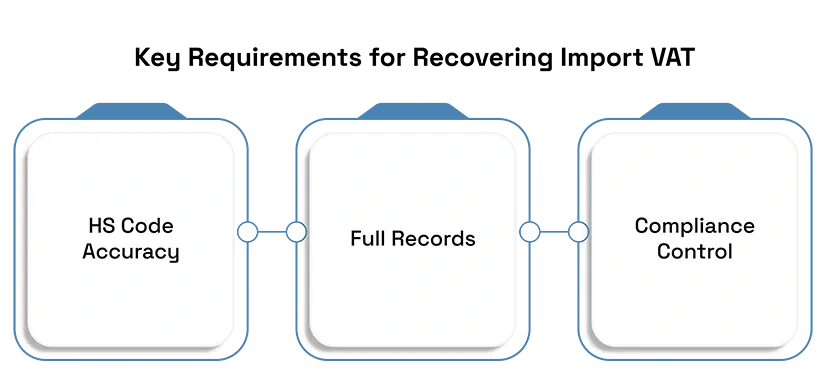
Key Requirements for Recovering Import VAT
Successful Import VAT recovery rely on correct documentation or proper compliance management. Businesses must manage commercial invoices, import declarations, shipping documents, & customs records that prove the import transaction & VAT payment.
Correct HS code selection is also important because it decides product classification, customs duties, or import requirements. Incorrect HS codes can result in customs delays, additional costs, or incorrect tax calculations.
Businesses should also maintain complete import records, involves supplier information, shipment details, customs values, & VAT information. Proper record management helps companies support VAT claims or respond efficiently if HMRC requests extra information.
Challenges Businesses Face When Recovering Import VAT
Many businesses experties complexcities with Import VAT recovery due to incorrect documentation, incomplete customs records, or misunderstanding UK import procedures. Even small errors in customs declarations can delay VAT claims or create compliance risk.
Companies includes in global trade frequently handles multiple suppliers, shipping routes, or product categories, making VAT compliance more complex. Businesses importing regulated products such as medical equipment, technology hardware, or automotive components must pay close attention to documentation & customs requirements.
How IOR Services Support Import VAT Compliance in the UK
An experienced Importer of Record helps to businesses manage customs duties & import compliance when bringing goods into the UK. This is especially valuable for foreign companies that do not have a local entity or established import network.
IOR services support businesses by managing customs documentation, management import processes, make sureaccurate product information, and helping maintain compliance with UK regulations. By handling these responsibilities, an IOR provider reduces operational challenges and helps businesses avoid shipment delays.
For companies importing high-value equipment, professional IOR support provides greater visibility and control over customs processes, VAT duties, & regulatory requirements.

Conclusion
Getting back Import VAT in the UK provides important benefits for eligible businesses by minimizing import costs and improving cash flow management. However, successful recovery requires accurate customs declarations, proper documentation, or compliance with HMRC requirements.
Businesses importing technology, medical equipment, automotive components, or industrial goods must carefully handle their VAT & customs duties. Contacting with a trusted Importer of Record offering like One Union Solutions helps simplify import processes, handles compliance requirements, & support smooth delivery into the UK.
Did You Know?
In 2026, HMRC continues to support Postponed VAT Accounting (PVA), allowing eligible VAT-registered businesses to account for Import VAT through their VAT Return, helping improve cash flow and VAT compliance.
Frequently Asked Questions
Who can recover Import VAT in the UK?
VAT-registered businesses importing goods for taxable business activities can usually recover Import VAT if they meet HMRC requirements and maintain proper import records.
Can foreign companies recover Import VAT without a UK entity?
Foreign companies may need UK VAT registration or an Importer of Record solution depending on their business structure and import requirements.
What documents are required to recover Import VAT?
Businesses generally need import declarations, commercial invoices, transport documents, and customs records to support Import VAT recovery claims.
What happens if Import VAT records are incorrect?
Incorrect documentation or missing records can delay VAT recovery and may create compliance issues during HMRC reviews.
How can an IOR provider help with UK imports?
An IOR provider helps manage customs procedures, import documentation, VAT coordination, and compliance requirements to support smooth UK imports.