Introduction
Artificial intelligence AI is driving rapid growth in data centers, cloud computing, or powerfull computing, increasing demand for AI servers & high-density GPU systems. However, importing this advanced hardware includes complex customs rules, documentation, or compliance requirements. Delays caused by incorrect paperwork or import requirements can impact critical projects. Partnering with a trusted Importer of Record IOR helps businesses handle these challenges, make sure smooth customs clearance, and faster global deployment of AI infrastructure.
Why AI Server Imports Are More Complex Than Standard IT Equipment
AI servers are built for complex computing workloads & usually contain multiple advanced GPUs, processors, storage devices, advanced networking components, or cooling systems. These products are notably more valuable than traditional office IT equipment & frequently require careful managing across shipping. In addition, they may be sourced from different production & shipped from multiple countries before arriving at the final installation site.
Many governments also identify advanced AI hardware as important technology, meaning extra export controls or import approvals may apply. Businesses importing these products must understand country-based customs rules, licensing requirements, & technology rules before shipping. Without proper planning, companies risk shipment delays, customs penalties, or rejected imports.
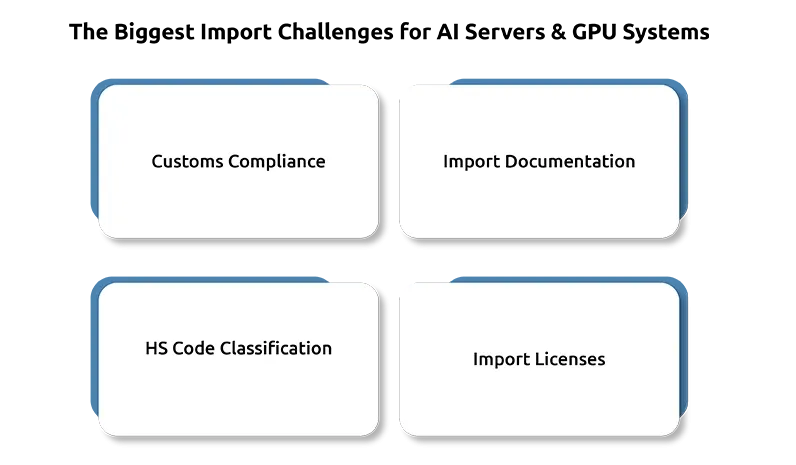
The Biggest Import Challenges for AI Servers & GPU Systems
Customs Compliance
Importing AI servers or GPU infrastructure requires compliance with country-specific customs regulations, import documentation, or compliance standards. Incorrect declarations or missing paperwork can lead to shipment delay,or penalties.
Import Documentation
Correct import documents, involves commercial invoices, packing lists, customs declarations, or import approvals, are essential for global shipments. Errors in documentation can delay AI server deployments. Professional import documentation services ensure paperwork is complete & compliant before customs clearance.
HS Code Classification
Accurate HS code classification helps ensure smooth customs clearance for AI servers and networking equipment, reducing the risk of delays, compliance issues, and additional import costs.A trusted Importer of Record helps classify products accurately and supports efficient cross-border imports.
Import Licenses
Some countries require import permits or approvals for advanced AI hardware & networking equipment. Failing to obtain these approvals before shipping can delay projects. Using import compliance services helps businesses meet local regulations and import equipment legally.
Duties & Taxes
Importing AI system involves customs duties, VAT, GST, or other government charges that vary by country. Calculating total landed costs in advance helps avoid unexpected costs. A reliable IOR service provider manages import compliance, duties, or customs processes, make sure of faster & more reliable global shipments.
Why Companies Without a Local Entity Face Additional Challenges
Many companies deploy AI systems in countries where they do not have a legal business entity. For example, a cloud service offer may need to install servers in a new regional data center without opening a local office. However, customs regulators in many countries require a legally recognized importer before clearing goods.
Setting up a legal entity solely for one project can be costly & complex. This is where Importer of Record services provide strong value. A qualified global Importer of Record allows businesses to import AI servers, networking equipment, storage systems, & other IT hardware legally without creating a local company. This approach speeds up global growth while making sure compliance with local customs rules.
The Importance of Secure Logistics for AI Infrastructure
In addition to customs compliance, AI servers require expert logistics because of their valuable & technical sensitivity. These systems are sensitive to shock, climate change, or improper managing during shipping. Delays caused by customs checks can also affect complete AI deployment projects.
Expert logistics planning includes secure packaging, shipment tracking, managed shipping, or timely customs clearance. When these processes are handled efficiently, businesses can minimize working risks, protect valuable equipment, & keep data center projects on schedule.

How Importer of Record IOR Services Solve These Challenges
Importer of Record services help organizations manage customs compliance, import documentation, duties, taxes, & requirements for AI systems. Acting as the legal importer, an IOR makes sure shipments meet local rules & clear customs efficiently. This enables organizations to deploy AI servers or GPU systems globally without setting up a local legal entity.
Common key facts to know About Importing AI Equipment
Many businesses assume a freight forwarder can perform every role include in a global shipment. While freight forwarders are responsible for shipping, warehousing, or shipment management, they are not automatically the legal Importer of Record. The IOR has import duties for customs compliance, documentation accuracy, import duties, and regulatory obligations.
Another common key factor is that the exporter or shipper can always act as the importer. Whether this is allowed rely on the destination country’s customs regulations. In many regions, the importer/exporter, & freight forwarder have separate import duties. Understanding these changes helps businesses avoid compliance issues & sudden customs delays.
Why Choose One Union Solutions?
One Union Solutions offering trusted Importer of Record IOR services for AI servers, GPU network, networking equipment, or data center hardware in over 190+ countries. Our experts handle customs documentation, compliance, import approvals, duties, & customs clearance, helping organizations import technology equipment legally & effectively without the need for a local entity.
Conclusion
Importing AI servers or dense GPU systems requires careful planning, correct documentation, & compliance with country-based customs rules. Delays or documentation errors can increase costs & delay deployment timelines. A reliable IOR service helps businesses effectively handle customs compliance, import documentation, & regulatory requirements. With the correct IOR partner, companies can simplify global imports, reduce compliance risks, & deploy AI systems faster while supporting long-term global growth.
Did You Know?
The U.S. government has identified artificial intelligence and advanced computing as critical technology areas. In 2025, the U.S. Department of Commerce continued updating export control rules for advanced computing chips and related technologies to address national security concerns.
Frequently Asked Questions
What is an Importer of Record?
An Importer of Record IOR is the legal entity reliable for make sure imported goods follow with a country’s customs rules. The IOR manages import documentation,customs declarations,duties, taxes, or regulatory requirements so shipments can be imported legally.
Why do AI servers & GPU networks require Importer of Record services?
AI servers, GPU clusters, or networking equipment are often subject to strict customs rules & technology compliance requirements. Importer of Record services help organizations help these requirements, make sure faster customs clearance & reducing the risk of shipment delays.
Can a freight forwarder do as the Importer of Record?
In most countries, a freight forwarder handles shipping & logistics but is not instantly the Importer of Record. The IOR is the legally responsible party for customs compliance, import duties, or regulatory duties. The exact rules rely on the destination country’s customs laws.
Can I import AI equipment without a local company?
Yes. Businesses can import AI servers, networking equipment, & other IT hardware without creating a local entity by partnering with a trusted global Importer of Record offering that assumes the legal import duties in the destination country.
What documents are required to import AI servers internationally?
The required documents typically include a commercial invoice, packing list, customs declaration, shipping documents, applicable import approvals, or the correct HS code classification. Requirements may vary depending on the destination country and the type of AI equipment being imported.