Introduction
To become competitive, businesses today need more than just fast shipping. Additionally, they want supply chain visibility, which requires having current knowledge of product status, inventory flow, and activities at every stage of the supply chain. End-to-end supply chain visibility allows companies to keep track on inventory, trace shipments, & quickly fix issues before they develop. Real-time supply chain understanding is more important than before because of global trade, changing customer demands, & unexpected delays. According to recent market analysis, many businesses are still not prepared for supply chain problems, which makes improving visibility a main priority. Businesses can improve supply chain management, reduce delays, & make decisions more quickly by using technology like AI, IoT, cloud services, and live tracking. In today’s quickly changing global market, businesses with improved supply chain visibility may increase customer fulfilment, reduce costs, and improve their market position.
What Is Supply Chain Visibility?
Having reliable and recent details about goods, inventory, & shipments at every phase of the supply chain is known as supply chain visibility. It allows businesses to track the locations, status, and scheduled time of delivery of products. Complete supply chain visibility provides a full view of the complete process, from suppliers and producers to warehouses and users. Businesses may keep track on goods from the time they reach a supplier until they are delivered to the customer by using live tracking. They are able to track inventory visibility, review shipping visibility, and quickly identify delays or other issues. This improves supply chain transparency, reduces delays, & maintains smooth operations. Specific tracking only displays the most basic details, including when a package is shipped or delivered. Complete end-to-end supply chain visibility, on the other side, provides reliable data on shipments, warehouse operations, inventory levels, & shipment status. Businesses invest more in digital devices like AI, IoT, and cloud services, according to recent industry research, in order to increase supply chain visibility, make decisions more quickly, reduce costs, or improve customer service.
Why Supply Chain Visibility Matters More Than Ever
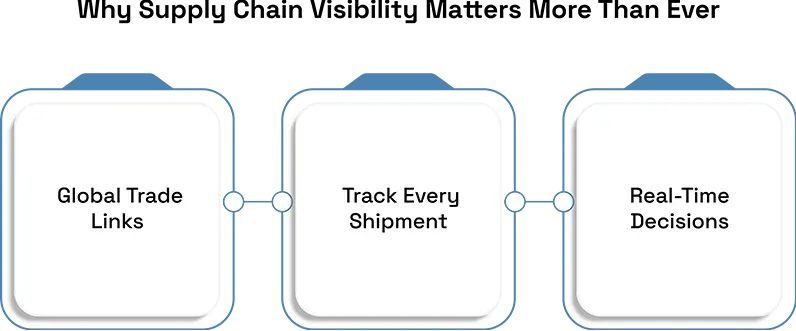
Global supply chains are now more connects than ever, with companies shipping goods between many countries. Because it allows companies to track shipments, keep track on stock, & handle processes more efficiently, supply chain visibility is important. Updated information is now important due to recent supply chain disruptions, changing trade rules, and growing consumer demands. Businesses require quick access to data in order to avoid delays & improve customer service, while customers need fast shipments and reliable order updates. By helping companies in identify issues quickly & making faster decisions, a digital supply chain with real-time supply chain visibility also improves risk control. This keeps the supply chain working smoothly, avoid delays, and costs.
How Supply Chain Visibility Creates a Competitive Advantage
Supply chain visibility provides companies with recent details on orders, inventory, & transportation. This allows them to response quickly to delays, a lack of goods, or other problems before they have an effect on customers. Improved supply chain efficiency & smooth regular tasks are helped by quicker responses. Businesses can better plan deliveries, shipping, and inventory when there is more insight. By avoiding delays and unused goods, this improves efficient operation, reduces unnecessary use, & supports reduce costs. Also, it helps companies deliver goods on time, improving customer satisfaction & developed customer trust. Businesses may increase efficiency, make better decisions, and identify new growth chances by using real-time data. Businesses are more prepared to compete in the fast-changing global market of today when they have good end-to-end supply chain insight.
Technologies That Improve Supply Chain Visibility
The supply chain is now more quickly and correctly because of advanced technology. Businesses will get demand, identify possible delays, and make smarter decisions with the use of AI. Prediction analysis makes use of current as well as historical data to plan for issues before they occur. RFID, GPS tracking, and the IOT allows companies to keep track on the state and location of shipments in real time. This improves the visibility of shipments and inventory and supports quick problem-solving for companies.
Data from suppliers, warehouses, and shipping providers is combined into a single system by cloud computing and supply chain software, which simplifies sharing of data & access. Automation increases accuracy, reduces manual effort, & speeds up regular tasks. Before making actual changes, companies may test different situations & improve planning by using digital twins to develop a digital model of the supply chain. When combined, these technologies help businesses improve performance, reduce delays, & increase end-to-end supply chain visibility.

Conclusion
Because supply chain visibility allows companies to track orders, stock, and shipments in real time, it has become an important competitive edge. Businesses may increase efficiency, avoid delays, reduce operating costs, and make quicker business decisions with complete supply chain insight. Accurate delivery status and increased customer trust are other ways that current data improves the customer experience. Investing in current supply chain visibility technologies, such as AI, the IoT, cloud services, & live tracking, can help companies improve supply chain performance and secure long-term growth as global supply chains continue to get more complicated.
Did you know
Procurement will look vastly different by 2030. AI is accelerating a shift toward intelligent, autonomous processes that will reshape operating models, supplier relationships, and competitive advantage.
FAQ
How does supply chain visibility improve inventory management?
It helps companies avoid running out of stock or keeping too much stock by providing real-time stock levels. Inventory planning is improved and waste is reduced.
Why is real-time tracking important in supply chains?
Businesses can use real-time tracking to find out proper location & status of shipments. It allows them to improve delivery performance, inform customers, and response efficiently to delays.
Is supply chain visibility useful during unexpected disruptions?
Yes, It allows companies to quickly identify problems, such as supply shortages and delivery delays, and take proper steps before they increase.
What are the long-term benefits of supply chain visibility?
Supply chain visibility later on helps companies in increasing efficiency, reducing risks, improving customer trust, and supporting continuous business growth.
How does supply chain visibility improve warehouse operations?
It makes daily work in warehouses more efficient by helping with inventory tracking, product planning, & order processing.