Introduction
International expansion has made enterprise IT hardware shipments a critical part of modern business operations. Organizations regularly move servers, storage systems, networking equipment, cloud systems, & other technology equipment across borders to support new offices, data centers, and customer deployments. While shipping has become faster, import requirements have become increasingly complex. Every destination country has its own customs rules, documentation requirements, tax rules that businesses must meet before equipment can be legally imported. Understanding these requirements early helps reduce delays, avoid extra costs, & keep global IT projects on schedule.
Import Compliance Challenges for Enterprise IT Hardware
After understanding the importance of global import compliance, businesses must also identify the specific challenges associated with business IT hardware. Products such as servers, networking equipment, storage systems, & security appliances are frequently subject to strict customs rules, product standards, & documentation requirements. Missing certifications, incorrect HS classifications, or incomplete paperwork can delay customs clearance and delay critical IT deployments.
Working with an experienced IOR service helps businesses meet local compliance requirements, manage import documentation, & move business technology across global borders more efficiently while minimize customs risks.
Why Enterprise IT Hardware Imports Are More Complex Than Standard Cargo
Company IT hardware is more complex to import than standard commercial goods because it is commanly may required extra customs & legal requirements. Shipments involves servers, networking equipment, storage systems, GPUs, or telecom devices may require specific product certifications, correct HS classifications, & detailed technical documentation depend on the destination country.
Customs rules also vary from one market to another, meaning a shipment approved in one country may need extra documentation or regulatory permits. As technology continues to change, businesses must keep pace with changing compliance requirements to avoid customs delays & make sure smooth global imports.
Understanding the Role of an Importer of Record
An Importer of Record IOR is the legal entity responsible for make sure imported goods comply with local customs regulations, documentation requirements,applicable duties or taxes. Businesses that use a trusted Importer of Record service can legally import enterprise IT hardware into countries where they may not have a local entity. By handling compliance, customs documentation, & regulatory requirements, an IOR helps reduce shipment delays and supports smoother international imports.
Benefits of Using an Importer of Record for Enterprise IT Hardware
An expert Importer of Record helps businesses simplify global IT hardware imports by handling customs documentation, regulatory requirements, & country-specific import requirements. This reduced shipment delays, reduces compliance risks, and supports smoother customs clearance.
Businesses can also import equipment without a local entity, expanding data center deployments globally and technology projects faster and more efficiently. With professional IOR services, companies can focus on their operations while make sure business hardware reaches its destination on time.
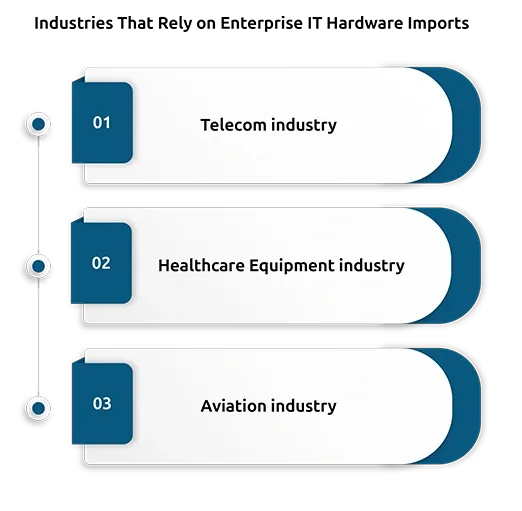
Industries That Rely on Enterprise IT Hardware Imports
IT industry
IT companies regularly import servers, networking equipment, storage systems, and cloud infrastructure. IT equipment Importer of Record services help ensure smooth customs clearance and regulatory compliance for global deployments.
Telecom industry
Telecom projects require routers, switches, antennas, and wireless equipment that may need additional regulatory approvals. An Importer of Record helps manage these import requirements efficiently.
Healthcare Equipment industry
Healthcare equipment organizations import IT infrastructure for hospitals and laboratories. Import Compliance Services help ensure shipments meet customs and regulatory requirements.
Aviation industry
Airlines or aviation companies import servers, networking equipment, communication systems, & airport IT systems. Global IOR services help ensure these shipments comply with customs regulations and reach their destination without delays.
Country Compliance: Why Import Rules Differ Across Countries
Import requirements for system IT hardware vary from country to country, with each market applying its own customs rules, documentation, duties, taxes, & product requirements. Businesses importing into regions such as the United States, Germany, the UAE, Singapore, or Canada must meet destination-specific compliance requirements to avoid customs delays. Working with an experienced IOR service helps make sure global shipments comply with local regulations and move across customs more efficiently.
Import Compliance Process for Enterprise IT Hardware
A successful import process begins with checking product details, destination country rules, and the correct HS classification. Businesses must then prepare correct customs documentation, verify import approvals, certifications, duties, & tax regulations before shipping. Once the shipment gets to its destination, customs regulators review the documents & complete the clearance process. Proper planning helps reduce delays, maintain compliance, & make sure system IT hardware is delivered on schedule.

Overcoming Import Compliance Challenges with Importer of Record Services
Importing enterprise IT hardware can become challenging due to changing rules, incomplete documentation, incorrect HS classifications, or the absence of a local legal entity. These issues often lead to customs delays & increased costs. A trusted Importer of Record helps businesses manage compliance, prepare accurate documentation, and meet country-specific import requirements, make sure smoother cross-border shipments & timely project delivery.
Why Choose One Union Solutions?
One Union Solutions provides reliable Importer of Record services for system IT hardware imports across 190+ countries. Our team manages customs documentation, regulatory compliance, import permits, & customs clearance, helping businesses import servers, networking equipment, storage systems, & other technology hardware effectively. With global expertise & local compliance support, we help keep global IT projects on schedule while minimize customs risks.
Conclusion
Importing business IT hardware requires careful planning, correct documentation, or adherence with country-specific customs regulations. A trusted IOR service helps businesses manage global import compliance, minimize customs delays, & simplify cross-border shipments. By working with an expert Importer of Record service provider like One Union Solutions, companies can import technology equipment efficiently while keeping global projects on schedule.
Did You Know?
Some countries require additional approvals for importing wireless IT hardware such as routers and networking equipment. In India, certain wireless devices may need Equipment Type Approval (ETA) from the Department of Telecommunications (DoT) before import.
Frequently Asked Questions
Why is enterprise IT hardware more likely to face customs inspections than general electronics?
Enterprise IT hardware often has a higher declared value, specialized technical details, & may include networking or encryption capabilities. Customs authorities commonly verify classification, documentation, & regulatory compliance before clearing these shipments.
Can a company import servers into another country without opening a local office?
Yes. Businesses can use an IOR service to legally import servers & other enterprise IT equipment into many countries without creating a local legal entity, subject to local regulations.
What documents are most important for importing networking equipment internationally?
The important documents usually include a commercial invoice, packing list, shipping document, accurate HS code classification, country of origin details, & any required product certifications or import permits applicable in the destination country.
How can incorrect HS codes affect enterprise IT hardware imports?
Incorrect HS codes may lead to inaccurate duty calculations, customs delays, extra checks, penalties, or customs audits. Correct classification is important for smooth global trade compliance.
When should businesses involve an Importer of Record in an international IT project?
The best time is before sourcing or shipment planning begins. Early compliance reviews help identify documentation requirements, licensing requirements, applicable taxes, & country-specific rules before the equipment is dispatched, reducing the risk of customs delays.