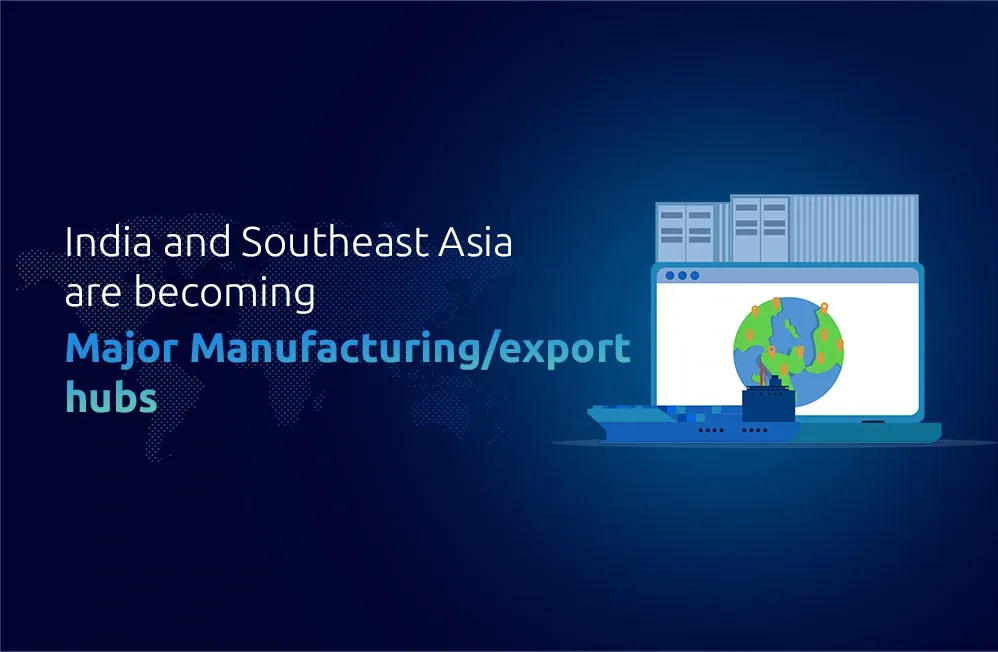
India & Southeast Asia are important locations for manufacturing exports. Many companies worldwide are transforming their production to these locations because costs are lower, there are plenty of workers, & infrastructure is improving. Countries like India, Vietnam, Thailand, & Indonesia are making more investments for businesses to seek easy, cost-effective places to produce goods.
This is also happening because companies want to minimize risk. Depending on one country, they are dividing production across different locations. This helps them avoid delays made from global issues like supply chain issues or trade problems.
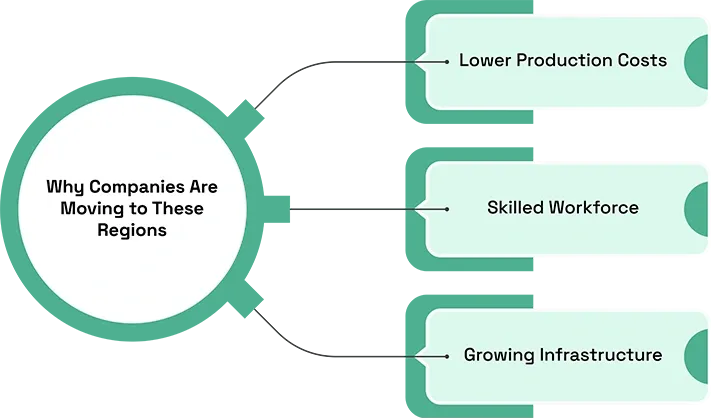
Why Companies Are Moving to These Regions
Lower Production Costs
One of the biggest reasons is cost. Labor & production costs in India & Southeast Asia are lower compared to other countries like the United States & many parts of Europe. This helps companies save money while producing goods.
Skilled Workforce
These regions have a huge number of skilled workers. Many young people are trained in industries like electronics, automotive, and IT. This makes it easier for companies to find the talent they need.
Growing Infrastructure
Governments are investing mainly in infrastructure. This includes better roads, ports, airports, & industrial zones. Good infrastructure helps goods move quickly from factories to global markets.
Key Countries Leading the Growth
India
India is becoming a main player in manufacturing. The government is promoting programs like “Make in India” to attract foreign investment. Industries such as electronics & automotive are growing rapidly.
Vietnam
Vietnam is known for electronics manufacturing. Many big companies have set up factories here because of its low costs & strong trade agreements.
Thailand
Thailand is strong in automotive manufacturing. It is called the “Detroit of Asia” because of its large car production industry.
Indonesia
Indonesia is growing in sectors like electronics & consumer goods. Its large population also creates strong domestic demand.
Role of Global Supply Chains
Shift Away from Single-Country Dependence
Many companies are trying to minimize their dependence on one country for manufacturing. This is often called the “China Plus One” strategy. It means companies are adding new production locations in India & Southeast Asia, also to minimize risk.
Faster & Safer Logistics
Better logistics networks are helping businesses move goods faster & more safely. Ports & transportation services are improving, which supports export growth easily.

Government Support & Policies
Incentives for Businesses
Governments in these regions offer tax benefits, subsidies, & easy regulations to attract foreign companies. This makes it easier to set up factories & start operations.
Trade Agreements
Many countries in Southeast Asia are part of free trade agreements. These agreements minimize taxes on exports, making products more usable in global markets.
Key Industries Driving Growth
India & Southeast Asia are seeing strong growth across many key industries, especially IT, medical equipment, aviation, & the automobile sector. The IT industry plays a major role, with countries like India becoming the top country in software development, data services, & digital solutions. This growth also supports manufacturing through automation, cloud systems, & smart technologies. The medical equipment sector is growing quickly due to the developing global demand for healthcare products such as diagnostic devices, surgical tools, & hospital equipment. Many companies are setting up production units in these regions to supply affordable & high-quality medical products worldwide. The aviation sector is also growing, driven by increasing air travel, aircraft management services, & the need for spare parts & components.
Benefits for Global Trade
Balanced Supply Chains
Balanced supply chains mean that companies do not depend on just one country or one factory to produce their goods. But, they divide their manufacturing across different locations like India & Southeast Asia. This approach helps minimize risk. if one country faces problems such as political issues, natural disasters, or trade restrictions, production in other countries can continue without any issue.
Faster Production
Faster production is another main useful benefit of manufacturing growth in India & Southeast Asia. Governments in these regions are investing in better infrastructure such as highways, ports, airports, & industrial parks. These improvements make it easier to transport raw materials to factories & finished goods to global markets.
Cost Efficiency
Cost efficiency is one of the main reasons why companies choose India & Southeast Asia for manufacturing. Labor costs in these regions are lower compared to other developed countries. This allows businesses to minimize their overall production expenses and achieve effective cost savings.
Challenges to Overcome
Infrastructure Gaps
When infrastructure is enhanced, some areas still need development. Better transport & logistics systems are needed.
Regulatory Differences
Each country has its own rules & regulations. Companies must understand & follow these to avoid delays.
Skilled Labor Shortage
Although there is a large workforce, such advanced skills are still limited. Training & education are needed to fill these gaps.
Conclusion
India & Southeast Asia are growing as the main manufacturing & export hubs. Lower costs, skilled workers, & strong government support are helping this growth. As global supply chains change, these regions are becoming more important for production & trade.
Many companies are selecting these regions because they give better value & easy operations. Businesses set up factories more easily, find workers quickly, & move goods faster due to improving roads, ports, & logistics systems. This helps companies meet global demand without any delays because delays cause cost.
Another important reason is risk management. Companies do not want to depend on only one country for production. By working in India & Southeast Asia, they can keep their supply chains stable even during international issues.
Did you know?
While long-time industrial leaders like China, Japan, Germany, and the U.S. have everything it takes to emerge at the forefront of advanced manufacturing, Southeast Asia has emerged as one of the fastest-developing regions.
FAQ
1. Why are India and Southeast Asia becoming manufacturing hubs?
India and Southeast Asia are growing as manufacturing hubs because of lower costs, skilled workers, and strong government support. Companies can produce goods more easily and at a lower price in these regions.
2. Which countries in Southeast Asia are leading in manufacturing?
Countries like Vietnam, Thailand, and Indonesia are leading in manufacturing. They attract global companies due to good infrastructure, trade agreements, and a growing workforce.
3. What industries are growing in these regions?
Key industries include electronics, automobiles, IT, and medical equipment. These sectors are expanding quickly due to high global demand.
4. How do these regions help global supply chains?
They help by reducing dependence on one country. Companies can produce goods in multiple locations, which lowers risk and avoids delays during global disruptions.
5. What are the benefits for businesses?
Businesses benefit from lower production costs, faster operations, and better access to global markets. This helps them grow, expand, and stay competitive.