Overview
The aerospace industry is going through various stages, changed by geopolitical competition, changes in partnerships, and quickly developing trade regulations. In a multipolar world where economic and technological power is distributed across multiple regions, export approval has become more difficult than ever for the supply chain. Aerospace products frequently include dual-use technologies, sensitive components, and advanced software that require strong tracking throughout international trade terms. Organizations involved in manufacturing, maintenance, and supply must now align regulatory approval with working efficiency. From managing HS code categorizations to the HTS Harmonized Tariff Schedule and Incoterms, aerospace exporters must confirm every trade meets global legal standards while maintaining fast-improving competitiveness.
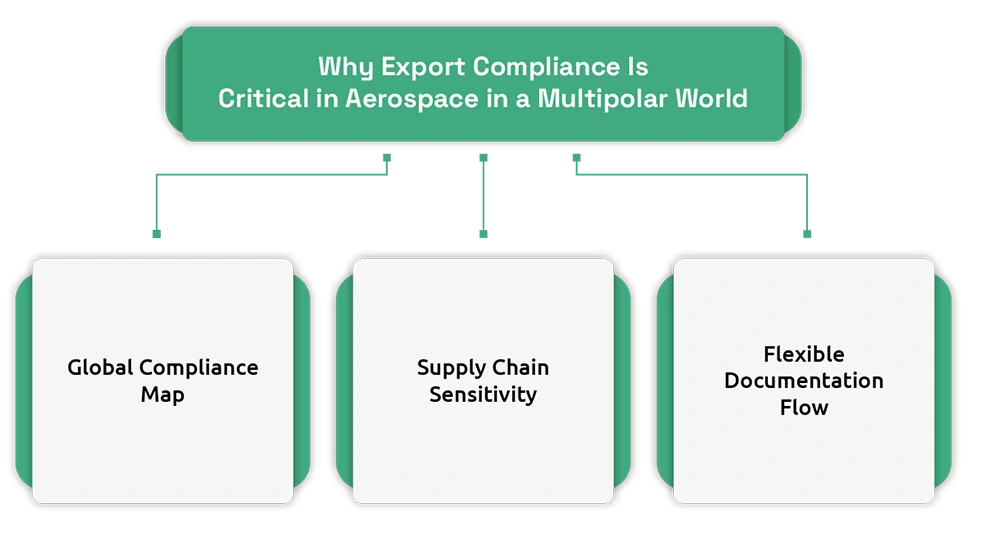
Why Export Compliance Is Critical in Aerospace in a Multipolar World
Increasing Regulatory Complexity
Aerospace exports are closely tracked because aircraft parts, avionics, and propulsion technologies. Governments globally are improving controls, making approval necessary for avoiding penalties, shipment delays, or trust damage in the supply chain. Advantageous programs such as the Generalized System of Preferences (GSP) also change tariff benefits, requiring correct documentation and eligibility checking to get customs clearance.
Supply Chain Sensitivity
Modern aerospace supply chains are deeply interconnected to the supply chain. A single aircraft component may cross borders many times before final production. Without strong supply chain optimization and inventory and order management systems, exporters risk approval gaps that can stop operations. Businesses must also clearly define responsibilities, such as exporter of record services and importer of record services. Questions like can a freight forwarder be an exporter of record or can a customs broker handle both import and export documentation are increasingly common as organizations look for flexible working methods while maintaining agreement.
The Key Regulatory Bodies Changing the Future of Aerospace Export Compliance
Global Mistake and Trade Controls
Regulatory authorities globally are improving export tracking systems to address national security and technology protection problems. Aerospace companies must follow licensing requirements, sanctions screening, and categorization rules that change across markets. Accurate product categorizations using HS code standards confirm proper tariff calculation and stop shipment holds. Miscategorizations can result in heavy fines or revoked export advantage, making compliance expertise a major necessity rather than back-office work.
Documentation and Trade Transparency
Authorities are demanding greater transparency across International freight services and cross-border logistics operations. Exporters must have tracking from origin to destination, such as verification of end users during shipments. Also, customs brokers play a vital role in working with regulatory approval, checking trade data, and confirming customs clearance processes.
Technology Tackles Aerospace Export Compliance in a Multipolar World
Automation and Compliance Software
Digital transformation is changing export compliance management. The best trade compliance software for import export rules now combines regulatory databases, automated screening tools, and categorization support into combined platforms. These solutions help companies manage licensing requirements, sanctions checks, and tariff updates in real time.
Data-Driven Decision Making
Modern AI systems allow organizations to track trade risks proactively for logistics, inventory, order management, and approval systems. Businesses gain visibility across global operations. Technology also simplifies difficult Incoterms management and documentation requirements, confirming each customer understands responsibilities related to logistics, risk changes, and regulatory agreements.

How One Union Solutions Help You as a Customs Broker
One Union Solutions provides end-to-end support for industries working under strong regulatory environments like aerospace. Their expertise covers exporter of record services, importer of record service solutions, and International freight services that work with global approval requirements. Through systematic supply chain optimization strategies, we allow organizations to reduce delays while maintaining compliance confidence. Their services help businesses to guide HS Code categorization challenges, manage DAP and DAPs delivery terms, and confirm shipments ship smoothly across borders.
Conclusion
The future of aerospace export compliance will be defined by difficulty and technology usage. As global power structures develop, exporters must adapt to stronger regulations, trade policies, and heightened security expectations. Success in this multipolar environment depends on combining regulatory knowledge with digital tools, effective logistics planning, and dependable approval partners in trade. Organizations that invest in systematic approval, correct trade documentation, and technology-allowed systems will not only avoid risks but also gain a competitive advantage in the global aerospace market.
DID YOU KNOW?
The Global South is a growing component of trade, projected to reach a CAGR of 4.4% over the next five years. By 2033, annual Global South trade is projected to reach $14 trillion.
FAQs:
1. Why is export compliance important in the aerospace industry?
Export compliance is necessary because aerospace products often include dual-use technologies and sensitive components that require government authorization to reduce security risks and legal penalties.
2. What are dual-use items in aerospace exports?
Dual-use goods are technologies or components that can be used for both civilian and military purposes, making them subject to strict export regulations and licensing requirements.
3. What role do HS codes play in aerospace export compliance?
HS codes help classify products correctly for tariff calculation, customs clearance, and regulatory approvals, reducing shipment delays and approval risks.
4. Can a freight forwarder act as an exporter of record?
In some cases, a freight forwarder can act as an exporter of record depending on legal responsibility agreements and country-specific trade regulations.
5. How does technology improve aerospace export compliance?
Automation and AI-based approval software help companies manage sanctions screening, licensing checks, documentation, and trade risk tracking in real time.