
Overview
In global trade, many importers suppose that once customs clearance is completed, the shipment will be delivered on time. Also, a shipment can be officially cleared yet remain stuck at the port, airport, or bonded warehouse. This situation frequently stops inventory and order management, creates delivery uncertainty, and increases storage costs. Understanding why this happens is necessary for businesses involved in international shipping and cross-border work.
Package Cleared at Customs but Still Not Shipped
When a package is marked “cleared,” it usually means duties and taxes have been determined based on the declared HS code or HTS Harmonized Tariff Schedule, and documentation has been reviewed. Also, clearance does not always mean release. Customs officials, port operators, and carriers work as separate organizations. Even after customs approval, shipments may still be awaiting physical release due to work, approval, or payment-related issues. This disconnect is common in international freight services, mainly for high-value or regulated goods.

Five Reasons Your Shipment Is Stuck in Customs After Clearing
1. Pending Port or Terminal Charges
Even after clearance, unpaid port handling, demurrage, or terminal fees can prevent cargo release. This is independent of customs duties and is often overlooked during shipment planning under Incoterms such as DAP or DAPs.
2. Documentation Holds Beyond Customs
Although customs may approve documents, shipping lines or ground handlers can place separate holds. Minor mismatches in the commercial invoice, packing list, or delivery instructions can delay release despite clearance.
3. Carrier or Airline Release Delays
Shipping lines must issue a delivery order before cargo exits the terminal. If the carrier has not received confirmation from the exporter of record services provider or the freight partner, shipments remain inactive.
4. Importer of Record Approval Checks
Even after clearance, the Importer of Record Service may be related to internal audits or post-clearance approval reviews. This is common for IT, medical devices, and automotive equipment.
5. Warehouse or Bonded Storage Constraints
Minimum warehouse storage, congestion, or labor shortages can delay cargo movement. These working issues frequently affect international shipping terms where responsibilities are broken across multiple clients.
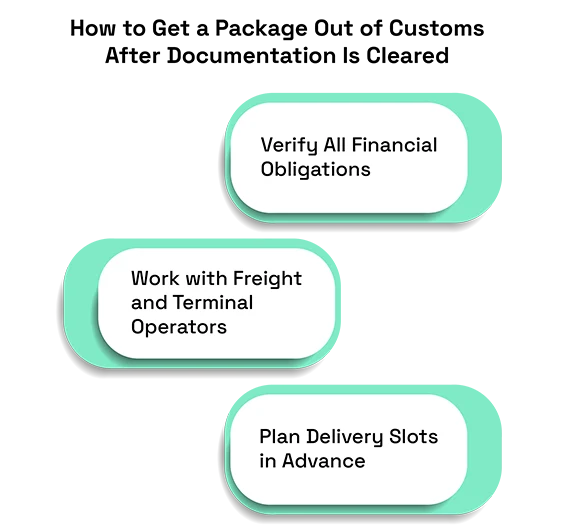
How to Get a Package Out of Customs After Documentation Is Cleared
Verify All Financial Obligations
Confirm that all port charges, carrier fees, and storage costs are settled. Clearance alone does not cover these expenses, especially in difficult supply chain optimization methods.
Work with Freight and Terminal Operators
Stay in constant contact with your freight partner to confirm that carrier release orders are issued quickly. This step is vital in urgent logistics work.
Recheck Classification and Declarations
Even post-clearance, officials may reassess declared values or classifications combined with the HS code. Proactive verification stops unexpected release holds.
Plan Delivery Slots in Advance
In crowded ports, pre-booking delivery windows helps avoid delays. This is mainly useful when using premium delivery service options for urgent cargo.
How to Resolve Packages Stuck in Customs with One Union Solutions
We simplify post-clearance challenges by managing both regulatory and working parts of global trade. Their integrated approach combines customs clearance, importer of record service, and exporter of record services under one system. By using documentation, carrier work, and terminal follow-ups, One Union Solutions confirms shipments move smoothly after clearance. Their expertise in international freight services reduces the risk of unnecessary holds, while their proactive approval method supports smoother cross-border shipments without disrupting business continuity.
Conclusion
A shipment being cleared but not released is a common yet costly challenge in global trade. Clearance is only one step in a multi-layered process requiring carriers, terminals, and compliance customers. Without proper coordination, delays can impact delivery timelines and working efficiency. Understanding post-clearance risks and working with experienced partners, businesses can reduce disruptions, improve inventory and order management, and maintain predictable global supply flows of shipments. Strategic planning and expert support remain the key to confirming that “cleared” truly means “released.”
DID YOU KNOW?
They stated that the industry, which accounts for approximately 20 percent of the country’s Gross Domestic Product (GDP) and generates 60 percent of the revenue for the Nigerian Customs and Excise Department.
FAQs:
1. What does “customs cleared but not released” mean?
It means customs authorities have approved the shipment documentation and assessed duties, but the cargo has not yet been physically released by the carrier, port, or warehouse.
2. Can a shipment be delayed even after customs clearance?
Yes. Delays can occur due to unpaid terminal charges, carrier release issues, documentation mismatches, or warehouse congestion after clearance.
3. Who is responsible for releasing cargo after customs clearance?
While customs grants clearance, the final release depends on shipping lines, airlines, terminal operators, and freight partners completing their procedures.
4. How long can cargo stay stuck after being cleared?
There is no fixed timeframe. Delays can range from a few hours to several days, depending on port congestion, compliance checks, and payment confirmations.
5. How can businesses prevent post-clearance shipment delays?
Planning, accurate documentation, timely payment of all charges, and working with experienced logistics and importer of record service providers help reduce delays.