Rising Trade Costs Creating Pressure on Global Healthcare Supply Chains
The healthcare sector worldwide is having a time because trade policies and tariff rules keep changing. These changes affect how surgical tools cost and changing trade policies and tariff regulations are making it hard. Hospitals and medical distributors are witnessing rising procurement expenses due to higher import duties on medical-grade steel, precision tools, and essential healthcare equipment. These added costs are not only affecting manufacturers and suppliers but are also placing financial pressure on healthcare institutions that rely on imported surgical products for daily operations. As prices keep changing a lot, hospitals and clinics have to rethink how much they spend, where they buy things from and how they plan to buy.
At the time trade disruptions and delays in transportation are causing uncertainty in medical supply chains. Delayed shipments of surgical instruments can directly impact hospital inventory availability and procedure scheduling, especially for critical surgeries and specialized treatments. Medical equipment companies that import and export things around the world are trying to make their supply chains better. They want to manage their inventory and orders in a way. In today’s tradeworld getting steady access to surgical tools is really important. It helps keep things running smoothly and ensures patients get the care possible.
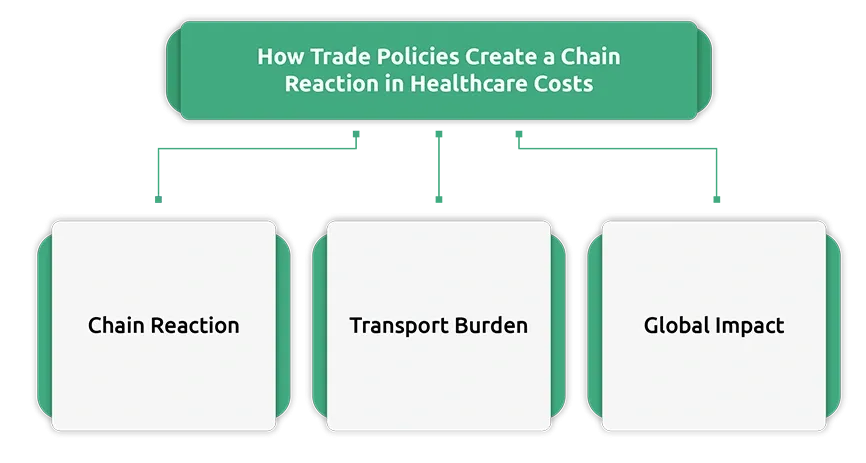
How Trade Policies Create a Chain Reaction in Healthcare Costs
Changes in trade policies often affect the healthcare supply chain. When governments add tariffs or change import rules on instruments and medical equipment manufacturers see their costs go up right away. This happens because they have to pay more to import things and make their products. The medical supply chain is facing problems because of increased expenses. These expenses are affecting the money that distributors and healthcare and precision medical devices. This is especially true for hospitals that need to import tools for surgery and other medical devices. Hospitals rely a lot on these imported tools and devices. On top of that it now costs more to transport these things. There are more customs procedures to go through. Sometimes it even takes longer to get these devices.
When suppliers try to deal with money problems the final cost of instruments goes up for healthcare facilities and end users. This shows how changes in trade rules can affect how much things cost, how stable the supply chain is and how affordable healthcare is around the world. Surgical instruments are getting more expensive. This is a big issue, for healthcare facilities and the businesses who use surgical instruments.
Cross-Industry Supply Chain Challenges Shaping Medical Equipment Trade
The cost of instruments and when we can get them is getting affected by big problems in the supply chain that are happening all around the world. These problems are not just affecting the field they are also affecting areas like multiple industries including medical, IT, aviation, and automotive sectors. The semiconductor shortages, the freight bottlenecks and the raw material dependency are creating a lot of disruptions. Many medical device manufacturers rely on globally sourced electronic components, specialized metals, and precision-engineered materials that are also used in automotive systems, aviation equipment, and advanced IT infrastructure. Businesses are getting really worried about sourcing risks.
These international sourcing risks are going up because of changing trade policies. So companies are trying to make their supply chains better. They want to manage their inventory and orders in a way. They are also working on their procurement planning to make sure everything runs smoothly. This way they can keep their operations going without any problems. International sourcing risks are a deal and companies do not want them to get in the way.
Companies that do import and export work are also trying to make customs clearance come up with good trade compliance plans and have logistics networks that can adapt easily. This helps to reduce delays and manage costs that can change suddenly in industries, like these import and export companies.
Rising Procurement Pressure on Healthcare Institutions
Hospitals and surgical centers and healthcare procurement teams are having a tough time. The reason is that trade policy changes are happening and this is affecting the cost and availability of instruments. The cost of importing is going up. The cost of moving supplies from one place to another keeps changing. This is making it really tough for healthcare providers to keep their spending under control while still making sure they have all the medical tools they need. Medical tools like these are very important for healthcare providers and doctors to do their work properly.
At the time procurement teams must balance cost control with making sure suppliers are reliable and provide good quality and having enough stock. This growing problem is making healthcare organizations want to work closely with suppliers, get better at predicting what they need and find new ways to get what they need so they can keep working well even when global trade is uncertain.

Conclusion
Businesses that deal with surgical instrument distribution have to think about making their medical supply chains stronger. They need to do this because trade policies are always changing. These businesses should look for ways to get the things they need from around the world. Companies that have suppliers plan their inventory well and know what is happening with their products as they move around the world will be able to handle changes in prices and problems with supplies. It is also very important for companies to work closely with companies, in the import and export business. This helps to get products through customs, keeps the supply of products steady and makes sure that products are always available. Companies that do this will have supply chains that’re strong and can handle problems. Supply chains are very important. Companies need to take care of them.
In the healthcare business things are changing fast. Companies that are able to adjust their supply chain models and work with companies around the world for a long time will be better at competing with others. Healthcare systems and medical providers will be able to do their jobs because of the support from these companies.
DID YOU KNOW
“In 2025, the U.S. implemented a 10% universal baseline tariff on most imported medical devices, alongside 25% tariffs on specific products from China, driving up the cost of surgical instruments.”
FAQs
1. How are tariffs affecting medical devices?
U.S. medical device tariffs are driving up costs for hospitals, healthcare providers, and patients, according to the latest IQVIA MedTech white paper.
2. What is the ad valorem trade policy?
An ad valorem tariff is calculated as a percentage of an imported good’s declared value — not necessarily the sale price. For example, a 25% tariff on a second-hand designer bag valued at $5,000 would add $1,250 in tax.
3 .Are tariffs designed to raise the price of imported goods?
Tariffs are trade barriers that raise prices, reduce available quantities of goods and services for US businesses and consumers, and create an economic burden on foreign exporters.
4. How will US tariffs impact India?
As of early 2026, the US-India trade relationship is navigating significant volatility following U.S. tariff actions aimed at narrowing the trade deficit.
5.What are the 4 types of tariffs?
The four principal types of tariffs used in international trade are ad valorem, specific, compound, and tariff-rate quotas.