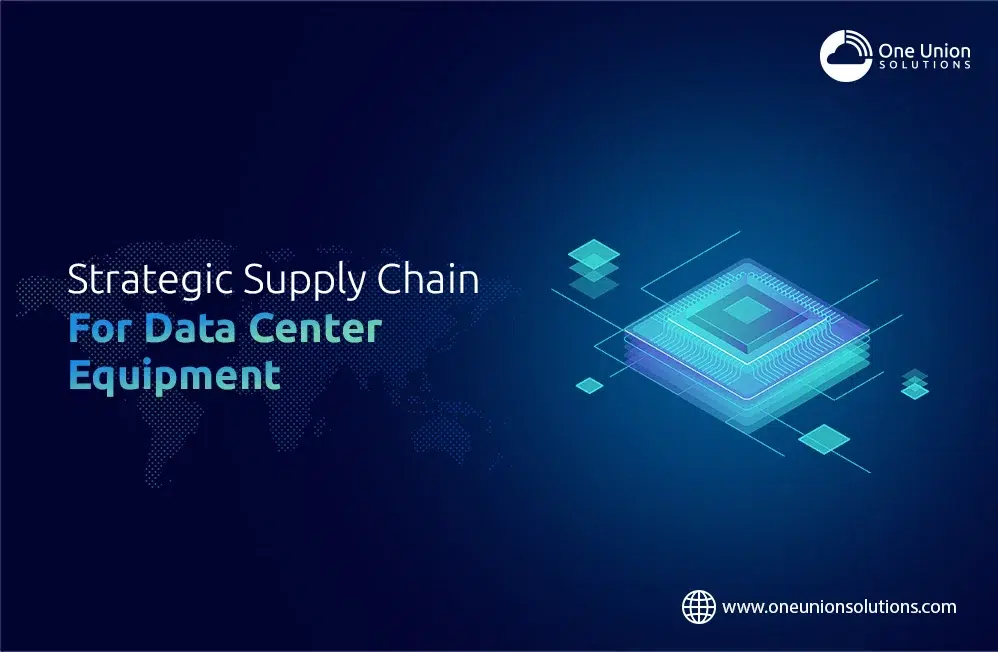
Long-Term Planning for Data Center Equipment Supply Chains
Today, the digital market demonstrates exceptional expansion as it shapes all devices, from domes to outer-space innovations. Businesses using digital technology now produce considerable amounts of data that demand improved storage methods with higher reliability. Large computers were the first iteration of data centers that bank institutions used specifically for data storage. These facilities have developed into essential economic hubs which serve almost all types of businesses.
Data centers today operate beyond basic storage functions because they transformed into integrated data processing and distribution systems that reduce human administration requirements. The industrial revolution leads to better technological developments, reducing data retrieval times and enhancing storage efficiency. The data center industry received investments beyond $30 billion during the second quarter of 2020 because most infrastructures transitioned to cloud capabilities.
The significance of data centers today lies in power and storage capacity and the speed of production and deployment. Speed in data center deployment sets the foundation for businesses to maintain their marketplace superiority because of our technologically advanced period. Datacenter supply chain management remains essential because it focuses on supply chain optimization to deliver needed speed throughout production and deployment activities. The success of data center infrastructure supply chain management depends on full cooperation among server providers with network hardware suppliers, electrical component suppliers, and HVAC equipment providers to guarantee timely deliveries and operational excellence.
Beyond providing only short-term planning for space deployment, a long-term strategy that successfully deals with complicated supply chain issues and minimizes repeat operations in the design is needed undefined
Key Strategies for an Efficient Data Center Equipment Supply Chain
Collaborative Planning and Forecasting: Open Lines of communication among suppliers and data center operators will facilitate the exact demand anticipation, and planning and minimize the unavailability of the needed part.
Standardization of Components: When using the pre-configured elements for the data centers which eliminates the need for customized solutions, the standardized parts could be adopted, so the procurement will be simplified, lower in costs, and faster in deployment.
Strategic Component Stocking: Developing a detailed inventory and strategically deploying essential parts will help to lessen the impact and guarantee that operations will not be interrupted even when supply chain disruption happens.
Diversification of Supply Sources: Keeping a diverse set of suppliers of key components can help prevent disruptions to the supply chain by acting as backups if there are unexpected spikes in demand or by conducting troubleshooting when faced with disasters provoked by international conflicts.
Integration of Advanced Technologies: Connecting IoT and AI to the supply chain can reduce resource wastage, set a predictive match, or increase transportation capacity.
The digital landscape undergoes constant change; therefore, data centers are becoming the main facilities that help the development of new technologies and the progress of the economy. Areas like the strategic optimization of supply chains for high-speed data center deployment will remain critical for companies’ capacity to quickly and successfully adapt to the fast-paced digitization of our era.
Owner Furnished Contractor Installed
In the OFCI model, data center owners purchase equipment such as servers, networking hardware, and cooling systems, while contractors handle installation. Coordinating supplier lead times, equipment specifications, and delivery schedules helps ensure that hardware reaches the site when needed.
Modular Construction
This concept is relatively new in data center construction but has proven to be highly innovative and efficient. It facilitates the prepositioning of all major components of the data center well in advance of the arrival of HVAC systems and critical electrical equipment. The approach organizes the entire building into functional subsets, commonly referred to as modules. These modules are designed to support both current and future deployments. Additionally, this method significantly reduces onsite overhead costs.
From Hyperscale to wholesale
Data centers source servers, storage systems, and networking equipment through OEM and ODM suppliers. Choosing suppliers based on equipment specifications, customization needs, component availability, and lead times helps maintain a consistent supply of hardware for data center deployment.
Adopting an Efficient Data Center Equipment Supply Chain Approach
We don’t see any signs of deceleration in data center industry. Even in the time of pandemic along side the ecommerce this was the industry which grew rapidly. There is an intense increase in demands for machine learning and AI based solutions which is leading towards more efficient ways of data handling. That’s why data centers are in high demands these days and they are considered vital part of every industry.
Getting a new data center built and running timely and cost effectively is the only way you can keep up with the accelerating digital development. As always, this business also become the crown of the one who can compete on time.
At One Union Solutions we strive to deliver the best solution for your data center development so that you can get your data center up and running. From new equipment sourcing to RFPs we can handle all your supply chain problems.
Frequently Asked Questions
What Factors Should Businesses Consider When Selecting Data Center Equipment Suppliers?
Businesses should evaluate equipment specifications, product compatibility, supplier production capacity, component availability, warranty terms, and delivery lead times before selecting a supplier.
How Do Equipment Lead Times Affect Data Center Deployment?
Long lead times for servers, networking hardware, power systems, and cooling equipment can delay installation and project completion. Early procurement planning helps businesses align equipment deliveries with deployment schedules.
Why Is Equipment Compatibility Important in Data Center Procurement?
Equipment compatibility ensures that servers, storage systems, networking devices, and power infrastructure work together as intended. Checking technical specifications before purchasing helps avoid integration issues and replacement costs.
What Documents Are Required for International Data Center Equipment Shipments?
Common documents include a commercial invoice, packing list, bill of lading or air waybill, and applicable permits or product compliance documents. Requirements depend on the equipment and destination country.
How Can Businesses Manage Supply Chain Risks When Sourcing Data Center Equipment Internationally?
Businesses can assess supplier capacity, identify alternative sourcing options, monitor shipment schedules, and review destination-country import requirements before dispatch. These steps help reduce the impact of supply interruptions and shipping delays.