Executive Summary
Due to the region’s complex and varied regulatory requirements, companies that wanted to bring satellite navigation systems into the region faced significant challenges. These problems could have slowed down or stopped important projects from happening.
The Challenge
When trying to bring their systems into Southeast Asia, the satellite navigation industry ran into a lot of problems. The main problem was the wide range of regulations; each country had its own rules and ways of certifying things. This made things more complicated which slowed down the approval process, cost more, and caused big delays that put project deadlines and operational efficiency at risk.

The Solution
One Union Solutions came up with a plan to deal with the regulatory problems in Southeast Asia that would make sure the process of importing satellite navigation systems went smoothly and on time.
In-depth research on regulations:
One Union Solutions did a lot of research on the rules that each Southeast Asian country has for satellite navigation systems.
We made an in-depth database of the certifications and standards that each country needed, which made it easy to follow the rules.
Custom Compliance Strategy:
One Union Solutions made a compliance strategy that was unique to each country based on the research.
The goal was to make sure that the satellite navigation systems met the strictest rules, which made their acceptance easier in many places.
Organized Coordination:
To handle the certification process, One Union Solutions set up a central hub for coordination.
Preparing and Submitting Documents:
The team made sure that all the necessary paperwork met the specific needs of each regulatory body.
They handled the submission process, monitoring progress and addressing any issues that arose promptly.
Real-time tracking and updates:
One Union Solutions set up a system for real-time tracking to keep an eye on the status of approvals and certifications.
Companies got updates regularly, which helped them better plan their operations and logistics.
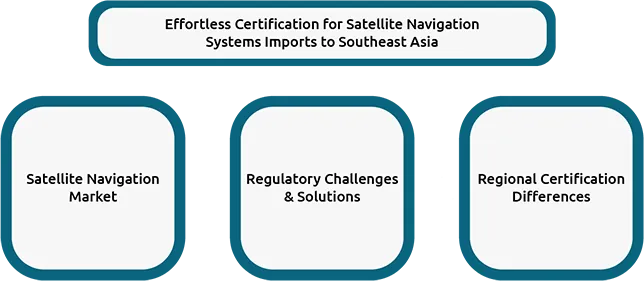
Importance of Regulatory Planning for Satellite Navigation Imports
Effective regulatory planning is important when managing the import of satellite navigation systems across Southeast Asia. As companies deal with multiple regulatory environments, having a clear understanding of certification requirements, technical standards, and documentation processes becomes critical. A structured compliance approach not only reduces delays and unexpected costs but also supports faster approvals and smoother customs clearance. By integrating regulatory planning into the overall import strategy, businesses can improve efficiency, maintain project timelines, and ensure consistent operations across different Southeast Asian markets.
Results
With this all-around plan, One Union Solutions cut down on the time and trouble needed to bring satellite navigation systems into Southeast Asia by a large amount. Among the results were:
- Faster Certification Process: The streamlined method cut approval times by up to fifty percent, which helped businesses get their products on the market more quickly.
- Savings on costs: Companies were able to make more money overall because they didn’t have to deal with long delays.
- Improved Operational Efficiency: Companies were able to keep their project schedules and operational efficiency up by importing goods on time, which made customers happier.
- Regulatory Compliance: One Union Solutions makes sure that all local rules are followed, which lowers the risk of legal problems and product rejections.
By reducing regulatory uncertainty and approval timelines, One Union Solutions enabled companies to expand faster and operate with greater confidence across Southeast Asia.
Did You Know?
Satellite navigation and communication equipment often require country-specific type approval and technical certification before they can be legally imported or operated, and these requirements vary significantly across Southeast Asian nations due to different telecommunications regulations
FAQs
1. What are satellite navigation systems used for in Southeast Asia?
Satellite navigation systems are widely used across Southeast Asia in industries such as aviation, transportation, automotive, logistics, infrastructure development, and emergency response. They support accurate positioning, navigation, and timing for critical operations.
2. Why is importing satellite navigation systems into Southeast Asia challenging?
Each Southeast Asian country has its own regulatory framework, certification requirements, and approval processes. Managing different standards, documentation, and timelines across multiple countries can cause delays, higher costs, and compliance risks.
3. How does One Union Solutions simplify the import process?
One Union Solutions manages regulatory research, country-specific compliance strategies, documentation preparation, and coordination with local authorities. This centralized approach helps reduce approval timelines and ensures smooth imports.
4. Does One Union Solutions handle multi-country imports at the same time?
Yes. One Union Solutions specializes in managing imports across multiple Southeast Asian countries simultaneously by using a centralized coordination model and region-specific compliance planning.
5. What types of approvals and certifications are managed?
One Union Solutions handles country-specific certifications, technical compliance checks, regulatory documentation, and authority submissions required for satellite navigation systems.