In today’s developing international economy, global trade depends on a smooth exchange of goods & services across borders. Businesses engaged in the import & export business face many challenges, from agreements with global export regulations to the challenges of customs clearance & transportation documentation. This is where freight forwarders play a major role in shipping to a country. They work as a combination that confirms the smooth movement of goods while having efficiency, clarity, & affordability in global supply chain services.
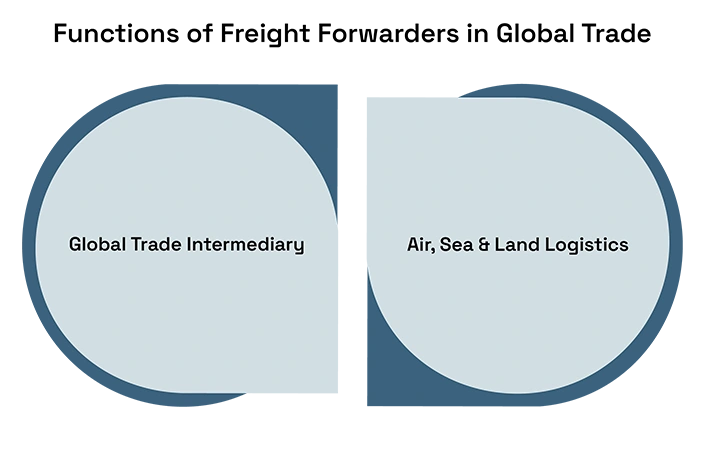
Functions of Freight Forwarders in Global Trade
Organizations that focus on working & managing the shipment of goods between countries. Working as intermediaries between importers, exporters, & carriers, they organize logistics through air, sea, or land & covers necessary documentation such as the HS Code & HTS Harmonized Tariff Schedule with their categorizations.
Their responsibilities extend beyond transportation; they provide Customs clearance support, manage global export regulations, & provide full import-export support. Many freight forwarders also provide Importer of Record services, Exporter of Record services, confirming that businesses deal with all legal & customs requirements during cross-border shipments. Knowledge about Incoterms & conditions, such as DAP or DDP shipping, helps importers & exporters define clear guidelines of delivery & cost responsibilities.
Improving Supply Chain Management with Freight Forwarding Services
Freight forwarding contributes mainly to enhancing their modern supply chain management. By combining Global supply chain services with digital tracking, route optimization, & customs officials, forwarders increase efficiency & clarity during transportation.
Through IOR services & complete import-export support, freight forwarders help global organizations manage import approval, tax issues, & import permits. Their knowledge of Incoterms & country regulations simplifies trade agreements, confirming on-time & secure deliveries. Businesses take advantage of minimizing risks, improving costs, & improving control over their global trade, making freight forwarders necessary for effective logistics plans
Challenges Faced By Freight Forwarders In Modern Trade
While freight forwarders play an important role in the global supply chain, they face many challenges that can disrupt operations.
Navigating Customs Delays & Regulatory Hurdles
One of the biggest problems is dealing with customs. Each country has its own regulations, & these can change quickly. For instance, changes in quarantine regulations can cause significant delays for shipments. These regulations can vary from state to state, creating additional layers of difficulty.
Technological Adaptation & Digital Lag
The digital transformation is here, but not every freight forwarder is on board yet. Many still depend on outdated systems or manual processes, which can slow them down. Some forwarders are unsure about adopting new tech like AI or blockchain because of the initial investment costs. However, those who have embraced these technologies are already seeing improvements in efficiency & cost savings.
Skill Shortage & Workforce Challenges
The freight forwarding industry is dealing with a shortage of skilled professionals, especially as operations become more digital. Today’s forwarders must manage logistics, compliance, & tech platforms all while experienced workers near retirement. Recruiting younger, tech-savvy talent is tough, & on-the-job learning remains useful. The challenge lies in balancing seasoned expertise with new skills to meet developing industry demands.

Conclusion
Freight forwarders play an important role in modern trade by making the movement of goods between countries simple & easy. They cover everything from transportation & documentation to customs clearance & compliance, helping businesses avoid delays & extra costs.
With their expertise in international regulations, logistics planning, & services such as IOR & Incoterms management, freight forwarders ensure shipments arrive safely & on time. They also help businesses minimize risks, manage costs, & cover supply chain efficiency.
Did you know?
High costs and inefficiencies have long held back India’s logistics sector. Estimates show that logistics costs have hovered around 7 to 8% of GDP, higher than in many competing economies.
FAQ
1. What is the role of freight forwarders in modern trade?
Freight forwarders manage the transportation of goods across international borders. They handle logistics planning, documentation, customs clearance, and coordination with carriers to ensure smooth and timely delivery of shipments.
2. How do freight forwarders help with customs clearance?
Freight forwarders prepare and submit required documents such as invoices, packing lists, and HS codes. They ensure compliance with import-export regulations, helping businesses avoid delays, penalties, and customs issues.
3. What services do freight forwarders provide in global trade?
They offer services like air and sea freight booking, warehousing, cargo tracking, insurance, documentation handling, and Importer of Record and Exporter of Record support for smooth international trade.
4. Why are freight forwarders important for businesses?
Freight forwarders reduce shipping risks, optimize costs, and improve efficiency. Their expertise in global logistics and regulations helps businesses focus on core operations while ensuring reliable delivery of goods.
5. How do freight forwarders improve supply chain efficiency?
They use digital tools for tracking, route optimization, and cost management. By managing logistics and compliance, they streamline operations, reduce delays, and enhance overall supply chain performance.