Introduction
The quick growth of the IT sector has changed how businesses work, but it has also created a serious environmental challenge: electronic waste. From outdated servers and networking devices to end-of-life laptops and data center hardware, discarded electronics are growing at a huge rate. Recycling & reverse logistics are now developing as important plans to manage IT equipment returns responsibly while following developing e-waste rules and regulations globally. As long-term viability becomes a core business priority, organizations are rethinking how technology devices move back through the supply chain.
How Recycling & Reverse Logistics Reduce E-Waste?
Extending the Lifecycle of IT Assets
Recycling and systematic return flows help extend the usable life of IT equipment. Through refurbishment, resale, or certified e-waste recycling, organizations can stop working hardware from ending up in dump sites. A well-designed reverse flow allows companies to recover value from returned assets while supporting a circular supply chain electronics model.
Role of Logistics and Warehousing
In effective supply chain management, warehousing plays a vital role in handling returned electronics safely. Specialized systems, including a secure bonded warehouse for electronics, allow proper sorting, testing, and temporary storage before reuse or recycling. When combined with freight logistics management, organizations can reduce transportation emissions and improve traceability across the return journey.
Approval and Environmental Benefits
By combining recycling into return processes, businesses can work with national and international environmental standards. This approach not only reduces environmental damage but also simplifies customs clearance for the cross-border shipment of used or refurbished IT equipment.

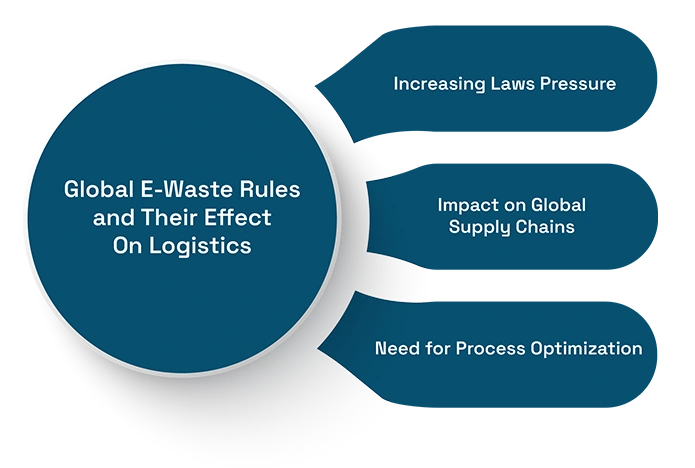
Global E-Waste Rules and Their Effect On Logistics
Increasing Laws Pressure
Authorities across the border are improving e-waste laws and regulations to control unwanted disposal and unlawful exports of electronic waste. These policies require device producers and suppliers to take complete responsibility for how devices are arranged, processed, and recycled after use in shipping.
Impact on Global Supply Chains
International regulations are changing international freight services related to returned electronics. Organizations must confirm clarity in documentation, environmentally complete recycling partners, and accountable importer of record service arrangements. Failure to follow can result in delays, fees, and trust damage.
Need for Process Optimization
As rules become more difficult, supply chain optimization is no longer optional. Businesses are investing in digital tracking, certified recycling partners, and combined logistics methods to confirm agreement while maintaining cost efficiency.
Future of IT Equipment Returns & Reverse Logistics?
Technology-Driven Returns Management
The future of IT equipment returns depends on automation and data-driven decision-making. Smart tracking systems, AI-related devices valuation, and predictive analytics will help organizations determine whether returned devices should be redeployed, refurbished, or sent for e-waste recycling.
Growth of Circular Business Methods
More organizations are changing from linear “use-and-dispose” methods to a circular system. Reverse logistics will support take-back programs, rent methods, and sustainable procurement plans, reinforcing the importance of circular supply chain electronics in long-term business planning.
Integration with Global Trade Operations
As IT devices are mostly shipped across the region for repair or recycling, effective work between international freight services, customs clearance processes, and an expert logistics service provider will define working success.
Challenges and Future Possibilities in E-Waste Reduction
Major Disadvantages
Managing IT equipment returns at growth shows issues such as data security risks, inconsistent regulations across countries, and high logistics costs. Not having exact freight logistics management and certified recycling methods, businesses may struggle to achieve agreement and efficiency.
Growing Opportunities
Despite these challenges, changes are expanding. Innovations in recycling technology, improved Importer of Record service methods, and advanced warehousing solutions are making sustainable returns more flexible. Organizations that invest early in systematic recycling and return plans gain both environmental and competitive advantages.
Conclusion
Recycling and reverse logistics are no longer border work; they are central to the future of IT asset management. As global e-waste rules and regulations tighten, businesses must use smarter return systems that balance agreement, cost control, and sustainability. Using effective supply chain management, warehousing, dependable international freight services, and responsible e-waste recycling methods, organizations can reduce environmental impact while unlocking long-term value. The future of IT equipment returns belongs to organizations that treat sustainability as a major priority rather than a regulatory burden.
DID YOU KNOW?
According to the Global E-waste Monitor, more than 2 million metric tons of e-waste are generated every year, and this figure is likely to double in the coming decades.
FAQs:
What is reverse logistics in IT equipment management?
Reverse logistics refers to the process of moving used, outdated, or end-of-life IT equipment back through the supply chain for reuse, refurbishment, recycling, or safe disposal.
How does recycling help reduce electronic waste?
Recycling helps recover valuable materials from old electronics, prevents hazardous waste from reaching landfills, and supports a circular supply chain by extending product lifecycles.
What role do global e-waste regulations play in logistics?
Global e-waste regulations enforce responsible disposal, recycling, and cross-border movement of electronic waste, directly affecting international freight, customs clearance, and compliance processes.
What challenges do businesses face in IT equipment returns?
Key challenges include data security risks, varying international regulations, high logistics costs, and the need for certified recycling and tracking systems.
Why is reverse logistics important for sustainable IT operations?
Reverse logistics enables organizations to meet environmental standards, reduce operational waste, recover asset value, and build long-term, sustainable, and compliant IT supply chains.