Introduction
India’s export logistics industry is changing in 2026 as part of increased freight demand and growing foreign trade. To handle shipments more easily, companies are using digital technology, online customs systems, and cargo tracking. Better freight planning and transportation networks are also helping exporters handle international shipping needs. This blog explores how digital logistics solutions, freight demand, and customs processes are shaping India’s export logistics in 2026.
India’s Growing Export Network and Logistics Development in 2026
India’s export logistics industry connect local producers with customers in global markets. In 2026, demand for Indian products like as electronics, technological goods, textiles, and machinery is creating new needs for global shipping. These products are shipped from factories to foreign locations with the help of ports, airports, highways, and railroads. Also, freight forwarders help exporters with delivery planning, customs documents, and shipment transfer. Businesses must handle shipping costs, select proper transport routes, and properly prepare documents when export activity increases in order to avoid issues during global shipments.
Digital Transformation in India’s Export Logistics
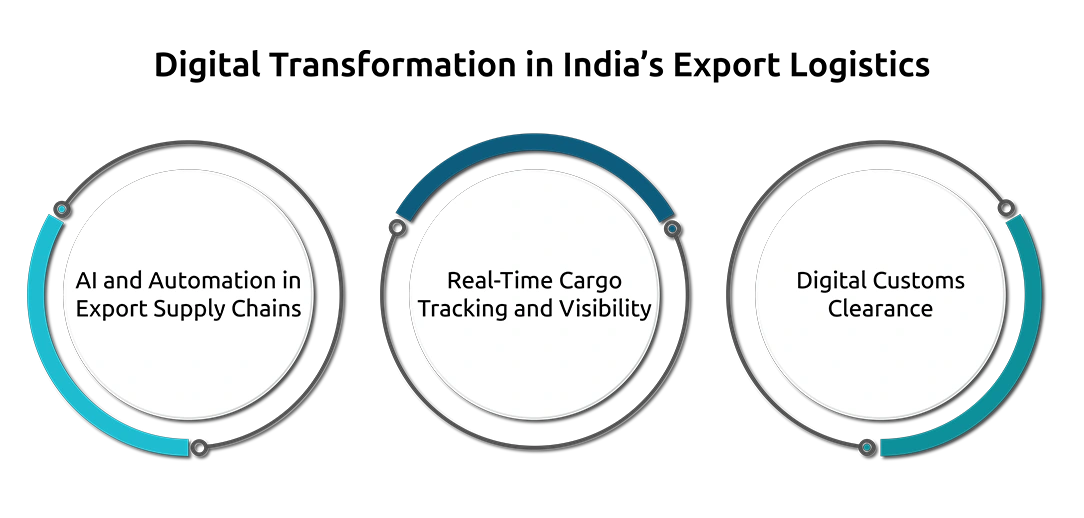
In 2026, digital tools will help Indian exporters with freight planning, handling documents, and shipping planning. AI, online customs processes, and cargo tracking are improving shipment tracking and improving export processes.
AI and Automation in Export Supply Chains
AI-based demand forecasting helps exporters plan orders and cargo movement. Automated shipment documentation reduces manual work and helps manage records more easily.
Real-Time Cargo Tracking and Visibility
Exporters can use real-time cargo tracking to follow cargo movement, notify customers of shipments, and identify possible delays in transit.
Digital Customs Clearance and Export Documentation
Electronic shipping documents and online customs clearance are supported by ICEGATE and digital customs processes. These tools make it simpler for freight forwarders, customs brokers, and exporters to handle export documents.
Growing Freight Demand Across India in 2026
In 2026, freight demand in India is growing with rising manufacturing activity and international orders. Indian engineering goods, electronics, and IT equipment are creating more need for export logistics and international shipping. The expansion of e-commerce exports is also increasing the movement of goods to global markets. As a result, companies require more air freight for important and high-value goods and ocean freight for larger cargo. The need for reliable international shipments is increasing as a result of this growth. Exporters are focusing on proper shipping routes, safe cargo handling, & timely delivery planning. Freight forwarders help companies with shipment documents, shipments, and customs efficiency. Improved freight planning also helps companies in controlling shipping costs & avoiding unwarranted delays while exporting.
How Digital Tools Help Exporters Manage Freight Costs and Delays
Digital tools make it simple to review and provide shipping details, which helps exporters handle freight costs and delays. Businesses may plan proper routes, check methods of travel, and check freight rates before delivery with the help of digital freight management systems. Also, cargo tracking helps in the early detection of possible delays, allowing exporters to change delivery times. Faster document transfer facilitates better interaction between customers, freight forwarders, and suppliers. By checking freight rates, customs charges, taxes, & other shipping costs before to the goods shipment, these tools also help companies in calculating landed costs. Exporters can handle delivery schedules, avoid unwanted costs, and inform customers of shipment status with improved shipping planning.
Major Export Logistics Trends Shaping India
India’s export logistics industry is changing with better transport networks and shipping methods. Exporters can better manage shipping costs and cargo movement due to these changes. Road, rail, air, and ocean freight are all used in multimodal transportation to deliver goods to international markets. It helps companies in selecting routes based to the cost, delivery time, and size of the shipment.
Air cargo transports high-value exports such as electronics, telecom equipment, & technology parts, which are usually used for quick company delivery. Better cargo handling and international connection at Jawaharlal Nehru Port and Mundra Port increase export shipping. Sustainable logistics focuses efficient routing, improved load planning, rail travel, and efficient warehouse services to reduce unwanted transit and support low-impact transportation.

What Exporters Should Prepare for India’s Logistics Growth
To effectively handle global shipments, exporters must carefully plan their processes. Based on the size, cost, & delivery time of the goods, they should select the correct freight route, such as air freight or ocean freight. Correct packing lists and commercial invoices are also required for customs clearance. Companies should check all landed costs, tariffs, taxes, shipping rules, & HS codes before to exporting. Also, exporters need check if their goods require any extra permits or clearance. When the regular transport route faces delays, planning different routes can be helpful. Tracking cargo movement, providing shipment details, and handling export documents are all made simpler by digital tracking and document technologies. These steps help businesses avoid common shipping problems and handle international orders more easily.
Conclusion – The Future of India’s Export Logistics
India’s export logistics is becoming more digital and organized. Digital tools make it simpler for exporters to plan freight, handle documents, and track shipments. Demand for reliable transport & improved shipping planning is also growing as freight demand increases. Companies can better handle international shipments when they have good connection and shipment tracking. For export processes to run smoothly, correct documents & following to customs laws are still important. By using the correct freight method, checking shipping requirements, and working with logistics partners, exporters can handle international shipments more efficiently and reduce unwanted costs.
Did you know
As per the central government estimates, the total exports of goods and services during FY 2025-26 (April-March) are estimated at approximately US 825.26 billion, marking a nominal increase over us $825.26 billion recorded in the previous fiscal year.
FAQ
How are digital tools changing export logistics in India?
Digital tools allow exporters to plan freight movement, transmit documents, track goods, and verify shipping details. Also, they improve the export process and reduce manual work.
How can exporters reduce freight costs using digital logistics solutions?
Before exporting, exporters can track cargo, select proper routes, check shipping costs, & compare freight rates. This allows them to handle their shipping cost and keep away from unnecessary spending.
What challenges can affect India’s export logistics in 2026?
Changes in freight cost, port traffic, issues with customs documents, route delays, and changes to location rules can all have an affect on export shipments.
How can freight forwarders support India’s growing export demand?
Freight forwarders help companies with tracking goods, handling shipment travel between locations, managing air, sea, and land delivery, and processing customs processes.
What is the difference between freight forwarding and customs clearance?
While customs clearance is completing the required customs processes and submitting shipment details, freight forwarding involves planning cargo transportation. For international shipping, both may require planning.