Canada is a great market for businesses looking to import commercial products. To import successfully, you must understand the basic rules, needed documents, and customs procedures. This article shows the import process in simple terms and explains how One Union Solutions can help businesses in shipping goods into Canada smoothly and efficiently. Every stage, from preparing documents to customs clearance, is important for avoiding delays and extra charges. Businesses in Canada can simplify imports, stay compliant, and develop their business with the correct support and planning.

Important Steps for Bringing in Commercial Products
Identify Eligibility:
Make sure the goods you plan to import are permitted entry into Canada. Depending on their nature, some products might be subject to limitations, permits, or rules.
Before importing, check that your goods are allowed into Canada. Some products may have restrictions or need special permits, depending on what they are. Failing to meet these rules can lead to delays, fines, or shipment rejection at customs.
Business Number Registration:
Acquire a Canada Revenue Agency (CRA) Business Number (BN). The BN is a special identification number for your company that is necessary for tax and customs clearance.
Choose a Customs Broker:
It is recommended to use the services of a licensed customs broker, particularly for complicated shipments. A customs broker assists in navigating the intricacies of import documentation, guarantees regulatory compliance, and expedites the customs clearance procedure.
Ascertain Tariff Classification:
Ensure that your commodities are accurately classified in accordance with the Customs Tariff. The classification aids in the preparation of the necessary paperwork and establishes the applicable duty rates.
Item Valuation:
Ascertain the objects’ value for customs reasons. The customs value is used to determine taxes and duties. Usually, it covers the price of the goods, delivery, plus any royalties or license payments that may be necessary.
Get the documentation ready:
Compile and finish all relevant paperwork, such as the packing list, bill of lading or air waybill, commercial invoice, and any certificates or permits needed for certain commodities.
Submit Entry to CBSA:
Provide the Canada Border Services Agency with the necessary entry paperwork. The CBSA evaluates the duties and taxes due at this point, starting the customs clearance process.
Pay taxes and duties:
Give the CBSA the applicable taxes and duties. Your products may not be released right away if you don’t pay.
Customs Declaration:
all paperwork has been completed and duties and taxes have been paid, the CBSA will release your things to be delivered to their intended location.
Simplifying the Import Procedure
- The customs clearance process helps goods enter Canada legally and smoothly. Proper documents and accurate information help avoid delays. This makes shipping faster and more efficient.
- Global trade compliance is important for successful imports. Following import rules and regulations helps prevent penalties. It also keeps shipments moving without unnecessary problems.
- Freight forwarding helps manage international shipments more easily. It supports transportation, documentation, and delivery coordination. This helps businesses save time and improve shipping operations.
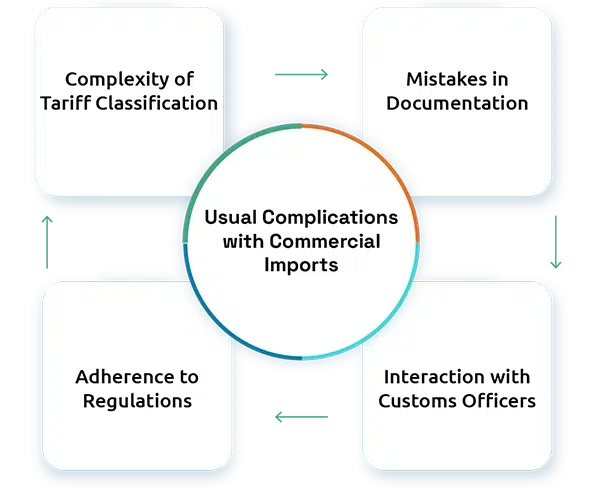
Usual Complications with Commercial Imports
Complexity of Tariff Classification:
Determining an item’s proper tariff classification can be difficult, particularly for companies that handle a large variety of goods. Classification errors may lead to inaccurate duty assessments and hold-ups in the customs clearance process.
Mistakes in Documentation:
An ongoing issue during the importation process is incomplete or erroneous documentation. Errors in the packing list, commercial invoice, or other necessary paperwork may result in extra inspection and delays at customs.
Adherence to Regulations:
Adhering to constantly evolving regulations might pose challenges. Companies need to take the initiative to learn about and abide by import limitations, licenses, and other legal requirements.
Interaction with Customs Officers:
Efficient interaction with customs officials is crucial for a seamless import procedure. If there is a lack of clarity or responsiveness while responding to the CBSA’s inquiries, delays may happen.
Prospects and Things to Think About
Digitalization and Automation:
Importing commercial goods into Canada is probably going to become more automated and digitalized in the future. Artificial intelligence (AI) and machine learning are two examples of technologies that can improve overall efficiency by streamlining procedures and lowering mistake rates.
Supply Chain Sustainability:
In supply chains, sustainability is becoming more and more important. It may be necessary for importers to take into account and exhibit ecologically friendly methods when handling and transporting their commercial goods.
Cooperating Resolutions:
Digital tools will help improve freight forwarding, simplify the customs clearance process, and support global trade compliance. This will reduce paperwork, improve shipment tracking, and make importing goods faster and easier.
Conclusion:
The process of importing commercial goods into Canada is dynamic and ever-changing, driven by changes in global patterns, technical developments, and legal frameworks. It takes a combination of precise information, following rules, and using effective solutions to successfully navigate this terrain.
With One Union Solutions, businesses can simplify international shipping and import operations. Our support helps improve shipment visibility, reduce delays, and make the customs clearance process easier. This helps companies move goods more efficiently and stay compliant with global trade requirements.
Did you know
In April 2026 Canada exported C$67.4B and imported C$69.3B, resulting in a negative trade balance of C$1.94B.
FAQ
1. Who can import commercial goods into Canada?
Any individual or business can import commercial goods into Canada. However, importers must have a Business Number (BN) issued by the Canada Revenue Agency and must comply with all customs, tax, and regulatory requirements.
2. What documents are required to import goods into Canada?
Commonly required documents include a commercial invoice, bill of lading or air waybill, packing list, and customs declaration. Some products may also need permits, licenses, or certificates, depending on their type.
3. Do I have to pay duties and taxes on imported goods?
Yes. Most commercial imports are subject to customs duties, Goods and Services Tax (GST), and in some cases provincial taxes. The final amount depends on the product classification, value, and country of origin.
4. Are all products allowed to be imported into Canada?
No. Some products may require special permits, licenses, or additional approvals before they can be imported into Canada. Checking the import requirements in advance helps avoid delays and compliance issues.
5. Can I use a customs broker to import goods into Canada?
Yes. Many businesses use a licensed customs broker to handle paperwork, duty calculations, and compliance. While not mandatory, using a broker can help avoid delays, errors, and penalties.