In the vast arena of international trade, securing payment for exports is a paramount concern for businesses. The intricate nature of cross-border transactions necessitates careful consideration and strategic planning to mitigate financial risks. Here below, we will delve into four highly effective methods for securing payment on international exports.
Letter of Credit (L/C): A Pillar of Financial Security
In 2026, Letters of Credit are a popular and secure payment method in global trade. Many businesses use them to reduce payment risks and make sure exporters receive payment on time. Digital banking tools are also making the L/C process faster, simpler, and more efficient. Let’s explore the details of this method:
Key Aspects of Letter of Credit:
- Terms and Conditions: The L/C outlines the terms and conditions that must be fulfilled for payment to be released. This may include the presentation of specified documents, such as invoices, bills of lading, and inspection certificates.
- Third-Party Involvement: The involvement of banks as intermediaries ensures a level of trust between the buyer and the seller. The bank verifies the documents and ensures compliance with the terms before releasing payment.
- Types of Letters of Credit: Depending on the nature of the trade, different types of L/Cs, such as revocable, irrevocable, confirmed, or unconfirmed, can be utilized to meet the specific needs of the exporter and importer.

Advance Payment: Upfront Financial Assurance
Securing payment through advance payment involves receiving the full or partial payment before the goods are shipped. While this method offers immediate financial assurance for the exporter, it may not always be the most favorable option for the buyer. Here’s an in-depth exploration:
Advantages and Considerations of Advance Payment:
- Reduced Risk for Exporter: With funds secured upfront, the exporter minimizes the risk of non-payment and can cover production and shipping costs with confidence.
- Buyer’s Perspective: From the buyer’s viewpoint, advance payment might be perceived as a risk since they are paying before receiving the goods. This can be a deterrent, especially in competitive markets.
- Negotiating Terms: Exporters can negotiate the percentage of the advance payment based on the nature of the goods, the relationship with the buyer, and market conditions.
Documentary Collections: Balancing Risk and Flexibility
Documentary collections provide a middle ground between the security of a Letter of Credit and the flexibility of open account trading. In this method, banks facilitate the collection of payment from the buyer upon presenting specified documents. Let’s dissect the key features:
Essential Components of Documentary Collections:
- Document Submission: The exporter entrusts shipping and payment documents to their bank, which forwards them to the buyer’s bank with instructions for payment.
- Flexibility: Documentary collections offer more flexibility compared to Letters of Credit. The exporter retains control of the goods until payment or acceptance is received.
- Risk Mitigation: While not as secure as Letters of Credit, documentary collections provide a level of assurance for both parties, as banks act as intermediaries in the payment process.
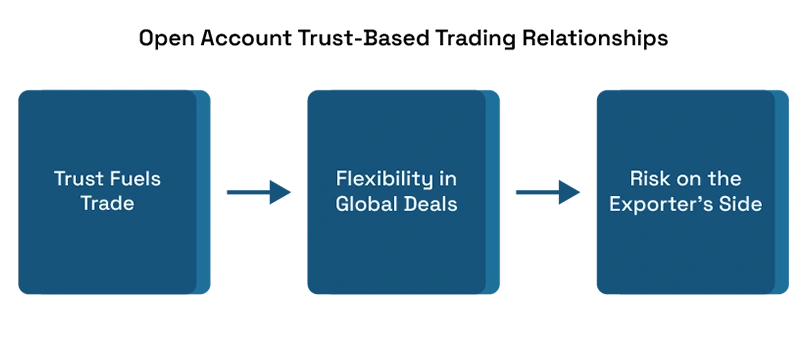
Open Account: Trust-Based Trading Relationships
In an open account arrangement, the exporter ships the goods and issues an invoice with agreed-upon credit terms. The buyer makes payment at a later date, typically after receiving the goods. While this method offers flexibility, it introduces a higher level of risk for the exporter. Let’s explore the intricacies:
Key Features and Considerations of Open Account Trading:
- Relationship Building: Open account trading often relies on strong, established relationships between the buyer and the seller. Trust plays a crucial role in ensuring timely payment.
- Flexibility: This method facilitates smoother transactions by eliminating the need for complicated documentation and intermediaries. It is often favored in industries where trust and ongoing relationships are paramount.
- Risk Management Strategies: Exporters opting for open account terms may implement credit insurance or factoring services to mitigate the risk of non-payment.
Choosing the Right Method: A Strategic Decision
The choice of the most suitable payment method depends on various factors, including the nature of the goods, the level of trust between the parties, the regulatory environment, and market conditions. Exporters must carefully evaluate these factors to make informed decisions that align with their business goals.
Considerations for Choosing a Payment Method:
- Nature of Goods: Perishable or time-sensitive goods may necessitate faster payment methods, while durable goods might allow for more flexible terms.
- Risk Tolerance: The exporter’s risk tolerance is a crucial factor. More secure methods may offer greater protection but could come with added complexities and costs.
- Regulatory Environment: Understanding and complying with the regulatory requirements of both the exporting and importing countries is paramount to a smooth transaction.
Conclusion: A Holistic Approach to International Payment Security
Getting paid in export business can be difficult, so planning is important. Exporters need to check different payment methods, export payment options and international trade payments to find what fits their business and market. Some options like a Letter of Credit, are safe but not very simple to use. Advance payment gives security before shipping. Documentary collections offer a middle option, while an open account depends more on trust. By understanding these choices, exporters can reduce risk, protect their money, and do business with more confidence worldwide.
Did You Know
Choose the appropriate method of payment, and make available options on the internet for exporters and importers.
FAQ
1. What is the best export payment method in 2026?
In 2026, many exporters prefer Letters of Credit and advance payments because they offer better payment security and reduce financial risk.
2. How can One Union Solutions help with international export transactions?
One Union Solutions helps businesses manage export documentation, trade compliance, customs processes, and smooth international shipping operations.
3. How can exporters avoid payment delays in international trade?
Exporters can avoid delays by preparing correct documents, choosing trusted buyers, using secure payment methods, and following all trade and customs requirements.
4. How do secure payment methods help global businesses grow?
Secure payment methods give businesses confidence when trading internationally. They help protect revenue, reduce payment disputes, and support long-term business growth in global markets.
5. Why is receiving payment on time important for exporters?
On-time payments help businesses manage cash flow, pay suppliers, cover shipping costs, and continue operations without financial problems.