
Insight
Aircraft engine parts may be delivered from providers to aircraft and service centers globally due to global supply chains. For aircraft service and repair have to do, these parts must be carefully handle, packed correctly, and delivered on time. Because shipments must travel across multiple countries and require specific permits, the correct documents, & customs clearance, shipping aviation engine parts can be challenging. Reduce delays and making sure the smooth transfer of aircraft engine spare parts over the global supply chain are made possible by better planning, international shipping, & aviation services.
Understanding the Global Aircraft Engine Parts Supply Chain
Aircraft engines contain many types of parts, including turbine blades, compressors, fuel filters, & engine sensors. These parts allow the engine to work properly and safely. Aircraft, repair centers, and MRO service get aircraft engine spare parts from the sellers.
The supply chain for aircraft engine parts starts when companies make the parts & deliver them to providers, warehouses, or service centers. Depending on the requirement, the parts may be delivered internationally by air or sea freight. These goods are delivered to their location with the help of airways, freight forwarders, customs brokers, and part providers.
The transportation of aircraft parts requires careful planning, safe handling, proper shipping documents, & prompt delivery because some engine parts are costly or highly required. These processes help service providers in identify the parts required to repair aircraft.
How Aircraft Engine Parts Move Across Borders
Before reaching at an airline or service center, aircraft engine parts usually travel across international boundaries. Based on sales, suppliers deliver these parts to vendors, warehouses, or MRO centers. Shipping international aviation parts requires proper packaging, shipping documents, & local custom clearance.
High-value aviation engine parts are commonly delivered by air since it is faster. Large goods that must be delivered quickly and over large areas can benefit from sea freight. The decision is affected by the required delivery, size, and cost.
The shipment of aviation engine parts is plan by sellers, freight forwarders, & customs brokers. Proper tracking and proper documents help to avoid delays and make sure that goods reach the destination safely.
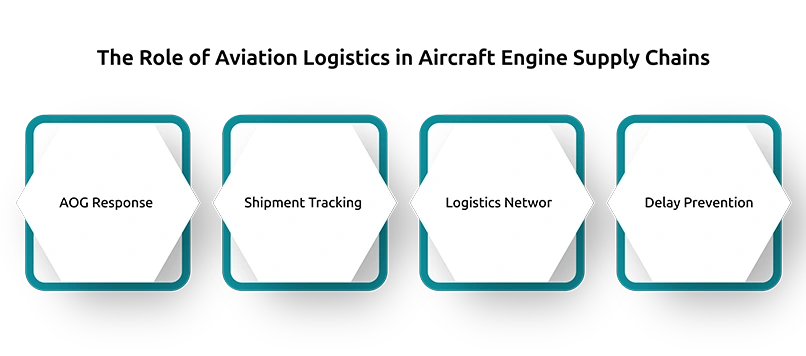
The Role of Aviation Logistics in Aircraft Engine Supply Chains
Aviation logistics allow the delivery of aircraft engine spare parts to aircraft and service centers when they are require for repairs or regular service. Good planning makes sure that the correct parts reach at the correct location on time.
AOG (Aircraft on Ground) logistics is used when an aircraft cannot to travel due to a technical problem or a missing part. In these cases, fast aviation parts delivery helps service technicians to receive the required parts as soon as possible.
Shipment tracking allows companies to track the location of aircraft parts in international delivery. Logistics teams work with aviation, providers, freight forwarders, and MRO centers to plan delivery times and avoid unnecessary delays. These processes help to the work smoothly of the aviation engine supply chain.
How Technology Is Improving Aircraft Engine Parts Supply Chains
The handling of aviation engine parts supply chains is becoming easier because of modern technology. Real-time tracking allows companies to know where goods are and when it reach. This makes it easy to plan a delivery and handle delays.
Digital stock control systems help aircraft and service units to keep track of available spare parts. They can check which parts are available and which have to be imported. Previous usage and servicing details can also help companies identify future demand and order parts before stocks become limited.
Proper supply chain visibility allows suppliers, freight forwarders, and MRO centers to deal with details and handle delivery. These equipment improve aviation spare parts logistics by making it easy to handle inventory, track shipments, and receive the correct parts when they are require.
Key Challenges in Aircraft Engine Parts Logistics
Transporting aircraft engine parts across borders can be challenging for many types of reasons. Some parts are time-sensitive to make, and shortages can cause delays in repairs. If a provider does not have the require part in stock, aircraft may have to wait for a spare.
Logistics for aircraft engine parts can be costly. Some parts are large, heavy, or costly to ship, which may increase shipping and handling costs. Important shipments may require fast shipping, which increases the cost.
Another challenge is the safe handling of important engine parts. To avoid damage in shipment, they require proper packing & careful loading. For quick shipments, logistics companies must carefully handle shipping documents, customs clearance, and delivery deadlines. Good planning helps to reduce delays and safely transport aircraft engine spare parts to their locations.

Conclusion: Building a More Reliable Aircraft Engine Parts Supply Chain
A trusted supply chain for aircraft engine parts requires careful planning, correct customs documents, & safe handling. Choosing the correct shipping method allows you to move engine parts across countries with less delays.
Providers, freight forwarders, aviation, and MRO centers must all work to make sure that parts reach at their destination on time. Proper cargo tracking and customs clearance can also help to avoid issues during delivery. Good air cargo shipping services help technicians in finding required parts and reducing unwanted aircraft delay.
Did you know
The global aircraft engine market size was valued at USD 161.6 billion in 2025 and is projected to grow from USD 170.3 billion in 2026 to USD 248 billion by 2034, exhibiting a CAGR of 4.8% during the forecast period.
FAQ
Why is correct product information important when importing engine parts?
Clear product descriptions, part numbers, and correct values help customs officers check a shipment. Incorrect details can lead to extra checks and delays.
Why is part number checking important in aircraft engine logistics?
Many engine parts look similar but serve different purposes. Checking the part number helps ensure the correct component reaches the maintenance team.
How are sensitive aircraft engine parts protected during shipping?
Parts are packed according to their size and handling needs. Suitable packaging helps protect them from impact, moisture, and damage during loading and transport.
Why do MRO centers depend on reliable aircraft parts logistics?
MRO centers need the correct parts to complete engine inspections, repairs, and maintenance. Timely delivery helps them plan their work and avoid unnecessary delays.
Can aircraft engine parts be returned across borders for repair?
Yes, some parts are sent to another country for inspection, repair, or testing. The company should check the customs rules and documents for sending the part out and bringing it back.