Overview
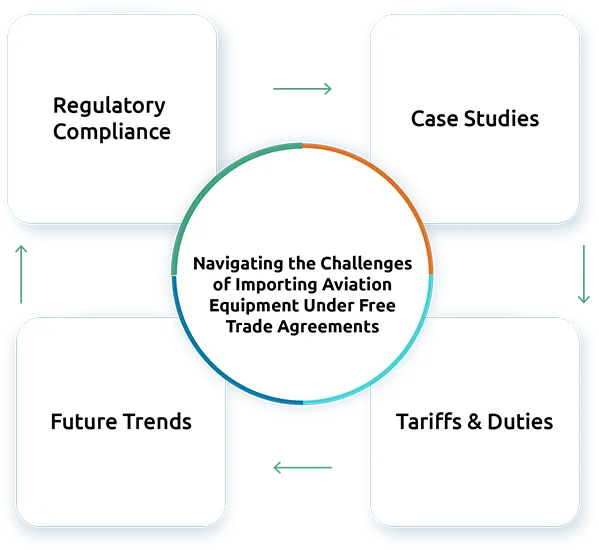
Companies face unique challenges with aviation equipment importations during this modern era of worldwide connection, specifically when using free trade agreements (FTAs). The agreements provide organizations with cost benefits because they lower tariff rates and simplify customs procedures. An extensive understanding of logistics practices, Incoterms and tariffs, and importer of record responsibilities allow for successful access to FTA benefits. The following discussion examines how businesses should maximize their importing operations through FTAs while handling typical supply chain issues.
To benefit fully from FTAs, companies must ensure accurate product classification and proper documentation. Working with experienced Importer of Record and customs experts helps prevent compliance errors and shipment delays. Selecting the right Incoterms also clarifies cost and risk responsibilities between trading partners. Strong coordination with freight forwarders improves delivery timelines for critical aviation equipment. Together, these practices help businesses reduce costs while maintaining supply chain reliability.
Understanding Free Trade Agreements and Their Impact on Imports
Free trade agreements provide preferential treatment for goods imported from member countries, reducing or eliminating tariffs based on proper classification under the HS code and compliance with specific terms like Incoterm DDP (Delivery Duty Paid) or DAP (Delivered at Place). FTAs also facilitate smoother customs clearance when importer adhere to defined regulations & document requirements.
One key benefit of these agreements is the reduction of tariffs, which are applied to goods based on their classification under the HTS harmonized tariff system. For example, aircraft components correctly classified under the HTS codes can enjoy significant cost reductions. The mistakes made during classification and lack of proper documentation may result in monetary penalties, delayed shipments, and rejected goods.
Managing Logistics | Supply Chain Challenges
The successful management of logistics & supply chain aspects remains vital for imports under FTAs. To succeed with FTA imports, businesses need efficient logistics and supply chain management, which mandates collaboration with freight forwarding services, cargo forwarding entities, and international supply depots. Freight forwarding services, cargo forwarding, and international warehouses simplify transportation by creating a continuous shipment path from producers to receivers.
The important functions of freight forwarders include managing customs activities, documentation, and transportation service provision. Local experts associated with Texas and Miami and clients in Mexico help companies take advantage of the profitable routing options that pass through Nuevo Laredo as a hub point. Businesses generally choose air forwarding services for their shipments when urgent matters arise, such as AOG (Aircraft on Ground) scenarios.
Leveraging Incoterms for Cost and Risk Management
International trade responsibilities between buyers and sellers are described within the Incoterm agreements, including DDP, DAP, and CIF transport terms. Aviation equipment importer typically choose DDP shipping because it transfers the duty to pay customs obligations, taxes, and transportation costs from the buyer to the seller.
Under DDP, the importer of record (IOR) ensures compliance with local regulations. Companies using IOR services benefit from expert customs clearance management, proper classification under HS codes, and adherence to regulatory requirements.
For example, when dealing with high-value aviation equipment, a white glove delivery service can be operated to deliver specialized handling and ensure the safe transport of sensitive components. This service minimizes the risk of damage and improves customer satisfaction by delivering parts ready for installation.

Overcoming Tariff and Compliance Challenges
Despite the benefits of FTAs, businesses still face challenges related to tariffs, compliance, and documentation. Proper classification under HTS codes is critical to ensuring that goods receive the correct duty exemptions. Misclassification can result in penalties and increased costs.
The role of the importer of record is crucial here. The IOR ensures that shipments comply with customs regulations, including accurate documentation, valuation, and duty payments. In DDP shipments, the IOR must verify that the seller covers all costs, including duties and taxes. For companies operating across borders, working with a foreign importer of record can streamline this process.
The Importance of Accurate Freight Calculations
Freight cost assessments must be precise to support business profits while protecting profits from surprise expenses. Businesses can use air freight cost calculators, air cargo rates calculators, and air freight chargeable weight calculators to predict shipping expenses based on shipment size, weight, and delivery point. The tools incorporate two different weight measurement systems, known as volumetric or actual weight, to calculate chargeable weight.
An air freight chargeable weight calculator lets companies check for accurate shipping bills. The system helps businesses avoid unnecessary expenses by detecting valuation differences between volumetric weight measurements and actual weight specifications.
Proper assessments of freight costs are crucial for companies to ensure profitability & avoid additional costs. Calculators such as air freight cost calculators, air cargo rates calculators, and air freight chargeable weight calculators are important in predicting the cost of shipping based on shipment size, weight, & delivery point. Chargeable weight calculators, volumetric and actual weight systems, are utilized to ascertain the chargeable weight, helping businesses figure out their shipping costs more accurately.
Key Global Hubs for Aviation Equipment Imports
Several global hubs play a critical role in the import of aviation equipment, supporting efficient customs clearance and logistics. Nuevo Laredo in Mexico serves as a key gateway for cross-border trade between the United States and Mexico, enabling smooth processing of large aviation equipment shipments. Miami acts as a major import hub for cargo arriving from Latin America and Europe, supported by strong freight forwarding capabilities. Frankfurt functions as a central European hub with advanced infrastructure for handling high-value and time-sensitive aviation cargo, while Singapore stands out for its highly developed logistics network that efficiently serves the Asia-Pacific aviation market.
Conclusion
Achieving success in importing aviation equipment through free trade agreements depends on thoughtful preparation and strict compliance with regulations, as companies can access reduced costs and logistics advantages. Import companies that use well-chosen importer of record services and master tariff rules alongside optimized supply chain management can efficiently manage these barriers to success. One Union Solutions provides whole-spectrum support to optimize your import operations, which ensures reliable aviation equipment delivery throughout the international market.
Did You Know?
Free trade agreements help participating nations receive a 10-30% decrease in trade costs based on data from the International Trade Centre. The World Trade Organization reports that Free Trade Agreements, including tariff and non-tariff barrier regulations, lead to trade volume growth by up to 25%.
FAQs
What is an Importer of Record, and why is it important for DDP shipments?
Ans: An Importer of Record is responsible for meeting all customs requirements, including paperwork, valuation, and payment of duties and taxes. In DDP shipments, the IOR manages all costs and risks until the goods reach the final destination.
How do HS codes affect aviation equipment imports?
Ans: HS codes classify goods for customs purposes. Using the correct HS code ensures the right duties are applied and helps importers benefit from free trade agreements.
What role do freight forwarders play in aviation imports?
Ans: Freight forwarders manage transportation, customs clearance, and shipping documents. They plan efficient routes and help ensure urgent aviation parts arrive on time, especially during AOG situations.
How do white glove delivery services support aviation imports?
Ans: White glove delivery services offer careful handling and secure transport for high-value or sensitive aviation equipment, ensuring it arrives safely and ready for use.
How can importers reduce costs under free trade agreements?
Ans: Importers can lower costs by using accurate HS classification, choosing DDP shipping terms, and using cost-calculation tools to avoid unexpected charges.