International Trade: Future Trends
International trade has long been at the core of global economic expansion, providing goods, services, and visions across borders in exchange for revenue. Its history echoes society’s growth, which is driven by technological innovations, economic policies, and shifting geopolitical alliances. Today’s global commerce is at a key point, being shaped by technological innovations, pushing for sustainability goals, and shifting alliances. Understanding these trends and predictions is imperative for businesses looking to navigate this ever-evolving environment.
Upcoming Trends in International Trade
Technology continues to revolutionize how businesses approach international trade. Digital transformation has allowed companies to operate on a global scale with unparalleled efficiency & transparency, including through e-commerce platforms which facilitate buying/selling and accessing international markets at the click of a button. Furthermore, blockchain technology provides secure procedures for tracking goods, verifying authenticity, and managing trade documents securely – further revolutionizing business practices around international trade.
Artificial intelligence (AI) has revolutionized trade logistics, helping businesses optimize supply chain operations, predict demand, and streamline customs procedures. Smart algorithms can examine and analyze extensive amounts of data to detect patterns, assess risks, and make better decisions; AI-powered solutions enable efficient global operations in industries like IT equipment delivery or data centres, where precision and timely deliveries are essential.
Sustainability and Ethical Practices in Trade are Now Standard
Sustainability has become a cornerstone of global trade as businesses and consumers acknowledge its environmental impacts. Ethical supply chains and green logistics have no longer become optional but required practices for companies seeking to meet global standards and client expectations.
Efforts to reduce the carbon footprint of shipping operations are rapidly transforming international trade practices as innovations such as energy-efficient transportation modes, carbon-neutral packaging, and digital documentation become widespread practices. Such measures ensure that international trade costs can be minimized while maintaining operational efficiencies. For businesses involved with critical sectors like IT equipment or data centres, adopting sustainable practices can boost their reputation while aligning themselves with global environmental goals.

Geopolitical Factors | Impacting Future Trade Agreements
Geopolitical factors strongly influence international trade agreements. After Brexit, the UK introduced new trade policies that changed how it trades with other countries. In the same way, ongoing trade tensions between the US and China continue to affect global markets, as tariffs and restrictions impact businesses and industries worldwide.
Regional economic partnerships like RCEP are creating new avenues of engagement between Asia-Pacific nations, creating new channels of partnership to reduce tariffs, harmonize trade standards, and expand market access – giving businesses new paths of expansion.
Emerging Markets Play a Role in Shaping International Trade Dynamics
Emerging markets are quickly emerging as key players in global commerce, offering immense growth potential and diversification possibilities. Countries belonging to the BRICS (Brazil, Russia, India, China, and South Africa) framework are at the forefront of this shift, taking advantage of their expanding economies to influence trade dynamics.
Developing economies are making investments in infrastructure, technology and trade policies to lure foreign businesses. These markets provide access to vast consumer bases while serving as hubs for innovation and production. For instance, India’s emphasis on digital transformation and technology development has made it an integral partaker in the global IT ecosystem. In contrast, China’s investments in data centers and advanced manufacturing technologies demonstrate its global trade trends shaping potential markets.
Smart Warehousing & Supply Chain Best Practices Redefining Global Trade
Modern global trade depends heavily on advanced warehouse services, storage and warehousing, and next-generation third-party logistics provider (3PL) capabilities to support faster, safer, and more transparent movement of goods. Companies today use MRO supply chain solutions, telco supply chain strategy, and eCommerce international shipping frameworks to handle high-value shipments like IT hardware and telecom equipment. Strategic in-transit storage, white glove service, white glove delivery, and DDP service ensure that sensitive shipments reach destinations securely with end-to-end visibility. Meanwhile, global trade compliance, accurate HS Code classification, and strong sourcing and trade compliance practices reduce delays and penalties.
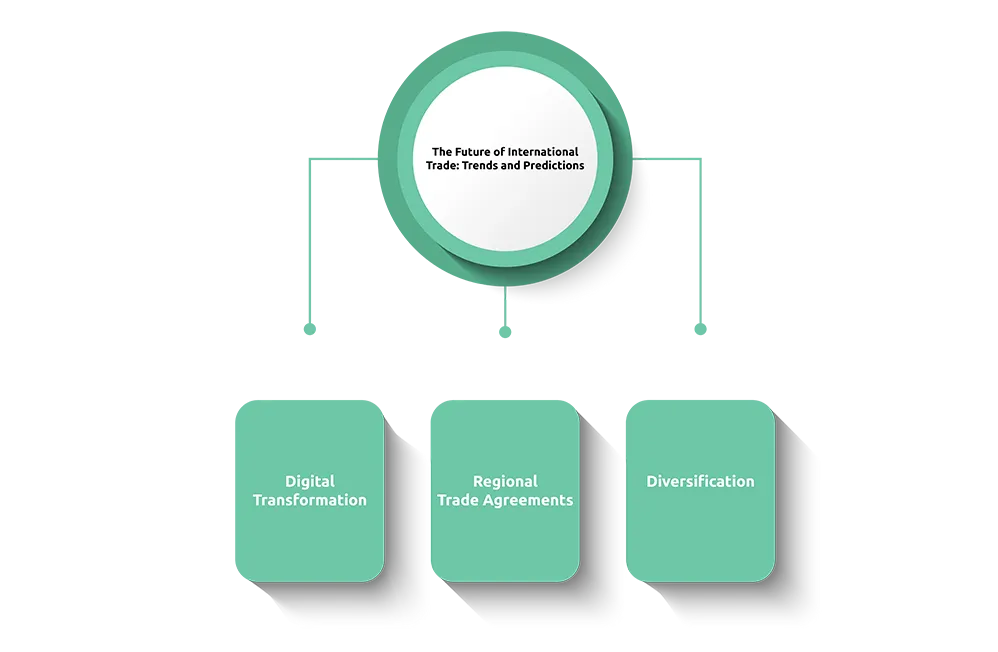
Role of Major Cities in Global Export Growth
Specific cities play an integral role in global trade, operating as hubs for exporting goods & services. Cities such as Singapore, Dubai & Shanghai are widely recognized for their strategic locations, advanced infrastructure, and business-friendly policies, which facilitate the smooth movement of goods across borders to global markets.
North American cities like Los Angeles & New York serve as important gateways for global trade, supported by world-class ports and logistics networks. Rotterdam and Hamburg in Europe serve as crucial trading hubs, while Hong Kong and Tokyo in Asia stand out as major export hubs that leverage both financial and logistical strengths. These cities not only contribute to the global economy, but they are also setting standards in trade efficiency and innovation.
Cities’ Contribution to Exporting: Global Hubs Driving Trade
Specific cities play an integral role in global trade, operating as hubs for exporting goods & services. Cities such as Singapore, Dubai & Shanghai are widely recognized for their strategic locations, advanced infrastructure, and business-friendly policies, which facilitate the smooth movement of goods across borders to global markets.
North American cities like Los Angeles & New York serve as important gateways for global trade, supported by world-class ports and logistics networks. Rotterdam and Hamburg in Europe serve as crucial trading hubs, while Hong Kong and Tokyo in Asia stand out as major export hubs that leverage both financial and logistical strengths. These cities not only contribute to the global economy, but they are also setting standards in trade efficiency and innovation.
Conclusion
The future of international trade is being powered by smarter logistics, sustainable strategies, and digital-first operations that help businesses stay competitive in a fast-changing environment. Companies are increasingly relying on freight forwarding services, customs clearance expertise, in-transit warehousing solutions, and Importer of Record (IOR)/Exporter of Record (EOR) frameworks to ensure smooth cross-border movement of goods. With the rise of AI-powered demand forecasting tools, green logistics, multimodal transport, and improved telecommunication supply chain strategies, global supply chains are becoming more efficient and resilient. From DDP shipping and international eCommerce to advanced warehouse management services, modern trade now demands compliance with global standards such as Incoterms® 2020, HS Code/HTS, AEO accreditation, and end-to-end trade compliance. Businesses that embrace these innovations and adopt best practices in supply chain management will be better prepared to navigate future trade shifts with confidence. One Union Solutions provides invaluable assistance for those navigating global trade.
Did You Know,
Each year, Singapore handles over 37 million containers – making it one of the busiest ports worldwide and an integral hub for IT and electronic goods.
FAQs
1. How are new technologies changing global trade?
New technologies like AI, blockchain, & IoT are improving clarity across global trade operations. They help businesses track shipments in real time & manage logistics more efficiently. These tools also improve supply chains by reducing delays & improving strategic planning.
2. How important is environmental responsibility in global trade today?
Climate responsibility has become a key priority in global trade methods. Companies are focusing on eco-friendly logistics & responsible sourcing. This helps businesses meet environmental regulations & develop trust
3. What role do emerging markets play in global trade?
Growing markets are creating a new outlook for global trade growth. They contribute to developments, lower production costs, & access to growing target markets. This helps expand global trade networks & reduces dependency on standard markets.
4. How have global delays impacted supply chains in recent years?
The delays have created risk across international supply chains. Many companies faced challenges in sourcing raw materials & maintaining on-time deliveries. As a result, companies are now highlighting strict, more flexible, & technology-driven logistics systems.
5. Which cities are major global trade hubs?
Cities like Singapore, Los Angeles, Rotterdam, & Shanghai are major global trade hubs. They are supported by strong ports, add-on infrastructure, & effective logistics systems. These cities play a key role in enabling global trade & cargo movement.