
Best Practices During the Shipping of Ground Support Equipment (GSE)
Ground Support Equipment or GSE is essential in airport operations, although exporting such machines has lengthy regulations & logistical issues. Customs clearance, tariffs, and warehousing require special care so that equipment can be delivered seamlessly and on time. Here, we will cover the fundamentals of shipping GSE across the border so that you have a successful, smooth shipping process on both ends.
Ground Support Equipment (GSE) is vital for airport operations, but exporting it involves strict regulations and complex logistics. Customs clearance, tariffs, and proper warehousing must be carefully managed to ensure timely delivery. Efficient planning and compliance are key to avoiding delays and extra costs. This guide covers the essentials of shipping GSE smoothly across borders.
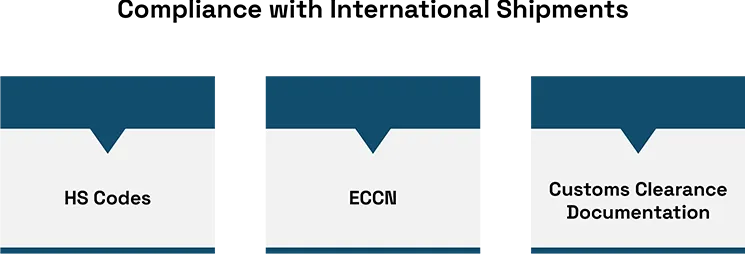
Compliance with International Shipments
The most important thing is compliance with any business shipping GSE abroad. All countries have certain rules and regulations for the import of heavy-duty equipment, or else non-compliance with these requirements may cause delays, fines, or even seizure of goods. It is imperative to understand and achieve the needs of foreign trade. Among these is properly categorising equipment through HS codes, and acquiring the necessary ECCN (Export Control Classification Number) where necessary. Also, when the customs clearance is well documented, it will enhance easy movement through the border control examination and avoid surprises.
Managing Tariffs and Duties Effectively
Learning tariffs and taxes is one of the challenges when shipping GSE on an international level. Tariffs may have a great impact on the cost of business and the final price that the customer will pay. Businesses will be able to plan better with such additional costs by investigating the customs tariff structure of the importing and exporting countries. The use of the right HS codes when classifying the tariff entails that the tariff rates imposed on GSE are correct. In some cases, it is easier to choose Delivered Duty Paid (DDP) service, wherein the exporter clears the duties, taxes & cleaning costs.

Customs Clearance in the Export Operation
The Customs Clearance is a necessary exportation process; thus, GSE may easily have extra scrutiny depending on size and value. All of the GSE should be reported correctly and follow the particular import requirements of the destination country. Classification of the equipment and delivery of the incomplete documentation may lead to delays or sanctions. Businesses can reduce the risks of the export process by paying the correct tariffs and processing customs clearance efficiently.
International Shipments- Strategic Warehousing
Businesses that participate in the export of GSE require warehousing services as a vital link in the chain between them. Properly run warehouses enable the companies to store the GSE until it is transported to other nations. The process will ensure that the equipment is ready to be shipped at the right moment and will remain safe until the last shipment. A well-planned use of warehousing can help the best companies simplify the inventory management process, cut down on shipping times, and save money in terms of operations. Also, the warehousing at the ports or airports allows faster work and easier transition to cross-border transport.
Automating Supply Chain Logistics
Successful international shipping must have an efficient supply chain. In the case of GSE, the ability to organize with and amongst the suppliers, manufacturers, and logistics providers guarantees that equipment is shipped most efficiently, A to B. This means planning the customs clearance, selecting a shipping company whose performance is trustworthy, and determining whether all the necessary documentation is completed. Technology will help, including shipping and inventory automated systems, which increase visibility and minimize loss due to delays. An effective, smooth logistics policy leads to appropriate delivery services and minimization of any inconveniences in the supply chain.
Market Insights on GSE-Global Trade
The environment is characterised by the growing Ground Support Equipment world market, which grows due to the increasing number of flights and the necessity of more efficient airport operations. As per the latest figures by the International Air Transport Association (IATA), the aviation sector is expected to increase at an average of 3% to 4% yearly during the upcoming 10 years. As the demand rises, more companies want to simplify the industry of exporting GSE. The recent rules and regulations on customs clearance, tariff systems, and supply chain strategies are also important for companies to understand to remain competitive in this emerging market.
Conclusion
Ground Support Equipment is more likely to be successful and exported by paying special attention to compliance, tariffs, customs clearance, and the excellent management of the supply chain. Businesses can overcome these challenges by going into business with skilled logistics and compliance specialists. At One Union Solutions, we are committed to offering customized solutions to businesses that may require the exportation of GSEs without fail. We make sure that every shipment complies with the regulations & is delivered safely to its destination.
Did You Know,
The worldwide GSE market will surpass more than $9 billion by 2027, with increased automation of systems such as automated guided vehicles (AGVs) as a trend to enhance airport operational efficiency.
FAQ’s
Which documents are needed to export GSE?
Key documents include commercial invoices, certificates of origin, and customs clearance declarations to ensure smooth export processing.
How are tariffs calculated for exporting GSE?
Tariffs depend on the importing country’s customs rules and the HS code classification of the GSE being exported.
What is an ECCN, and why is it important for GSE exports?
The ECCN (Export Control Classification Number) identifies whether an export license is required, helping ensure compliance with export control regulations.
How does warehousing help in exporting GSE?
Warehousing provides secure storage before shipment, allowing companies to manage inventory, control shipping schedules, and protect valuable equipment.
What are DDP Incoterms, and how do they benefit GSE exports?
With DDP (Delivered Duty Paid), the exporter covers all shipping costs, including tariffs, taxes, and customs clearance, simplifying the import process for the buyer.