Insight
According to modern aviation industry standards, businesses need precise handling to import equipment at competitive prices. Companies benefit from smooth importing processes using advanced tariff engineering alongside comprehensive Importer of Record (IOR) services with freight forwarding capabilities and optimum supply chain optimization. Combining HTS code optimization and a Generalized System of Preferences (GSP) enables importer to decrease expenses while stopping delivery delays.
Minimizing engineering involvement in handling customer data imports while optimizing aviation operations is achievable through major tariff engineering and specialized aircraft import service solutions. By using automated classification tools, accurate HTS code assignment, and expert Importer of Record (IOR) support, businesses can simplify import processes without heavily depending on internal engineering teams. This approach reduces approval risks and administrative overhead, allowing engineers to focus on core technical tasks instead of regulatory procedures. Combining these practices with effective freight forwarding and tariff optimization ensures that aircraft imports are handled efficiently, cost-effectively, and in full compliance with international trade laws.
What Is Tariff Engineering and Why Is It Important?
Strategic import classification under tariff engineering helps businesses reduce their payments while maintaining regulatory affairs. The correct application of tariff engineering stands vital to aviation profitability because improper classifications would escalate expenses to unfeasible levels. The implementation of Harmonized Tariff Schedule (HTS) codes selection, together with the appropriate use of a Generalized System of Preferences (GSP) and Incoterm DDP (Delivery Duty Paid) shipping methods, allow proper management of duties and taxes before shipment. Companies must work with expert importer of record services and logistics personnel who know international trade specifics because misclassification leads to incorrect duty payments or penalty charges
Key Benefits of Tariff Engineering for Aviation Imports
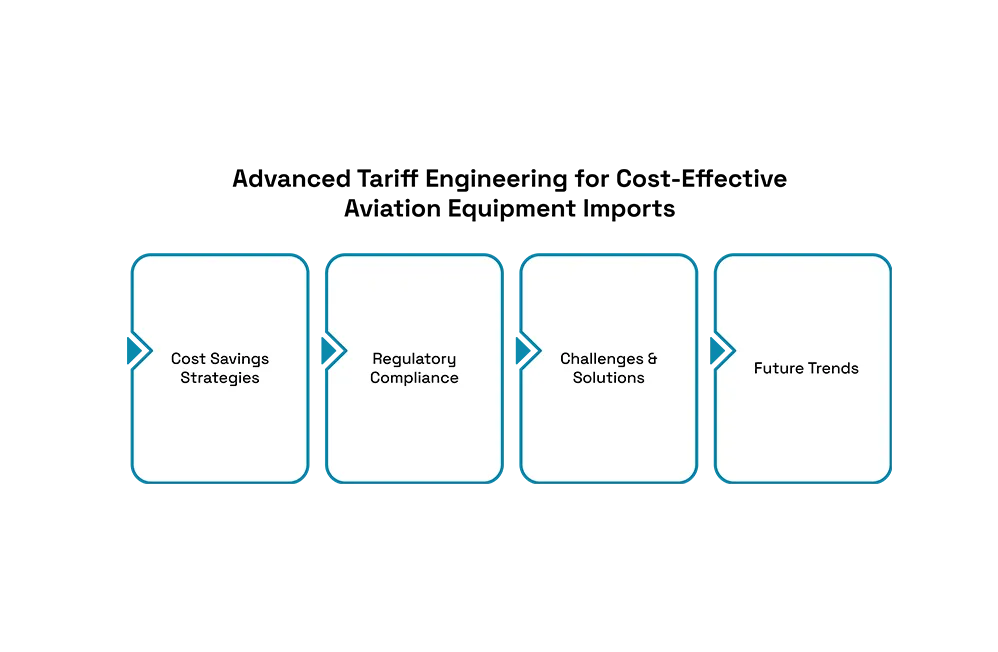
Implementing Tariff Engineering for aviation imports delivers multiple important advantages to businesses. Every aviation importing operation benefits from tariff engineering through its optimized cost management and enhanced logistics efficiency. The process of classification under HTS codes coupled with the Generalized System of Preferences (GSP) benefits importer by substantially cutting their import expenses. Incoterm DDP allows buyers to budget delivery expenses better as duties and taxes become part of the shipping cost, thus eliminating unpredictable expenses. The optimization of freight forwarding services improves operation benefits through streamlined delivery while consolidating multiple shipments, minimizing transportation expenses, and guaranteeing on-time delivery.
How Importer of Record (IOR) Services Enhance Efficiency
The importer of record functions as the key assurance for aviation equipment import compliance requirements. IOR services must fulfill duties that exceed customs clearance procedures by maintaining proper classification of imports, preparing adequate documentation and ensuring duty payments. Some key functions include:
* HTS Code Accuracy: Correct classification under the proper HTS code to avoid overpaying or facing penalties.
* Customs Compliance: Ensuring all documents meet regulatory standards to prevent delays.
* Importer of Record Number Tracking: Keeping meticulous records to meet audit requirements and maintain transparency.
The collaboration between IOR services and tariff engineers ensures compliance and cost efficiency, making them indispensable for aviation imports.

Freight Forwarding Solutions for Aviation Equipment
Effective freight forwarding solutions serve as a crucial requirement to deliver aviation equipment with speed. Through the cargo forwarding services, freight forwarder help customers choose efficient routes, consolidate shipments, and manage customs paperwork to reduce supply chain disruptions.
The advanced features of freight forwarding allow organizations to maximize import operations efficiency while minimizing their total costs. Companies use online air freight expense determination tools to validate shipping costs which prevents budgetary overruns and keeps expenses within control ranges. The connection of storage and logistics systems through warehousing and supply chain integration creates an efficient management system to control inventories properly and schedule precise product deliveries.
White glove delivery services with specialized handling stand as a top service option to safeguard essential aviation components throughout transit. The combination of tariff engineering HTS code and GSP benefits management with advanced freight forwarding delivers optimal value to business imports at reduced costs alongside prompt delivery timelines.
The Importance of Supply Chain and Warehousing in Cost Optimization
Supply chain management & proper warehousing operations minimize import costs to create efficient aviation equipment imports. Implementing modern warehousing systems with real-time inventory monitoring allows businesses to execute efficient stock management, leading to shorter delivery times and less delayed expenses.
Through advanced supply chain management, companies achieve optimized 3 phase power systems to provide reliable power for critical maintenance of sensitive aviation equipment at storage facilities. Real-time inventory visibility lets operations run like clockwork through time-saving delivery methods and minimized storage expenses. Integrated systems between supply chain data and IOR services and logistics providers lower operational mistakes and improve collaborative management, producing more efficient import processes at reduced costs.
Strategic Use of HTS Codes and GSP for Aviation Equipment Imports
HTS codes are crucial in determining the duties owed on imports. Correct classification ensures compliance and reduces costs. Similarly, the GSP program offers reduced tariff rates on qualifying goods imported from certain countries, making it a vital cost-saving measure for businesses importing aviation equipment.
Steps to Optimize HTS Code Usage:
* Conduct a thorough review of product descriptions.
* Consult experienced tariff engineers or IOR service providers.
* Cross-reference products with available GSP benefits.
Conclusion
Effective aviation equipment importation requires the strategic implementation of advanced tariff engineering techniques, accurate HTS code classification processes, and optimized logistics solutions. Our team at One Union Solutions recognizes that companies must overcome complex customs requirements through successful cost-decreasing strategies to achieve success. Through our expertise in importer of record services, freight forwarding, and supply chain management, we assist businesses in managing their duties and taxes and attaining operational efficiency.
We work as a team to keep imports accurate, efficient, and cost-effective. By managing complex import processes carefully, we help avoid delays and keep global supply routes running smoothly. This ensures simple, compliant, and reliable shipping that supports our clients in today’s fast-moving markets.
Did You Know?
Tariffs on aircraft parts create hidden costs that ripple through maintenance programs across the aviation industry. These tariffs impact not only pricing but also supply chain reliability, influencing operational efficiency and long-term planning.
FAQs
1. What does an Importer of Record (IOR) do for aviation equipment imports?
An IOR handles customs compliance, correct HTS code classification, and payment of duties and taxes, allowing importers to focus on their core operations.
2. How can tariff engineering help reduce import costs?
Tariff engineering helps businesses select the most accurate HTS codes and use benefits like GSP, which can lower duties and simplify customs procedures.
3. What is the role of Incoterm DDP in aviation equipment imports?
Under DDP (Delivered Duty Paid), all duties, taxes, and fees are included in the shipping cost, giving importers clear and predictable pricing.
4. Why is accurate air freight cost calculation important?
Correct air freight calculation ensures you do not overpay, as charges are based on the higher of actual weight or volumetric weight.
5. How does freight forwarding support tariff engineering?
Freight forwarders optimize routes, reduce transit times, and ensure timely delivery, working together with tariff engineering to lower costs and improve efficiency.