Overview
Investment patterns are reshaping global production. Greenfield investment in plans sectors is rising, while investment in manufacturing outside them is declining. The change help economies with strong system, skilled workers, supplier networks and entry to major markets.
According to UN Trade and Development UNCTAD, announced greenfield investment in strategic sectors increased from $109 billion in 2020 to $576 billion in 2025, representing more than fivefold growth. The share of these sectors in global greenfield investment also increased from 16% to 44%. This growth reflects rising investment in AI infrastructure, semiconductors and advanced technologies, creating additional requirements for transporting specialised equipment to manufacturing and technology facilities across different countries.
Global Factory Expansion Is Changing Manufacturing Supply Chains
The evidence collected for this report confirms that globalization is being reconfigured rather than reversed: supply chains are adapting through regionalization, digitalization, and diversification. These adjustments revolve around three core dimensions that structure the report: building resilience to shocks,
expanding inclusion across economies & firms, and advancing sustainability through technological and policy innovation.
And multinationals are restructuring supply chains towards South-East Asia, Eastern Europe and Central America – a shift that began during the pandemic and is accelerating.
How Is Industrial Equipment Transported Safely?
According to the Transport Information Service, machinery that is sensitive to jolting should be placed in suitable positions during transportation. Loading instructions provided by the manufacturer or consignor should be followed to prevent damage caused by mechanical stress. Lashing plans help secure machinery without damaging its packaging or components. Both the transport vehicle and the machinery must have suitable arrangements for proper loading and securing. The weight, dimensions and centre of gravity of each item should also be considered when selecting cargo-securing methods.
International Customs Requirements Add Complexity to Factory Projects
Each Member shall, where appropriate, endeavour to accept paper or electronic copies of supporting documents required for import, export or transit formalities.
Each Member shall apply common customs procedures and uniform documentation requirements for release and clearance of goods throughout its territory.
The TFA requires the regular review of formalities and documentation requirements, with a view to minimizing the incidence and complexity of import, export and transit formalities.
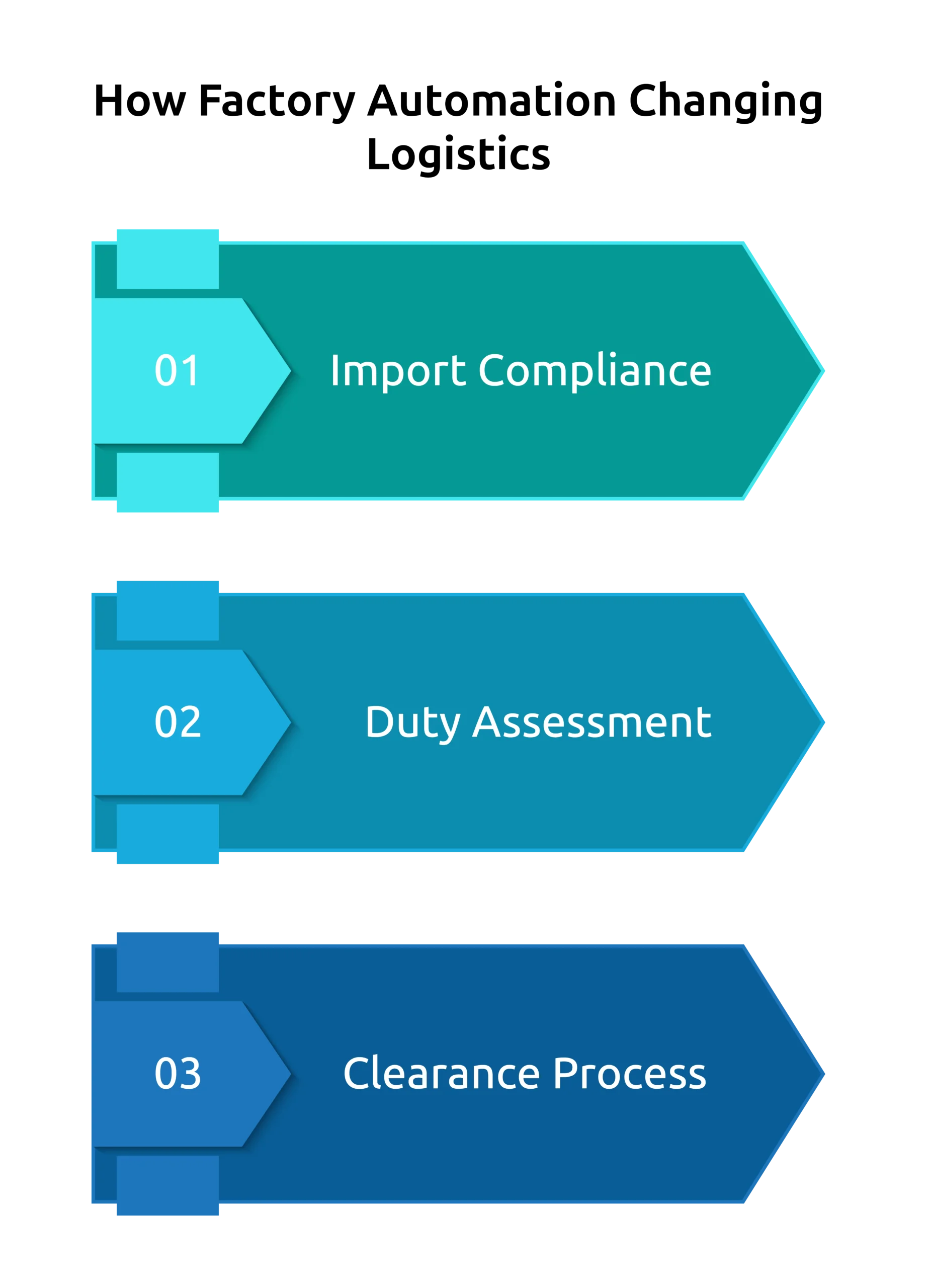
How Factory Automation Changing Logistics?
A significant advantage of logistics robots is that they can be effectively integrated into digital automation networks, giving manufacturers, logistics and other companies a real-time overview of operations.This calls for autonomous guided vehicles that can communicate with scheduling systems and move freely around the factory, since production is planned on the fly.
Robots are increasingly moving out of their cages to provide support to workers in factories, warehouses, hospitals and other workplaces, lifting, fetching, carrying and performing tedious, unergonomic tasks.
Mobility is central to the concept of human-robot collaboration, and will be key to future robot adoption, particularly by small-to-medium-sized companies that have only just begun to automate.
Warehousing and distribution support of multi-country manufacturing
Warehouse trade refers to the movement of goods into a storage facility with the intention of distributing them later.
Distribution may occur within the compiling economy or may result in a subsequent re-export to another country.
Types of facilities in warehouse trade include bonded warehouses, commercial warehouses, consolidation warehouses, buffer stock organizations, and distribution centres.
When an enterprise sends goods to a warehouse or a distribution facility abroad while retaining ownership, this transfer is considered a movement of goods without a change of ownership, even if a future ownership change is anticipated.
When goods previously imported by a non-resident into a warehouse or a distribution facility in the compiling country are subsequently exported to a third country while still owned by a non-resident, the movement of goods is recorded as export (re-export) under code 2.4 in the country where the facility is located.
How Specialised Logistics Providers Support Factory Expansion
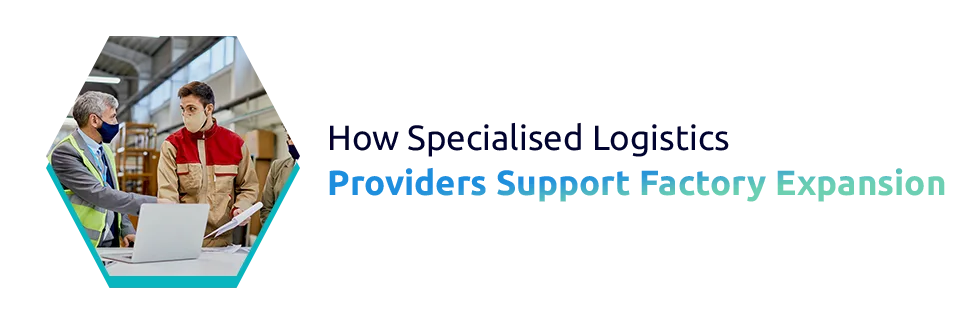
Factory expansion includes several connected activities, from global procurement & equipment shipping to customs clearance & final delivery. Hnadling each activity separately can create communication gaps & make shipment management more complex.
One Union Solutions supports eligible B2B equipment shipments across more than 190+ countries, covering IT and telecom equipment, aviation parts, automotive equipment and healthcare equipment. Depending on the shipment, destination and service requirements, businesses can assess suitable importing, transportation and delivery arrangements before equipment is dispatched.
Conclusion
The Logistics Industry plays a crucial role in economic growth and trade. Global factory expansion is increased the movement of industrial machinery, technology network, automotive components, aviation parts & healthcare equipments between countries. These shipments involves different transportation methods, customs processes managing requirement and delivery.
Did You Know?
According to UNIDO, global high-technology and medium-high-technology manufacturing output grew by 5.9% year-on-year in Q4 2025, increasing the need for equipment transportation and logistics.
FAQ
Why do expanding companies need specialized logistics services?
Factories commonly have pieces of heavy equipment and delicate technology tools and production measures to ship. Such shipments require proper packaging, handling and transportation.
How does global factory expansion affect international logistics?
Increasing numbers of factories around the globe mean more machines, tech equipment, spare parts and production material shipped across borders from one country to another.
How does warehousing help manufacturers operating in different countries?
Warehousing involves storing machinery, equipment, and spare parts by manufacturers in the factory or close to the customers.
How can production companies avoid delays when shipping equipment globally?
Production Companies preparing proper documents before shipping, making sure they check on import requirements, & arranging good transport before transport can help avert shipping delays.
What types of equipment require specialized logistics?
Heavy machinery, servers, networking equipment, automotive parts and medical devices may require specialized packaging, handling and transportation.