
Understanding the Role of Semiconductors in the Automotive Industry
Semiconductors are important parts of current automotive. They help in handling high-level driver helping systems, safety devices, navigation, display, brake systems, and engine tasks. Semiconductor chips are also required for controlling batteries, power systems, and charging tasks for electric vehicles.
Automotive companies require a regular supply of different chips as vehicles become advanced in technology and network. Also, semiconductor availability can be affected by shortages, production delays, & changing trade methods. These problems can cause delays in the production of vehicles, increase costs, & create risks to global automotive supply networks.
Major Causes of Automotive Semiconductor Shortages
Shortages of automotive semiconductors can happen for lots of reasons. More production time, specific centers, cutting-edge devices, and raw materials are all required for chip production. The supply of important parts can be affected if a factory faces technical issues, power shortages, or limited production capacity.
Growing demand from different industries is another important reason. Semiconductors are also needed in electronic devices, data centers, telecoms, and AI. Growing demand for memory chips used in AI systems can put demand on the global supply and have an affect on the cost and availability of some automotive parts.
Geopolitical Risks and Global Chip Supply Chain Disruptions
The production of semiconductors focuses in very few of countries and production locations. Risks happen when the supply of chips and raw materials is affected by export rules, trade rules, political tensions, or international disputes.
Supply of some automotive chips are also affected by rules on China semiconductor exports. These factors show the affect focusing on a limited number of suppliers and production places may have on companies in different markets.
Geopolitical issues can also be taken carefully by companies when choosing suppliers and planning global shipping. Multiple stages of car production can be affected by an issue in one location.
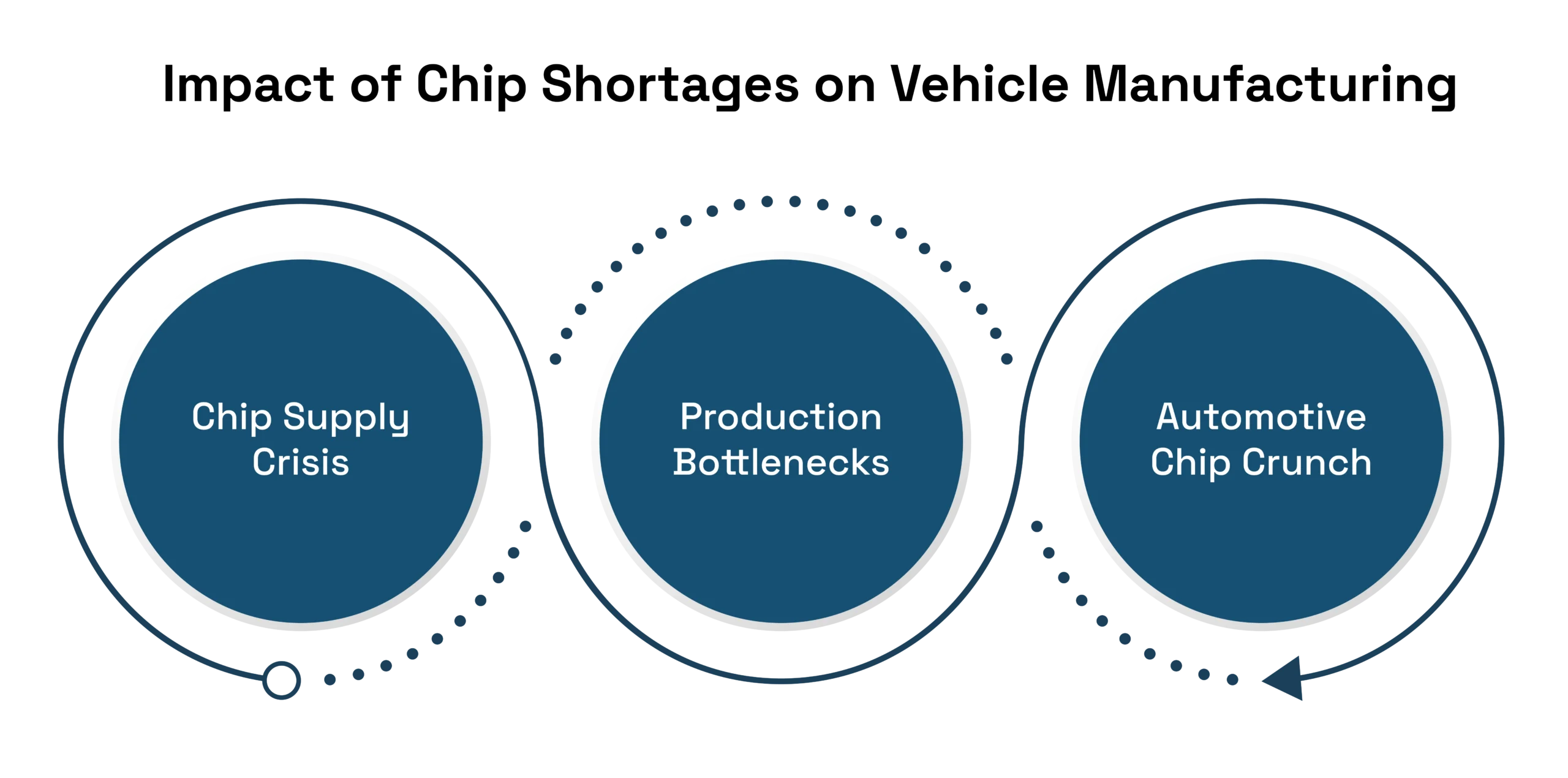
Impact of Chip Shortages on Vehicle Manufacturing
Semiconductors are important for the efficiency of automotive production methods. A shortage of one important chip can cause a delay in the build of a complete car, even if many of its parts are found.
Changes in the production process, reduced vehicle output, delayed customer deliveries, and increased production costs can all result from these delays. When chip supplies are irregular, suppliers can also find it difficult to fulfill orders from automotive products.
Because they depend on digital control devices, battery control systems, sensors, and power semiconductors, electric vehicles and current connected vehicles are more sensitive. The demand for reliable chip makers is growing as vehicle technology improves.
Longer Lead Times and Rising Automotive Supply Chain Costs
Shortages of semiconductors can increase the cost of buying and affect control of delivery times. Companies can have to pay more, look for other suppliers, or change their production plans when chip supply becomes short.
Inventory planning is also more challenging with longer lead times. When important parts not arrive on time, companies that depend on just-in-time manufacturing can face issues. Some supply risks can be reduced by keeping extra inventory, but doing so also increases storage and inventory costs. Companies has to find a deal between the demand to keep important parts on site for production and inventory costs.
Challenges in Semiconductor Sourcing and Supplier Management
Finding a different supplier of semiconductors is not always a simple task. Automotive chips have to follow to strict safety, quality, and technical demands. Before a spare part is used in a vehicle, it can have to be checked, verified, and approved.
Also, companies may not have much data on suppliers out of their primary production partners. A chip provider can depend on another company for raw materials, packaging, or device production. These low-level issues have a chance to affect the supply chain.
Wherever possible, companies should avoid depend on a single supplier, identify important parts, and understand their supply chains.
Strategies to Reduce Automotive Semiconductor Supply Risks
Companies can reduce the risks related to semiconductor supply by improving supplier control and planning. Reduced depend on one producer can be done by working with multiple trusted suppliers. However, before different chips are used in the production of vehicles, they must be approved and legally proper.
Companies need to think about dealing with supply deals, keeping track on supplier capacity, and keep safety stock of important chips. Companies can detect possible shortages quickly by keeping a regular connection with semiconductor makers and parts suppliers.
Improved visibility into buy orders, inventory, and shipment movement can be provided by digital supply chain tools. Manufacturers are able to keep track of important parts and react faster when delays happen due to these techniques.

The Role of Logistics and Import Compliance in Semiconductor Shipments
Automotive semiconductors usually travel by multiple countries before reaching to companies. Chip production, packaging, testing, shipment, and final delivery to suppliers of automotive parts can all be part of their supply chains.
More difficulties can happen from incorrect product classifications, import rules, delays in global shipping, and mistakes in customs documents. Before shipping, companies should collect proper commercial invoices, packing lists, transport documents, & any required permissions.
Along with knowing the duties of the importer, customs broker, & logistics provider, they need look at the import rules of the destination country. If it cannot solve shortages at the production stage, proper planning can help reduce needless border-related delays.
Conclusion
Automotive chip shortages continue to become major difficulties to global auto supply chains. Increased production delays, a lack of supplier options, political tensions, & increasing demand can all have an affect on chip supply and vehicle production plans.
Companies need to prepare by changing their trusted suppliers, keep proper inventory, tracking supply chain risks, & improving their global logistics plan. Handling shipments properly and following to import rules can also help reduce unwanted delays. Reliable automotive production and supply chain resilience can both be improved by predictive processes.
Did you know
While global light vehicle volumes are expected to reach close to the 90 million units mark in 2026, the modest topline growth conceals profound structural disruptions.
FAQ
Why are semiconductor chips important in modern vehicles?
They control important vehicle functions such as braking systems, engine management, airbags, navigation, battery management, and driver assistance technology.
How do semiconductor shortages affect vehicle production?
A shortage of essential chips can delay vehicle assembly, reduce production output, increase costs, and affect delivery schedules.
Why is it difficult to replace an automotive semiconductor supplier?
Replacement chips must meet technical and safety requirements. They may also need testing and approval before manufacturers can use them in vehicles.
How can automakers prepare for future chip shortages?
They can work with multiple qualified suppliers, maintain stock of critical components, monitor supplier capacity, and prepare alternative sourcing plans.
Can customs delays affect automotive semiconductor shipments?
Yes. Incorrect documents, product classifications, or missing import approvals can delay shipments at customs and affect component delivery schedules.