Introduction
Medical devices travel across different countries before reaching hospitals and medical suppliers. Medical device tracing improves product tracking, record keeping, and shipment checking from production to delivery.
Correct records support product recalls, handle shipping documents, and follow with import rules in the global medical device supply chain. Improved medical device tracking also makes it easier to handle international medical device logistics and increases the visibility of the medical supply chain.
What Is Medical Device Traceability?
Medical device tracking relates to the tracking of a medical device from its production to its final delivery and after it is placed on the market. To identify devices and track their movement, companies use serial numbers, barcodes, batch numbers, and product details.
A medical device tracking system allows the tracking of products at every stage and keeping track of device history data by makers, importers, and sellers. End-to-end product traceability allows stock control, product detail check, and device location in the case of a recall or issue. It also supports improved supply chain tracking and product daily tracking.
How Unique Device Identification (UDI) Is Changing Medical Device Tracking
Medical devices now have a common method of identity because of Unique Device Identification (UDI). It helps companies check product details and tracking devices across the supply chain.
There are two major parts to UDI. When required, UDI-PI provides production details such a lot number, serial number, or production date, and UDI-DI identify the device type. This information is stored in codes and data matrix codes for fast scan and reading.
Medical device serialization, barcode tracking, and device serial number tracking are all improved by UDI compliance. Also, it makes it simpler for companies to keep product records and check device data across different areas.
The Role of Traceability in International Medical Device Supply Chains
Producers, providers, freight forwarders, importers, and sellers can transfer correct product and shipping details between countries with the use of tracking. These documents help both parties in checking the goods, location, and receiver of medical devices delivered across international borders.
Correct records improve the efficient distribution of medical equipment and reduce complications in the global medical device supply chain. Companies can use shipping details to check delivery, check a product quantities, and locate delayed or missing shipments. Improved shipment tracking increases supply chain efficiency and makes it easier global healthcare logistics planning for companies.
Companies can review every country’s import regulations and prepare shipping documents with the help of clear product details. As medical equipment are transferred from manufacturers to hospital and other medical centers, this improves their control.
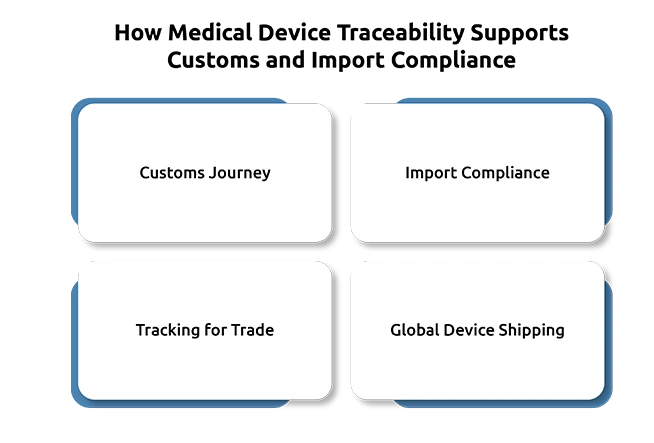
How Medical Device Traceability Supports Customs and Import Compliance
When companies transport medical equipment to other countries, medical device tracking helps make sure that product details are correct. When required, proper product labels, details, serial numbers, and quantity numbers help in matching the goods with their shipping documents.
Companies may require commercial invoices, packing lists, product labels, permits, and product registration details, for medical equipment customs clearance. Customs officials are helped in checking the shipment and identifying the products when medical devices are shipped correctly. Businesses also have to follow by local rules controlling the import of medical devices.
Still, tracing does not have the role of import licenses or complete customs filings on its own. Companies can handle medical device import compliance and reduce issues during global shipping by following the correct process.
How Traceability Is Changing Medical Device Logistics and Distribution
Companies can better handle medical devices as they travel between warehouses, countries, and medical centers with the help of tracing. By helping teams in stock checks, shipment review, and delivery approval, correct product records improve medical device logistics control.
When necessary, medical device warehouse tracking helps workers on locating products and checking their amounts. Companies can find the location of a shipment and identify missing products or delivery problems with medical equipment shipment tracking and global distribution tracking.
Improve end-to-end logistics visibility efficient interaction and planning between importers, suppliers, and freight forwarders. Also, it helps medical centers and suppliers keep better records of the medical equipment they receive and store by helping medical & inventory control.
Key Challenges in Medical Device Traceability Across Borders
Because different countries may have different rules dealing with identity, labeling, and filing, tracking medical devices across borders can be difficult. To avoid issues during shipment and delivery, companies must follow to the proper international medical device rules.
Incorrect product details or incorrect labeling offer other difficulty, making it more difficult to identify equipment. It may also be difficult to identify the location of a shipment due to a shortage of updates from suppliers and logistics partners. Cross-border shipment delays may be more likely as a result of these supply chain issues with medical devices.
Supply chain data integration can be challenging as different tracking systems could not efficiently transfer details. Delivery schedules may also be affected by delays in regulatory checks or missing documents. Businesses require specific product records, clear labels, and effective interaction between every party involved in order to reach global traceability compliance.

Conclusion: The Future of Traceability in International Medical Device Supply Chains
Medical equipment trace improves product tracking, reliable record keeping, and compliance with international import rules. Global medical device distribution is helped by electronic devices and connected supply chain systems that improve shipping visibility. Companies may increase international medical device compliance and handle shipments more efficiently with correct data and improved coordination.
Did you know
The medical equipment market size has grown strongly in recent years. It will grow from $791.33 billion in 2025 to $857.08 billion in 2026 at a compound annual growth rate (CAGR) of 8.3%.
FAQ
How does medical device traceability help during international shipping?
It helps businesses match devices with shipping documents, check shipment details, and track products as they move between countries.
What product details are needed to trace a medical device?
Depending on the device and applicable rules, details may include the product name, UDI, serial number, batch number, and manufacturing information.
Does medical device traceability replace import permits or customs documents?
No. Traceability helps maintain accurate product records, but businesses must still complete customs declarations and obtain any required permits or approvals.
How does traceability help when a medical device needs to be recalled?
It helps businesses identify affected devices and locate them in warehouses, distribution networks, or healthcare facilities.
What makes medical device traceability difficult across borders?
Different country rules, incorrect labels, disconnected tracking systems, and missing product records can make it harder to track devices throughout international supply chains.