Finding global customers & managing shipments are only two parts of shipping goods from India. Companies have to deal with export paperwork, product specifications, national laws, & certifications needed by foreign agencies. Errors can occur more frequently, & export processes might be delayed by manual data entry and repetitive documents.
To cover these problems, India is growing its digital trade network. On September 7, 2026, the Directorate General of Foreign Trade (DGFT) introduced an Open API facility for Certificates of Origin through the Trade Connect e-Platform. This facility allows eligible exporters to connect their business software directly with the government’s certificate system, reducing the need to enter the same information repeatedly.
What Is India’s New Trade Connect API?
Two software systems can securely exchange data thanks to an application programming interface, or API. An organization can use an API to ship related data from its current program to another system rather of inputting shipment details separately on some platforms.
The new API facility focuses on Certificates of Origin. These certificates confirm the country where exported goods originate and may be needed for customs clearance or to claim special tariff treatment under applicable trade agreements.
According to DGFT, exporters can use the new facility to submit Certificate of Origin applications & receive certificates through their own enterprise resource planning, accounting, or other business software. The facility supports both preferential & non-preferential certificates.
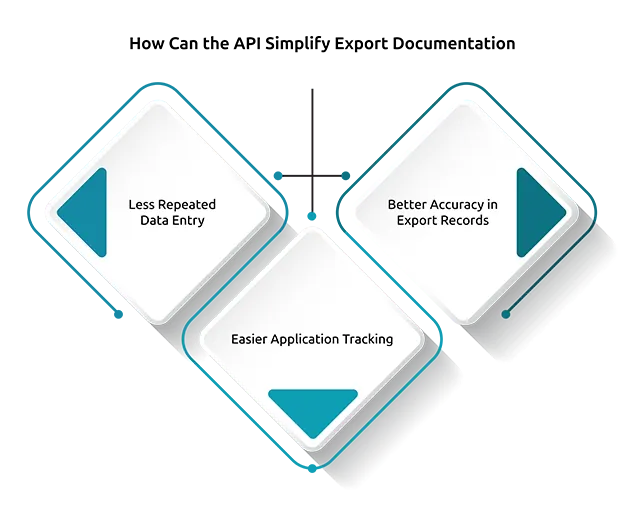
How Can the API Simplify Export Documentation?
1. Less Repeated Data Entry
Exporters frequently use their own systems to handle client data, shipment records, invoice details, and product classification. Reentering the same data on a government portal is time-consuming and error-prone.
Exporters can move pertinent application data from their apps to the Certificate of Origin system by developing APIs. This can help teams organize their paperwork and cut down on effort duplication.
2. Better Accuracy in Export Records
Processing papers may be hampered by missing fields, inconsistent corporate information, and erroneous product specifications. Digital data transfer can minimize some of the errors that occur when copying data between systems by hand.
Nevertheless, the accuracy of the original records continues to determine the quality of the outcome. Before submitting an application, exporters must confirm product descriptions, origin information, invoice data, and other necessary fields.
3. Easier Application Tracking
The new facility includes an electronic transaction ledger that records application progress. Exporters can track statuses such as Draft, In Process, Approved, Certificate Issued, and Rejected.
This visibility can help export teams identify pending applications, follow up when necessary, and maintain better records for internal reviews.
Security and Digital Integration
Connecting business software with government systems needs accurate security controls. DGFT’s new API framework includes authentication procedures, digitally signed requests & responses, & restrictions based on registered IP addresses.
These security help to secure data shipped across systems and make it easier to verify data and its source. Businesses looking for development should work with their software or IT teams to appropriately find access, secure passwords, & handle secure records.
Mainly, exporters should set up whole controls so that applications may only be approved or submitted by authorized staff. Although digital processes can increase productivity, compliance concerns might still arise from inadequate access restrictions or erroneous source data.
Conclusion
A more integrated approach to Certificate of Origin applications is introduced by India’s new Trade Connect API. Approved exporters can enhance application tracking, minimize repetitive data entry, & updated paperwork procedures by developing company software with the government portal.
These changes could enable more organized compliance processes for both small organizations and large exporters as global trade becomes highly digital. However, automation does not remove the need to understand trade agreement responsibilities, manage huge supporting data, & confirm facts.
As India’s digital commerce network builds, companies that combine easy data handling with safety technologies & regular compliance checks would be better able to manage export paperwork.
Did you know?
According to India’s Ministry of Commerce and Industry, the Trade Connect e-Platform had issued more than 35 lakh Certificates of Origin as of June 5, 2026. The new Open API facility builds on this digital system by allowing eligible exporters to apply for certificates directly through their own business software.
FAQ
1. What is the Trade Connect API?
It is an integration facility that allows eligible exporters to connect their business software with DGFT’s Certificate of Origin system.
2. Which documents are covered by the new API?
The facility covers applications and processing for preferential and non-preferential Certificates of Origin.
3. Can the API reduce export documentation errors?
It can reduce errors associated with repeated manual data entry, although exporters must still verify the accuracy of their information.
4. Does the API guarantee faster customs clearance?
No. It can streamline certificate-related workflows, but customs clearance also depends on other documents, regulatory requirements, inspections, and destination-country procedures.
5. Where can exporters find API registration details?
Exporters can consult the official Trade Connect Certificate of Origin portal for registration information and technical instructions.