Insight
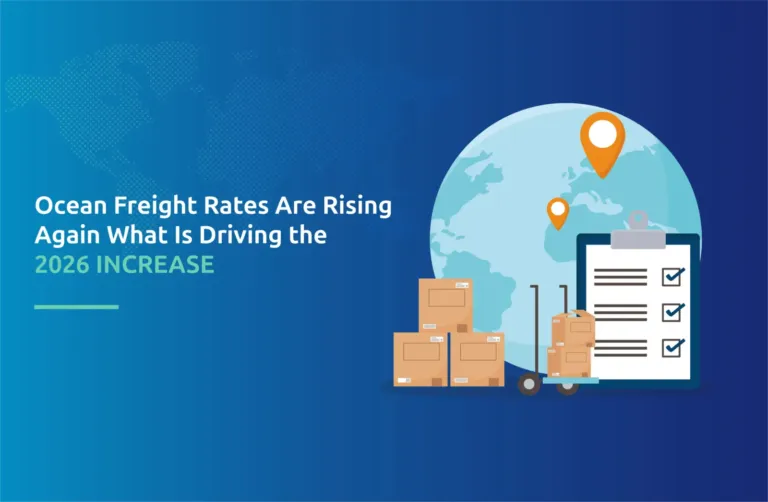
In 2026, ocean freight rates are increasing again on some important trade routes, making it more difficult for importers to plan for international shipping. Not all routes face the same changes. Ship capacity, cargo demand, fuel costs, port congestion, route changes, and other transport issues can all affect ocean freight rates. It reviews the main causes of the 2026 freight rate changes and shows how they can affect import costs, container shipping costs, and international supply chains.
What Is Happening to Ocean Freight Rates in 2026?
Ocean freight charges are changing at different rates in all international trade routes in 2026. Rates on some routes are higher, while those on others keep same or go down. Cargo demand, ship capacity, fuel cost, port congestion, & route changes all affect global shipping costs.
The trade route and market trends can also affect the cost of container shipping. Spot rates are current market prices and can change quickly, while contract freight rates are agreed for a fixed period. This means international shipping rates, ocean transport costs, and shipping rate changes can be different from one route to another.
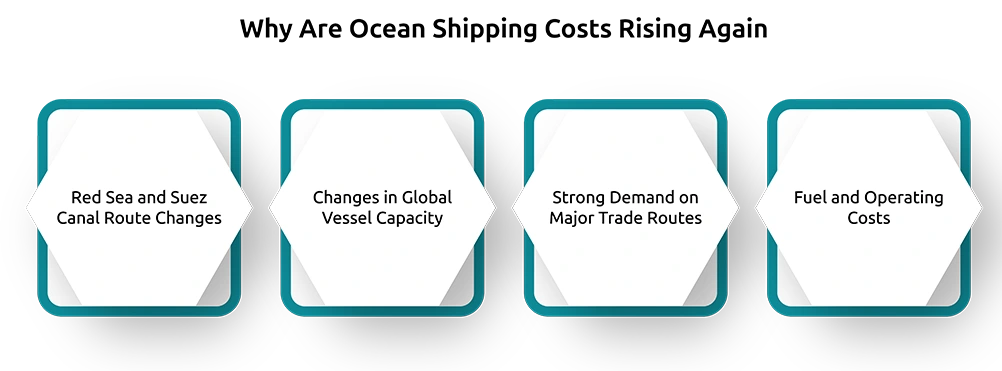
Why Are Ocean Shipping Costs Rising Again?
Red Sea and Suez Canal Route Changes
In 2026, shipping across the Suez Canal is changing again, as some carriers grow what they provide while security risks in the Red Sea remain. The Cape of Good Hope route may still be used by other ships. These changes may have an impact on available containers, shipping distance, transit time, and ship capacity on shipping routes between Asia and Europe.
Changes in Global Vessel Capacity
Carriers regularly adjust container vessel capacity based on demand and route conditions. They may change vessel deployment, reduce services, or use blank sailings. In September 2026, carriers announced several cancelled sailings across major routes, which can reduce available space for some shipments.
Strong Demand on Major Trade Routes
Higher global container demand can make available space tighter. In 2026, seasonal demand before China’s Golden Week is affecting some routes, while demand remains weaker on others. This means Asia-Europe trade and Transpacific shipping can experience different rate movements at the same time.
Port Congestion and Container Availability
Port congestion can slow vessel and container movement. Longer delays can affect the supply of equipment and cause to imbalance in containers across locations. Shipping plans may become unexpected as a result of these port delays and port congestion, which may also increase shipping costs.
Fuel and Operating Costs
Marine fuel costs are another factor affecting ocean freight prices in 2026. Higher bunker fuel prices increase vessel operating costs, and carriers may add a fuel surcharge to cover part of these higher shipping fuel expenses. Recent market data shows fuel costs remain an important pressure on container shipping.
How Freight Rates Can Affect Data Center Equipment Imports
Higher freight rates can increase the cost of data center equipment shipping, especially for large and high-value shipments. Server shipping, GPU shipping, and network equipment logistics may need careful planning because equipment can be heavy, bulky, or require special handling. For a data center deployment across several countries, changes in freight costs can affect the overall import budget. Companies moving IT hardware imports may also need to plan customs clearance, duties, taxes, and delivery costs along with ocean freight.
IOR for data center equipment can help manage the import process in each destination. One Union Solutions supports global data center logistics by coordinating IOR and import requirements for technology equipment across different markets.

What Is the Difference Between Freight Rate and Total Import Cost?
The freight rate is the cost of moving goods from the shipping origin to the destination. Total import cost includes the freight rate and other costs paid to bring the goods into the country. The freight rate vs landed cost difference is important when planning an import. Customs duty, VAT/GST, location charges, and customs clearance costs may be included in the landed cost.
For example, a shipment may have a reduced freight rate, but because of customs, taxes, or local charges, its overall import cost may still be greater. Therefore, companies should consider the complete cost of imports rather than just the cost of shipping by ocean.
Conclusion – What the 2026 Freight Rate Changes Mean for Importers
In 2026, port delays, fuel costs, ship capacity, demand, and route factors can all affect ocean freight rates. The final landing cost of imported goods may be affected by these changes. Before shipping, importers should check the complete import cost, which includes freight, tariffs, taxes, & other costs. Businesses can better handle changing global shipping costs by carefully planning their shipments and choosing a suitable delivery option.
Did You Know
Global shipping, which carries over 80% of world trade, is under immense pressure, facing delicate growth, rising costs and mounting uncertainty.
FAQ
Why are ocean freight rates changing again in 2026?
Route changes, ship capacity, cargo demand, port congestion, & fuel costs all affect ocean freight rates.
How do higher freight rates affect data center equipment imports?
Higher rates can increase the cost of shipping servers, GPUs, racks, and network equipment. This can raise the overall import and landed cost of a data center deployment.
How can importers manage changing freight rates in 2026?
Before making a booking, importers may check current freight costs, plan shipments before time, compare shipping options, and check the total landing cost.
What are blank sailings and how can they affect shipping costs?
A blank sailing is when a planned sailing is cancelled. Fewer sailings can mean less available space for cargo and may affect freight rates.
Why is shipment planning important when freight rates are changing?
Planning helps businesses compare available options and understand the expected shipping and import costs before the cargo is booked.