Gulf shipping conditions are changing quickly in 2026 as cargo is being moved through different ports, land routes, and alternative shipping connections. This is putting additional pressure on some regional gateways and creating new planning challenges for importers.
Port delays for importers add more than just waiting for a ship. Cargo availability, storage, inland shipping, customs clearance, delivery schedules, & the total cost of a shipment can all be affected.
Why Is Gulf Port Congestion Increasing?
Changes in the region’s typical transportation patterns are connected to the current port delay situation. Carriers are reviewing how cargo is transported through the Gulf due to safty concerns surrounding the Strait of Hormuz and other major maritime routes.
When a normal port or route becomes critical to use, cargo may be moved to another gateway. This can increase the amount of cargo managed by similar ports and create additional pressure on terminals, yards, trucks, and inland transport networks.
This means port delays can move from one part of the logistics network to another rather than simply disappearing.
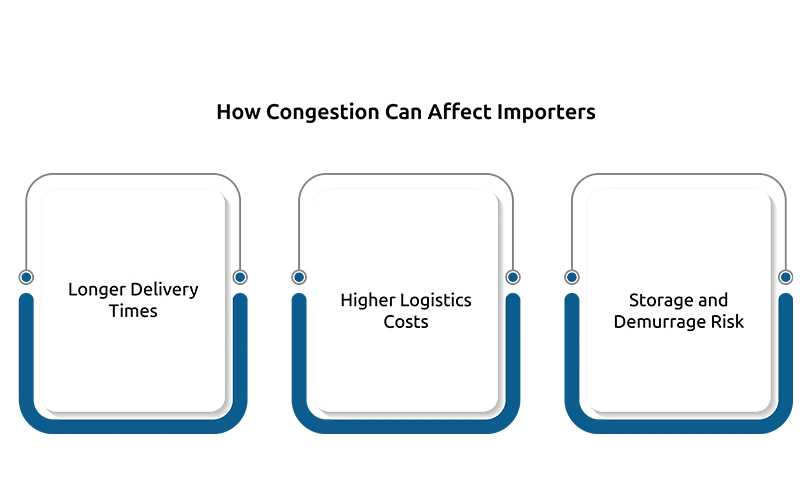
How Congestion Can Affect Importers
Longer Delivery Times
Port congestion can add time before cargo is discharged, cleared or collected. Vessel waiting time is only one part of the delay. Cargo may also require additional handling, storage or inland transportation after reaching an alternative port.
For companies importing servers, networking equipment, industrial machinery or spare parts, even a few additional days can affect installation or maintenance schedules.
Higher Logistics Costs
The landing cost of imported goods may rise with additional shipping.
The importer may change route, incurring extra inland transportation, handling, or storage costs if goods are discharged at a different port and then transported by truck to its original location. The revised routing arrangement may result in higher transportation, clearance, and storage expenses for affected cargo.
Additionally, changes in available vessel capacity and routing alternatives may affect freight rates.
Storage and Demurrage Risk
Congestion can make it harder to collect cargo within the available free-storage period.
If containers remain at a storage or transit location for longer than planned, additional storage or related charges may apply. Importers should therefore confirm the free-storage period, collection requirements and responsibility for additional charges before cargo arrives.
Changes to the Final Port
Importers should not assume that the port shown on the original booking will always remain the final discharge point.
Current carrier arrangements show that some cargo originally planned for one Gulf gateway can be redirected to another port and then moved by land to the intended destination.
This can affect customs planning, delivery appointments and the documents needed for the shipment.
Why Alternative Gulf Ports Matter
Alternative ports such as Khor Fakkan, Fujairah and Salalah are becoming more important when normal Gulf routing is restricted or difficult.
However, an alternative port is not automatically a simple replacement. Importers need to check whether the carrier accepts the cargo at that gateway, whether customs procedures are available, whether trucking is arranged, and whether the cargo can legally ship onward to the final location.
The best option therefore depends on the cargo, destination, carrier, customs requirements, and available capacity.
What Technology Importers Should Check
Technology & data center equipment can need additional planning because shipments may contain high-value or time-sensitive products.
For huge data center deployments, businesses may also consider dividing cargo into shipment waves. Important equipment can be planned separately from less time-sensitive goods where the logistics situation allows.

How Importers Can Prepare
Rather than depending only on the original quotation, it is most useful to confirm the shipment route just before cargo travels.
Importers should inquire with their freight forwarder or carrier about the availability of the intended port and the possibility of using a different gateway. They need to to verify the likely travel time, inland route, & customs procedure.
It is also important to keep documents ready. Accurate business invoices, packing lists, product classification, customs value, permits, and importer details are still need even when a port or transportation arrangement changes.
Businesses should keep a backup delivery plan for important items and factor in extra time for potential delays at port, customs, or interior transportation.
Conclusion
Gulf port congestion in 2026 is creating a more complex environment for global importers. Changes in shipping routes are increasing the use of alternative ports and land connections, while congestion at some gateways can add waiting time and additional handling.
For importers, the key is to look beyond the ocean freight booking. Port availability, customs, inland transportation, storage, documentation and final delivery all need to be considered together.
A shipment planned around one port or one route may need to change before the cargo arrives. Businesses that check alternative routing and destination-side requirements early can respond more effectively when Gulf shipping conditions change.
Did You Know?
Global container freight markets strengthened through May 2026, though the rally was highly lane-specific rather than broad-based. By May 21, Drewry’s World Container Index had risen 6% week on week to USD 2,712/FEU, led by a sharp move on Asia–Europe.
FAQs
What is causing congestion at Gulf ports?
Changes in regional shipping routes are moving more cargo through alternative ports and transport connections. This can put additional pressure on terminals, storage areas, vessels and inland transportation.
Which Gulf ports are being used as alternatives?
Depending on the cargo and destination, carriers may use ports such as Khor Fakkan, Fujairah and Salalah as part of alternative routing arrangements. Availability depends on the carrier, cargo type and current operating conditions.
How can Gulf port congestion affect importers?
It can lead to longer transit times, additional handling, storage charges, higher inland transportation costs and changes to the final delivery port.
Can technology equipment be affected by Gulf port congestion?
Yes. Servers, GPUs, networking equipment, telecom hardware and other high-value equipment can face delivery delays when vessels are rerouted or cargo requires additional port and inland handling.
What should importers check before shipping through the Gulf?
Importers should check the current port, carrier routing, vessel schedule, customs requirements, inland transportation, storage arrangements, expected delivery date and any alternative routing options.