Aircraft-on-ground (AOG) situations can make an aircraft part urgently needed. Even when the part is ready to ship, import requirements, customs documents, and the importer of record can affect the shipment. An IOR for aviation can help companies manage the import side of aircraft parts and support urgent shipment coordination. This is useful for airlines, MRO organizations, aircraft operators, OEMs, and parts distributors that need to move aircraft parts internationally while meeting the required customs and import rules.
What Is an Importer of Record for Aircraft Parts?
An Importer of Record (IOR) is the party responsible for bringing aircraft parts into a country and meeting its import requirements. For aircraft parts imports, the IOR provides or supports the required customs information, import documents, duties and taxes, and regulatory checks. An IOR for aviation can be useful when an airline, MRO, aircraft operator, or parts supplier does not have the right local setup to act as the importer. The IOR does not replace the customs broker or carrier; each party has its own role in the import process.
Why AOG Shipments Need Special Import Planning
An Aircraft-on-Ground (AOG) case may require a fast replacement or repairable part. The shipment might have to move fast in aircraft-on-ground logistics, but proper handling of customs & import laws is still required. Before the shipment arrives, IOR AOG shipments need correct part details, specific importer data, and the correct documents. Good planning for urgent aviation imports can help avoid issues such as missing paperwork or unclear import responsibility during AOG customs clearance. This is especially important for time-critical aircraft parts, where delays can affect aircraft operations.
Types of Aircraft Parts and Aviation Equipment an IOR Can Support
An IOR can support different types of aircraft parts and aviation equipment, based on the destination country’s import rules and requirements. Aircraft spare parts can include replacement items used for maintenance, while avionics equipment can include communication, navigation, and other electronic systems.
Other aircraft components may be imported for installation or maintenance. MRO equipment supports aircraft maintenance and repair work. Repairable aircraft parts can be sent to another country for testing or repair and later returned. Specialized aviation technology may also require specific import checks and documents.
How Customs Clearance Works for AOG Shipments
Checking the importer, aircraft part details, and required import documents is the first step in AOG customs clearance. The part quantity, description, value, country of origin, and customs classification must all meet the shipment to allow for aviation parts to be allowed through customs. The required customs declaration is prepared using these details and submitted to the customs authority. Aviation import customs may also involve checks for permits, approvals, duties, taxes, or other requirements, depending on the country and type of part.
For urgent aircraft shipments, checking these requirements before the shipment arrives can help identify missing information early. An IOR can support the import process and provide the required importer information, but customs authorities control the final clearance and release of the shipment.
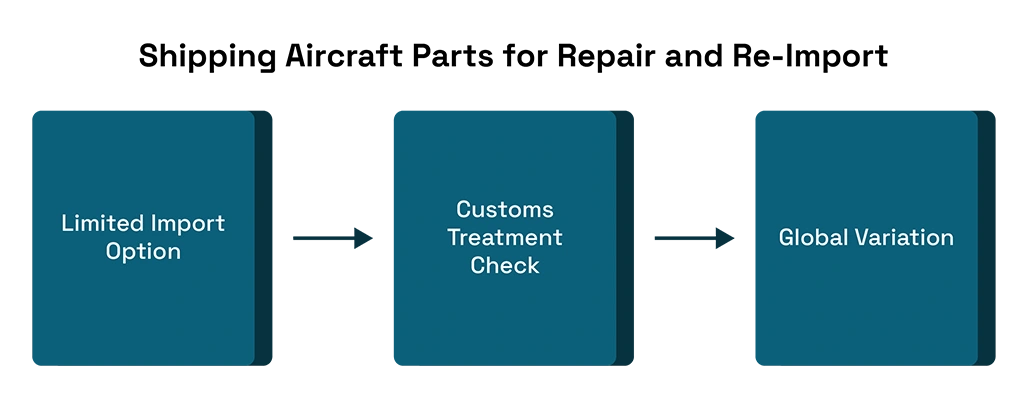
Shipping Aircraft Parts for Repair and Re-Import
Aircraft parts for repair may be sent to another country for inspection, testing, maintenance, or repair. These repairable aircraft components can then be shipped back to the original country or another location after the work is completed. A return for repair may have different customs requirements from a normal sale. If the products meet the required standards, a limited import for repair may be possible in multiple countries. Details about the primary shipment, part value, repair goal, and expected return may be required of the importer.
For an aircraft component re-import, the customs treatment should be checked before the part is shipped back. Proper records of the original export, repair work, and return shipment can help support the customs process.
AOG Shipment Coordination Between Suppliers, MROs and Customs
AOG shipment coordination involves several parties working with the same shipment information. The aircraft parts supplier provides accurate part details, documents, and shipping information. The MRO team confirms where the part is needed and whether it is for replacement, maintenance, or repair.
Also, MRO logistics has to connect the shipment with the delivery location and aircraft repair plan. Before to the shipment’s delivery, customs handling helps in verifying the importer, declaration data, and other import rules. Data shortages in the aircraft supply chain can be reduced by having clear communication between different parties, even when a part is urgently needed.

Conclusion
AOG shipments require careful planning because aircraft parts may be needed urgently. An IOR for aviation can help manage the import side by supporting importer details, documents, and customs requirements. It’s important for suppliers, MROs, customs, and other entities to plan AOG imports properly. Shipments of important aviation parts can be handled easier and possible issues can be identified early if the import process is prepared before an emergency.
Did You Know
India’s aircraft parts imports are expected to total nearly $530 million by 2026, down 4% per year on average from 2021’s $664 million.
FAQ
Can an IOR support an AOG shipment when the airline is not the importer?
Yes. An IOR can act as the importer where permitted and handle the required import process for the aircraft part.
What can cause an AOG aircraft parts shipment to be delayed?
Missing documents, incorrect part details, unclear importer information, or additional regulatory requirements can affect the shipment.
Can an AOG shipment be stopped by customs even if the aircraft needs the part urgently?
Yes. Urgency does not automatically remove customs or regulatory requirements. The shipment may still need to meet the applicable import rules.
What records should companies keep for aircraft parts sent across borders?
Companies should keep relevant invoices, shipping records, part details, export documents, repair records where applicable, and import documentation.
What happens if the aircraft part arrives before the import documents are ready?
The shipment may not be released until the required customs information & documents are provided. Preparing the import details before dispatch can help avoid this situation.