Introduction: Logistics Is No Longer Just About Tracking Goods
Logistics tracking used to mainly involve knowing the location of goods, the expected delivery time, and any delays. Supply chains are now more detailed and connected. Supplier problems, missing documents, customs checks, inventory levels, finances, changing demand, and other risks can all have an effect on a shipment. This is where “invisible logistics” is becoming important. It covers the activities that happen behind the movement of goods, including supply chain data, supplier performance, inventory, cash flow, compliance, risk and sustainability. These factors may not be visible in a normal tracking system, but they can affect delivery time, cost and overall supply chain performance. Current industry research shows the growing importance of supply chain visibility. PwC’s 2025 Digital Trends in Operations Survey found that 98% of respondents said digital tools improved visibility into their end-to-end operations. As a result, companies are moving beyond basic shipment tracking. They are using digital tools, supply chain analysis, and real-time data to develop more detailed knowledge of their operations. This wider perspective can help companies to detect problems faster, reducing delays, handling costs, & improving end-to-end supply chain visibility.
What Is Invisible Logistics?
Invisible logistics means the work that happens behind the movement of goods. It includes financial flows, information flows, supplier coordination, digital documentation and compliance processes that help shipments move smoothly. It also includes hidden logistics costs such as storage, waiting time, extra handling and paperwork. These costs can affect logistics operations even when a shipment is moving on time. Supply chain visibility and transparency are improved by data from suppliers, warehouses, & shipping providers. Businesses can use this data to improve operational choices, sustainability performance, and risk management. Businesses can combine logistics data, identify issues quickly, and enhance supply chain performance with digital logistics and supply chain intelligence.
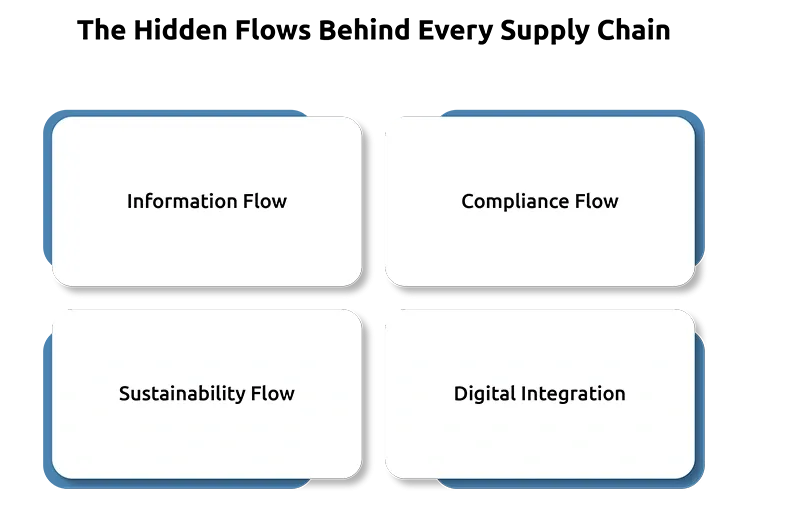
The Hidden Flows Behind Every Supply Chain
A supply chain involves more than just moving goods. The physical flow of goods covers the movement of products from suppliers to warehouses, distribution centers and customers. Alongside this, information flow includes orders, tracking information, customs documents, inventory data, electronic invoices and proof of delivery. The financial flow includes payments, working capital, supplier credit, invoice financing and payment terms, which can affect when goods are produced, released or delivered. The Vietnam source also highlights how cash flow can be linked with physical supply-chain movement through digital documents and APIs. Compliance flow covers customs documentation, import requirements, product approvals, duties and taxes, and regulatory checks needed for goods to move legally. At the same time, sustainability flow looks at carbon emissions, energy consumption, waste, supplier sustainability and ESG reporting. Together, these flows give businesses a wider view of their operations and support better supply chain visibility and decision-making.
Supply Chain Finance Is Becoming Part of Logistics
The flow of money is becoming a crucial aspect of modern logistics. Even if a shipment continues as planned, a supplier could still face delays due to payment delays or limited working capital. Logistics, trade, and finance are all connected by supply chain finance, which makes it simpler for companies to handle these financial needs. Supplier financing and invoice financing can help suppliers receive funds earlier instead of waiting for the full payment period. Good cash flow management can also support steady production and delivery. In the financial supply chain, tools such as digital invoices, electronic bills of lading, warehouse receipts and proof-of-delivery data can make financial checks faster. Trade finance and digital trade finance can therefore support smoother movement of goods while reducing financial delays.
Sustainability Is Another “Invisible” Layer of Logistics
Traditional tracking shows the location of a shipment, but it does not completely show its effects on environment. Companies must also track energy use, waste, carbon emissions, & supplier efficiency. Because of this, supply chain sustainability is important for modern logistics. A 2025 MIT study found that 85% of companies were maintaining or increasing their supply chain sustainability efforts, while about 70% did not have enough supplier data to measure their supply-chain climate impact accurately. Better data can improve environmental performance and support green logistics and sustainable logistics. Also, sustainable procurement can help companies in working with trusted suppliers. Together, these practices support ESG supply chain goals and stronger green supply chain management.
Conclusion – The Future of Logistics Is About More Than Tracking
While traditional tracking is still important, new logistics require more than just shipment updates. Supply chain performance is also impacted by data, finance, risk, compliance, & sustainability. Supply chain visibility is being improved and these areas are becoming easier to handle because of AI, APIs, automation, and connected platforms. In the future, problems will be identified and handled earlier instead of being simply tracked.
Did You Know
The global logistics sector is projected to grow at a 6.3 % compound annual rate through 2028, propelled by resilient e‑commerce demand and large‑scale infrastructure investment.
FAQ
What makes invisible logistics different from normal logistics tracking?
Normal tracking mainly follows shipments. Invisible logistics also looks at the data, money, documents, risks and other activities that support those shipments.
How can invisible logistics improve supplier management?
Companies can use supplier performance data to identify late deliveries, capacity problems and other issues.
How does invisible logistics support sustainability reporting?
It makes evaluating environmental performance easier by combining data on energy use, waste, carbon emissions, and supplier sustainability.
How can invisible logistics help during supply chain disruptions?
Real-time data can help companies respond more quickly to changes in suppliers, inventory, shipping, or compliance.
How can companies measure invisible logistics performance?
They can track logistics costs, delivery time, supplier performance, inventory, waiting time, compliance issues and sustainability data.