Introduction
Global production is shifting as organizations look for better ways to handle resources, reduce waste, & develop stronger supply networks. Traditional supply chains often follow a linear model: raw materials are recovered, products are production, sold, used, or finally rejected. This approach can increase material use & create needless waste. Circular logistics provide a different model by storing products, components, or materials in use for as long as possible. For productions operating across global markets, this approach can support resource efficency while also improving supply chain efficiency & long-term business value.
What Are Circular Supply Chains?
A circular supply chain is built to minimize waste by keeping materials or products within the economic cycle for longer. Instead of handling used products as waste, companies can repair, restore, reproduction, reuse, or recycle them. This creates a continuous flow of resources between production, suppliers, customers, & recovery partners.
The concept goes beyond recycling. A successful circular supply chain considers the complete product lifecycle, from sourcing raw materials or production to supply, use, return, & recovery. This allows organizations to rethink how products are built, shipping, kept, returned to the supply chain.
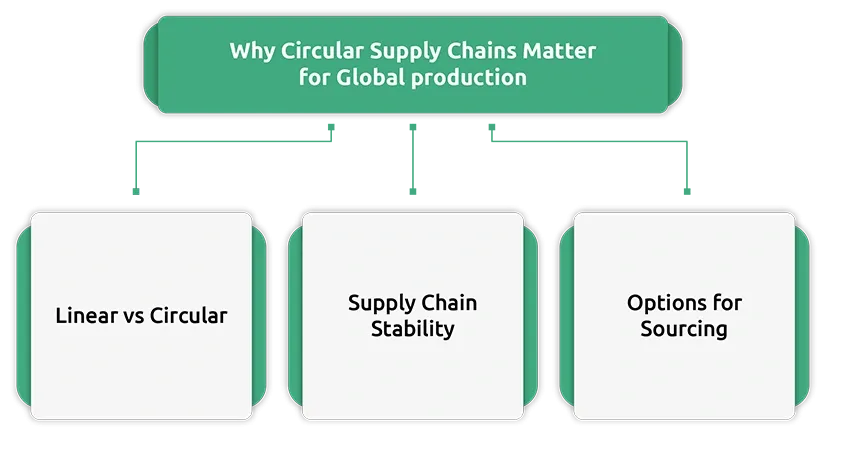
Why Circular Supply Chains Matter for Global production
productions today face demand from increasing material costs, supply delays, environmental requirements, & changing rules. Rely heavily on newly sourced raw materials can show companies to price changes & supply shortages. Circular models can help production recover valuable materials or components from products already in circulation.
For global manufacturers, this can also improve supply chain stability. Reusing components or recovering materials from returned products can reduce rely on a single source of raw materials. As global supply networks become more complex, circular practices can provide production with additional options for sourcing & production.
How Circular Supply Chains Work
The purpose of circular supply chains is to increase the value of goods, parts, and tools. Businesses can create goods that are simpler to improve, recycle, repair, and reuse. During manufacturing, they can also reduce material waste and use recovered parts where suitable.
After products are used, reverse logistics brings returned, damaged or unused items back to the company or a recovery facility. The items are then checked and sorted for repair, refurbishment, reuse, parts recovery or recycling. This helps create a more efficient circular supply chain management process and reduces unnecessary waste.
The Role of Reverse Logistics
Reverse logistics is an essential part of circular supply chain management. It includes transport products, components, or materials from customers back to productions, suppliers, or expert recovery facilities.
For example, an electronics production may gather restored servers, networking equipment, or other hardware from customers. Working components can be tested or reused, while broken parts may be repaired or recycled. This method can recover value that would otherwise be lost & minimize the amount of equipment sent to refuse side.
Cross-Border Returns in a Circular Supply Chain
Circular supply chains can become more difficult due to cross-border returns because returned goods still need to comply with customs regulations. Businesses may need the correct HS code, import documents, customs value and return details for IT equipment such as servers or networking devices. Duties, taxes or special procedures may also apply depending on the country. Good reverse logistics planning helps businesses manage these returns more smoothly.
Circular Manufacturing and Product Design
Circular production begins before a product enters the market. Producers can develop products with longer lifecycles, replaceable components, modular structures, or recyclable materials. These features can make repairs or enhanced easier while minimizing the need to replace complete products.
Modular design is specifically useful for industries such as electronics, telecom, automotive, or industrial equipment. Instead of replacing an complete unit because one component fails, productions can replace or repair the individual part. This can reduce material use & support more effective product lifecycle management.
Benefits of Circular Supply Chains
Circular supply chains help productions reduce material waste by reusing products, components, or recovered materials instead of sending them directly for removal. This approach improves resource efficiency & minimize dependence on newly sourced raw materials.
They can also help lower lifecycle costs because repairing, restoring , or enhancing products may cost less than producing complete replacements. Keeping products in use for longer can improve goods value or reduce unnecessary replacement costs.
Challenges in Implementing Circular Supply Chains
Although the benefits, moving from a linear to a circular supply chain is not always simple. Companies may need to redeveloped products, create collection systems, train employees, or develop link with recycling or repair partners.
Global operations can add another layer of complexity. Returned goods crossing borders may require customs documentation, correct HS code classification, duties, taxes, permits, or regulatory checks. Different countries may also have different rules for waste, used equipment, restored products, & electronic goods.
Circular Supply Chains and Global Trade
Global production need to consider trade compliance when implementing circular models. A product being returned for repair does not automatically remove customs requirements. Depending on the country and transaction structure, businesses may need specific documentation or temporary import processes.
Companies moving equipment globally should understand applicable customs rules before shipping. Working with an expert Importer of Record service offer can help businesses handle import documentation, customs clearance, duties, taxes, or local compliance requirements.
Conclusion
Circular supply chains are becoming an essential part of the future of global production. By integrating product reuse, repair, reverse logistics, recycling, digital tracking, & smarter product design, businesses can minimize waste while making better use of existing resources.
For companies operating across borders, circularity also requires strong logistics & trade compliance planning. Handling returns, repair goods, or recovered components globally can involve complex customs requirements. With the right processes and partners, production can develop supply chains that are more strong, resource-efficient, & prepared for the changing demands of global trade.
Did You Know?
In 2025, the EU’s circular material use rate was reported at 11.8% for 2023, showing that recycled materials still account for a relatively small share of total material use.
Frequently Asked Questions
How do circular supply chains benefit production?
Circular supply chains help production minimize material waste, recover valuable components, or expand product lifecycles. They can also improve resource efficiency & reduce rely on new raw materials.
What role does reverse logistics play in circular supply chains?
Reverse logistics moves used, sent back, or damaged products back to production or recovery facilities. These products can then be repaired reused, reproduction, or recycled.
Can circular supply chains reduce manufacturing costs?
Yes. using again components, repairing equipment, or recovering materials can minimize the need for new production & raw materials. This can lower costs across the product lifecycle.
How does technology support circular supply chain management?
Digital tracking, IoT, or data analytics help businesses monitor product location, condition, or lifecycle history. This makes it simple to identify products suitable for repair, reuse, or recovery.
What challenges do companies face with global circular supply chains?
Cross-border returns can includes customs documentation, HS code classification, duties, taxes, or import rules. Proper compliance planning is essential when moving used or repair products globally.