Introduction
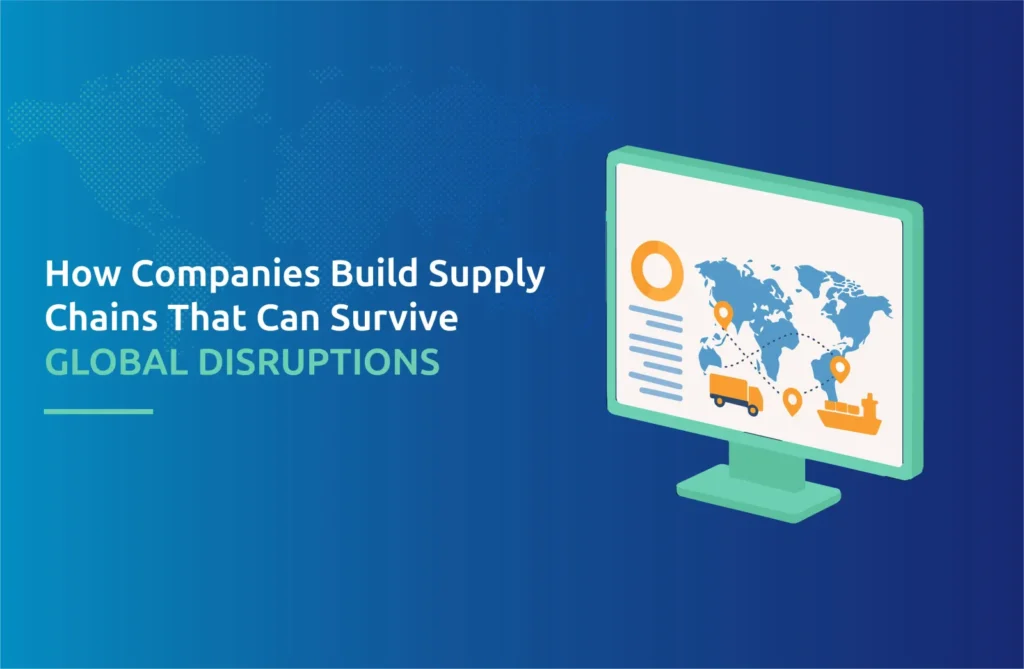
In 2026, global supply chains will face more problems than before. Economic issues, trade rules, cyberattacks, natural disasters, port congestion, & changing legal regulations are all typical causes of disruption for businesses. Such issues can cause shipments to be delayed, increase shipping costs, & make it more difficult for companies to deliver goods on time. Recent delays to important global shipping routes also showed how quickly a single problem can affect companies globally. Many businesses in the past depends on a select number of suppliers and just-in-time inventory when developing their supply chains in order to reduce costs. Although this method reduced costs, it also increased the sensitivity of companies to unexpected delays. These days, businesses are focusing on risk management, company continuity, & supply chain resilience to maintain services even in uncertain times.
Businesses can respond quickly to delays, identify other suppliers, improve supply chain visibility, and keep products ready for customers with the support of a strong supply chain. Companies have invested in flexible supply chain methods that reduce risks and support long-term growth rather than simply choosing the cheapest route. Building a stronger and more flexible supply chain has become known as a key business issue as global trade continues to change.
What Is a Resilient Supply Chain?
A supply chain that can manage unexpected problems and recover quickly without stopping business processes is said to be reliable. It allows businesses to keep shipping goods, handling inventory, and shipping goods even in a situation of disruptions. Supply chain capacity, careful preparation, and planning for business continuity to reduce risks are all parts of a strong, resilient supply chain strategy. Using more suppliers and having less inventory is the main goal of a traditional supply chain. When trade rules, natural disasters, or logistics issues occur, this can cause delays even though it works normally. To maintain a smooth process, a strong supply chain, on a different side, makes use of multiple suppliers, flexible shipping options, and better planning.
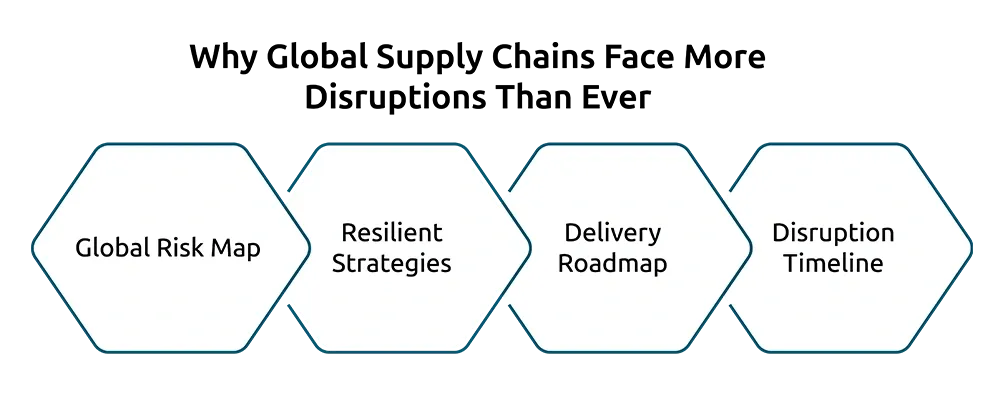
Why Global Supply Chains Face More Disruptions Than Ever
Global supply chain disruption is going to increase in 2026 as companies depend on providers & shipping networks in multiple countries. The delivery of goods may be delayed when connected in the supply chain is affected, resulting in changes in global trade. Tragic events, political instability, shifting trade rules, & cyberattacks face many supply chain risks. These situations can increase costs, affect company activities, & delay imports and exports. Port congestion, supplier problems, transit delays, and higher prices are further problems with global logistics. Companies are developing more flexible and reliable supply chains in response to these risks in order to maintain product supply and avoid major delays.
Why End-to-End Supply Chain Visibility Is Essential
Businesses can track products at every level, from suppliers to customers, with the use of supply chain visibility. Better logistics overview & real-time shipment tracking allow companies to understand where goods are and react to delays faster. Additionally, it helps companies track the performance of a supplier & detecting issues before they become major. Supply chain tracking allows quick response by providing quick alerts on less inventory, delivery delays, & delivery issues. Improved visibility supports fast decision-making, reduced delays, better customer service, & a smooth supply chain.
Managing Supply Chain Risks Before They Become Problems
Supply chain risk management helps companies in detecting and reducing issues before they affect their processes. A thorough risk analysis helps companies to avoid possible risks, such as changing trade rules, supplier delays, and shipping issues. Planning for a strong supply chain requires developing back-up plans for different situations, checking compliance with trade & customs laws, and planning regular checks to review supplier performance. Additionally, companies develop plans for emergency responses so they can react quickly to unwanted disruptions. These procedures help in reducing business risk, improving supply chain safety, & helping businesses to continue providing goods on time.

How Digital Technology Makes Supply Chains More Resilient
Businesses may improve daily tasks and respond to issues more quickly with the help of a digital supply chain. AI in supply chains, machine learning, and predictions are examples of technologies that review data to predict demand, detect risks, and help with improved planning. IoT devices are used in live tracking and logistics to keep track on the location and state of shipments as they are being shipped. This increases supply chain visibility and allows companies to react quickly in the case of delays or other issues. In order to verify different situations before making decisions, different tools, like e-twins, produce virtual models of supply chain processes. Cloud platforms make it simple for companies to share details, and automation increases accuracy, decreases manual work, & speeds up daily tasks. These technologies work together to help companies build a supply chain that is stronger and more dependable.
Conclusion
A reliable supply chain helps companies to keep their product supply in the face of unexpected challenges. Smooth business processes & reduced delays are provided by a solid supply chain. Businesses that use technology, improve control over their supply chains, work with multiple suppliers, and apply effective risk control have a better chance to handle future issues and provide more reliable customer service.
Did you know
Industries experience a supply chain disruption lasting a month or longer every 3.7 years on average, and companies in most sectors can expect shocks to erase 45% of one year’s EBITDA over the course of a decade.
FAQ
Why is supply chain resilience important for businesses?
Businesses can continue moving during unexpected delays with the support of a strong supply chain. It reduces risks, reduces delays, & enables on-time delivery of goods to users.
How can companies reduce supply chain disruptions?
By using many kinds of sellers, improving supplier visibility, keeping backup stocks, & identifying possible risks, businesses can reduce delays.
What technologies improve supply chain resilience?
Businesses can better track & handle their supply chains with the use of tools like AI, cloud services, IoT, live shipment tracking, & predictions.
How does supplier diversification reduce supply chain risk?
Using many sources reduces dependency on a single source. Another supplier can keep delivering the required goods even if one has a problem.
What is the role of supply chain visibility during disruptions?
Supply chain insight helps companies in tracking shipments, keep track on suppliers, detect delays quickly, & making faster decisions when they face disruptions.