Introduction
When organizations import goods from other countries, they usually think about duties, taxes, & transportation costs. But many forget about the price of customs delays. If a shipment is held at the border, businesses may have to pay storage charges, extra transport costs, or face delivery delay issues. These problems can also slow down production, leave customers waiting, & mainly affect sales. The cost of a delay is more costly than the customs duty itself. That is why it is important to understand why customs delays happen & how they can be avoided.
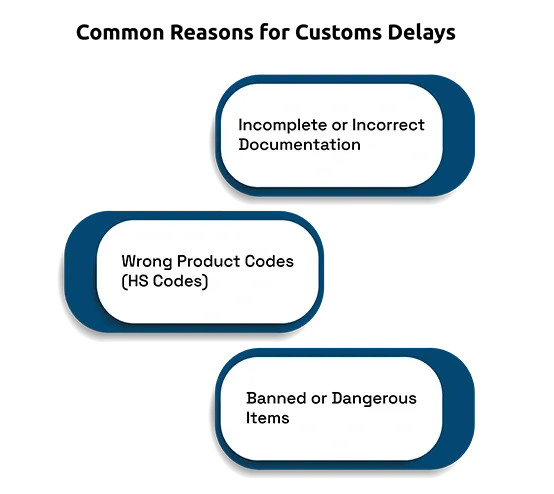
Common Reasons for Customs Delays
1. Incomplete or Incorrect Documentation
This is hands down the number one reason for delays. Lost bills, wrong packing lists, or incomplete documentation make customs officials stop the move. They can’t know what they can’t check. Tip: Always look over trade bills, packing lists, ship bills, source proofs, and any must-have paperwork before you send.
2. Wrong Product Codes (HS Codes)
Using the incorrect HS code can lead to incorrect duty & tax calculations, which may cause customs to stop your shipment for verification. It can also result in delays, extra documentation, & fines. Selecting the correct HS code helps customs process your shipment faster than usual, ensures compliance with import laws & regulations, & minimizes the risk of unnecessary delays.
3. Valuation Issues
If the price you say your goods are worth doesn’t fit normal prices or looks too low or high, customs will look into it. They need to make sure taxes are fair & stop scams.
4. No Import/Export Documentation
Some things, like tech items, need special papers. Without these, your goods won’t move until the correct paperwork is in place.
5. Banned or Dangerous Items
Some items might be fully banned or severely limited in the place you are sending to. Not knowing this can cost a lot.
Industries Most Affected by Customs Delays
Information Technology
The IT industry mainly depends on the quick shipment of products like servers, laptops, networking equipment, & data center hardware. Customs delays can affect installations, delay business projects, & rising storage & shipping costs. Companies may also miss important project deadlines if equipment does not arrive on time.
Medical Devices
Medical equipment often needs to reach hospitals & healthcare experts quickly. Delays at customs can affect the supply of important equipment like diagnostic machines, surgical tools, & patient management devices. This can disrupt healthcare services & increase costs for suppliers.
Telecommunications
Telecommunications companies highly import network equipment, routers, antennas, & fiber optic hardware. Customs delays can slow down network upgrades, slow the rollout of new services, & affect connectivity projects. These delays may also lead to higher project costs.
Aviation
The aviation industry mainly depends on the timely delivery of aircraft parts, management equipment, & safety components. If these shipments are delayed at customs, aircraft maintenance schedules can be affected, leading to operational issues & additional costs for airlines & service providers.
Automotive
The automotive industry depends on a stable supply of imported parts & components. Customs delays can interrupt manufacturing, delay vehicle repairs, & slow deliveries to dealerships. Even a small delay in receiving critical parts can affect the entire production process & increase overall costs.
Reducing Customs Delays Through Better Planning
Minimizing customs delays starts with correct and complete paperwork. Every shipment should include proper invoices, packing lists, & correctly classified goods using the right HS code.
Working with experienced providers of international freight services and international logistics services helps to ensure smoother handling of shipments and following of rules.
Using Importer of Record & Exporter of Record services helps organizations to handle legal responsibilities more easily, especially when shipping to countries with strict import rules.
Technology also plays an important role. Using the best trade compliance software for import export rules which helps to automate tasks, reduce mistakes, & improve inventory and order management.
Working with experts who provide customs compliance services makes sure that both import and export paper are handled properly, reducing the chances of delays.

Conclusion
Customs delays affect more than slow shipments. They can raise costs, delay shipments, delay business operations, & affect consumer satisfaction. Even a small mistake in transportation paperwork or product details can create unnecessary problems in shipping products at the border. Taking time to prepare correct paperwork, use correct HS codes, & follow import rules can help secure these issues. Businesses that plan & work with experienced customs & logistics partners are better prepared to keep goods shipping without delays. An easy customs process not only saves money but also helps build a stronger & more trustworthy supply chain.
Did you know?
More than 80% are already reviewing their supply chains in response to changing trade policies, while many are investing in technology to improve visibility, automate compliance, and reduce the burden of manual processes.
FAQs
What are the main reasons for customs delays?
The most common reasons include incomplete or incorrect documents, wrong HS codes, valuation issues, missing import or export permits, and restricted or prohibited goods.
How do customs delays affect businesses?
Customs delays can increase storage and transportation costs, disrupt supply chains, delay production, and lead to lost sales and unhappy customers.
Which industries are most affected by customs delays?
Industries such as information technology (IT), medical devices, telecommunications, aviation, and automotive are highly affected because they depend on the timely delivery of imported goods.
How can businesses reduce customs delays?
Businesses can reduce delays by preparing accurate shipping documents, using the correct HS codes, complying with import regulations, and working with experienced customs and logistics partners.
How do Importer of Record (IOR) services help with customs clearance?
Importer of Record (IOR) services manage import compliance, documentation, and legal responsibilities on behalf of businesses. This helps shipments clear customs more smoothly and reduces the risk of delays.