Introduction
In today’s evolving global landscape, the international logistics supply chain has experienced unprecedented shocks, with disruptions & delays becoming the norm. The industry is shifting from basic mechanical automation to AI-driven intelligent decision-making.
Before updating new technologies, however, it’s important to distinguish between two concepts that are often confused the strategic pursuit of Strategic autonomy for geopolitical & national security resilience, & the autonomous supply chain technology that utilizes AI for unmanned decision-making.
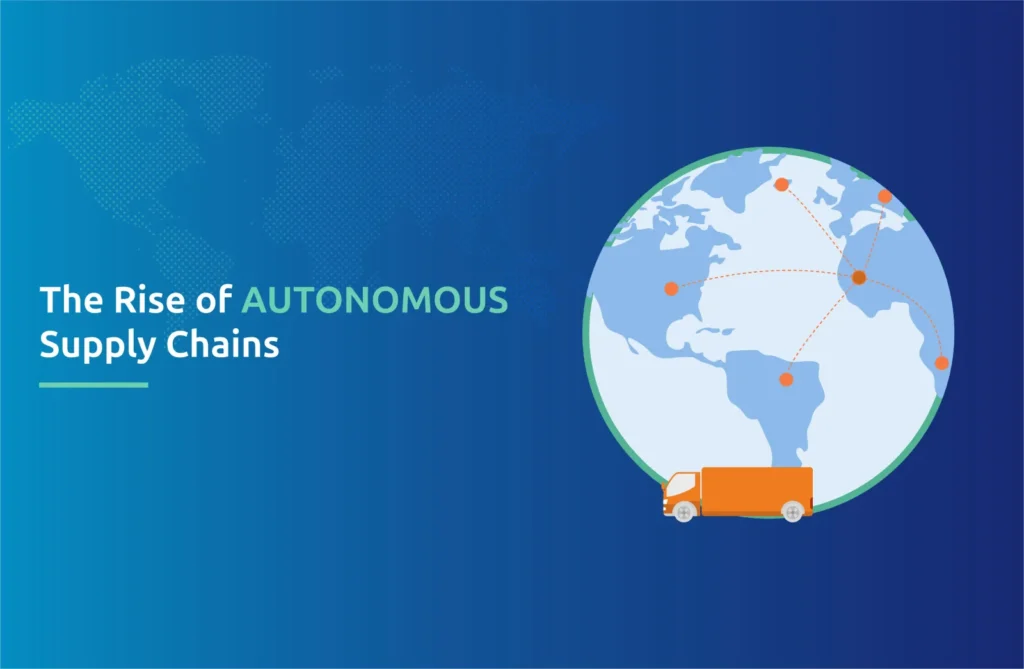
What is an autonomous supply chain?
An autonomous supply chain is an updated supply chain that uses AI, automation, & real-time data to handle operations with less human work. It can track products, check inventory, predict demand, & make quick decisions automatically. Unlike traditional supply chains, it can detect problems & respond faster. For example, it can detect low stock, track shipments, & adjust delivery plans when delays happen.
Autonomous supply chains help organizations minimize costs, avoid delays, enhance accuracy, & deliver products more easily. They make supply chains faster, smarter, & easier to handle.
How Autonomous Supply Chains Work
An autonomous supply chain uses AI & automation to handle supply chain tasks with less human work. It collects data, understands what is happening, & takes action in real time. This helps businesses save time, minimize mistakes, & keep goods moving. The process starts with demand forecasting. The system studies past sales & customer demand to predict what products will be needed. This helps businesses keep the right amount of stock.
Next, it checks inventory levels. If stock is low, the system can automatically place a new order or suggest another supplier. This prevents stock shortages. During shipping, GPS and IoT sensors track products in real time. Businesses can see where their goods are and when they will arrive.
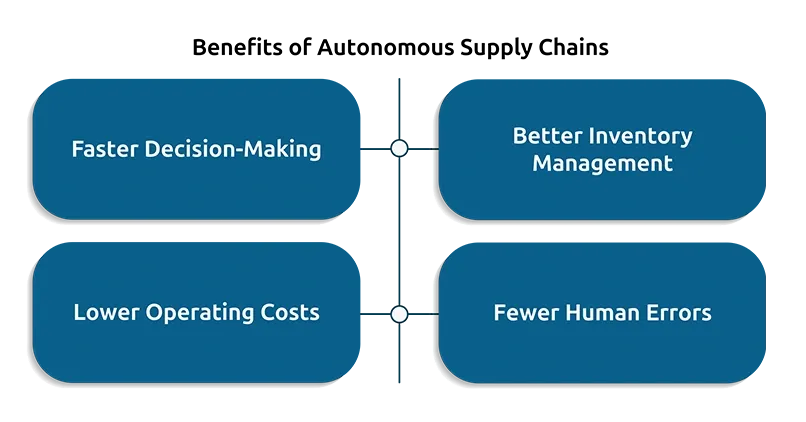
Benefits of Autonomous Supply Chains
Faster Decision-Making
Autonomous supply chains use real-time data to make decisions much faster than manual systems. They can quickly identify changes in demand, supply, or transportation. This helps businesses respond without waiting for manual approval. Faster decisions reduce delays & enhance the whole flow of goods. It also helps companies manage unexpected situations more easily.
Better Inventory Management
The system tracks inventory levels continuously & predicts future demand. It helps businesses keep the right amount of stock at the correct location. This minimizes the risk of stock shortages & excess inventory. Automatic reordering also saves time & improves planning. As a result, inventory costs remain under control.
Lower Operating Costs
Automation minimizes the need for manual work in warehouses & logistics operations. Better planning also minimizes unnecessary transportation & storage costs. Businesses can enhance resource use without increasing expenses. Fewer delays & fewer errors also help lower operating costs. Over time, companies achieve better financial performance.
Fewer Human Errors
Many routine tasks such as inventory updates, order processing, & shipment tracking are completed automatically. This minimizes mistakes caused by manual data entry. Accurate information enhances planning & customer service. Fewer errors also minimize returns & shipment problems. Operations become more usable.
Challenges of Building an Autonomous Supply Chain
High Development Costs
Developing an autonomous supply chain needs investment in AI, automation, sensors, & software. Businesses may also need to develop existing equipment & network. These can be costly, mainly for small companies. The return on investment may take time. Good planning is needed before implementation.
Integrating Legacy Systems
Many businesses still use older software that was not developed for AI or automation. Connecting these systems with new technology can be difficult. It may need additional software, upgrades, or custom integration. The process can take time & increase project costs. Proper planning helps reduce these difficulties.
Data Quality & Accuracy
Autonomous systems mainly depend on correct & upgraded data. Incorrect or incomplete information can make poor decisions. Businesses must one time update & verify their data. Good data management enhance planning. Accurate data is useful for easy operations.
Cybersecurity Risks
Connected devices & cloud-based systems increase the risk of frouds. Hackers may target business data or disrupt operations. Companies need strong security, regular updates, & data safety policies. Employee awareness is also important for securing cyber frouds. Good cybersecurity secure the whole supply chain.
Employee Training & Change Management
Employees need time to learn new technologies & systems. Businesses must provide correct training before introducing automation. Some workers may be uncomfortable with new ways of working. Good communication helps employees accept these changes. A skilled employee makes setup more successful.

Conclusion
Autonomous supply chains are developing the way organizations move & manage transportation. They use AI, automation, & real-time data to make daily work faster & easier. This helps companies minimize costs, avoid delays, & ensure on-time delivery of products. It also helps them respond quickly when any problem happens.
Developing an autonomous supply chain takes time & planning. Businesses need the updated technology, accurate data, & skilled employees to make it work well. Although there are some difficulties, the long-term benefits are much greater.
As supply chains continue to develop, automation will become more important. Businesses that start using autonomous supply chains today will be ready for future changes. They will work more easily, serve customers better, & stay updated in the international market.
Did you know?
Procurement will look vastly different by 2030. AI is accelerating a shift toward intelligent, autonomous processes that will reshape operating models, supplier relationships, and competitive advantage.
FAQs
1. What is an autonomous supply chain?
An autonomous supply chain is a supply chain that uses AI, automation, and real-time data to manage tasks with very little human involvement. It can monitor operations, make decisions, and respond to changes automatically.
2. How is an autonomous supply chain different from a traditional supply chain?
A traditional supply chain depends on manual work and human decisions. An autonomous supply chain uses smart technology to automate tasks, improve accuracy, and make faster decisions.
3. What technologies are used in autonomous supply chains?
Autonomous supply chains use technologies such as artificial intelligence (AI), machine learning, IoT sensors, robotics, cloud computing, and data analytics to improve supply chain operations.
4. What are the main benefits of an autonomous supply chain?
The main benefits include faster decision-making, better inventory management, lower operating costs, improved supply chain visibility, fewer errors, and faster deliveries.
5. What challenges do businesses face when building an autonomous supply chain?
Some common challenges include high setup costs, connecting old systems with new technology, maintaining accurate data, cybersecurity risks, and training employees to use new tools.