Introduction
The fast growth of artificial intelligence, cloud computing, & digital change is increasing the need for hyperscale data centers around the world. Building these large facilities needs transporting costly IT equipment, like servers, storage systems, networking equipment, & power systems, in different countries while meeting strict project deadlines.
Because these projects involve many suppliers, countries, & shipping stages, good logistics planning is useful. End-to-end logistics manages the whole process, from buying equipment & global shipping to customs clearance, warehousing, final delivery, & installation support. A well-planned logistics process helps minimize delays, secure valuable equipment, meet import requirements, & keep data center projects on schedule.
What Is End-to-End Logistics for Data Center Projects?
The term ‘end-to-end logistics’, also known as E2E, describes a transportation process that encompasses the whole supply chain. Depending on the business, it can already start with product design or with procurement, & then handles all related shipping & transport activities, through to delivery to the final location. Extended end-to-end logistics processes may also include after-sales services & return logistics.
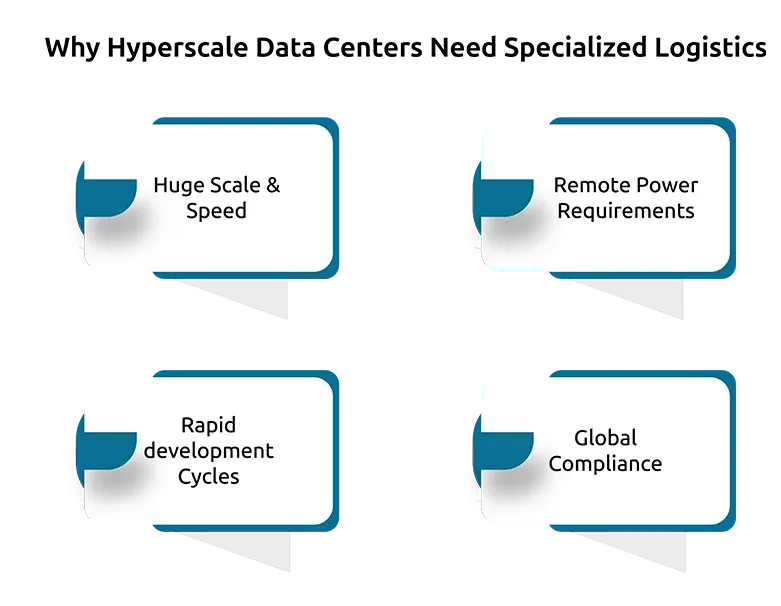
Why Hyperscale Data Centers Need Specialized Logistics
Hyperscale data centers need specialized logistics because they process mission-critical, highly sensitive, & oversized equipment. Specialized supply chains secure costly downtime, ensure flawless “just-in-time” development with construction schedules, & reduce the difficult compliance needs of global hardware deployment.
The need for highly engineered supply chain frameworks in hyperscale infrastructure is driven by some important factors:
Huge Scale & Speed: Hyperscale expansion involves thousands of server racks & petabytes of hardware. Specialized logistics ensure thousands of components are coordinated globally without issues, meeting aggressive technology deployment timelines.
Remote Power Requirements: Hyperscale sites are increasingly built in remote locations to access usable energy & water resources. This need difficult multiple transportation, route planning, & managing site-specific environmental conditions or access constraints.
Security: Semiconductor-rich equipment and AI hardware require shock-proof packaging, climate-controlled transport, and end-to-end chain-of-custody tracking to prevent physical damage or tampering.
Rapid development Cycles: Hardware refreshes occur in continuous loops. Logistics providers not only manage initial delivery but also white-glove server rack assembly, reverse logistics, & responsible recycling.
Global Compliance: Sourcing high-tech modules across borders requires deep expertise in customs, export controls, & regional regulations to avoid costly customs delays.
Key Components of End-to-End Logistics
End-to-End logistics is the complete, integrated management of a product’s journey, from raw material sourcing & manufacturing to final delivery & reverse logistics. Instead of managing stages separately, E2E connects the supply chain into a single, coordinated system to optimize visibility, efficiency, & cost.
The key components of this streamlined supply chain include:
A useful supply chain begins with demand forecasting, where businesses predict future market demand to determine inventory requirements, replenishment schedules, & stocking strategies. Based on these forecasts, procurement teams source raw materials & products from reliable suppliers to ensure uninterrupted production. During the manufacturing or production stage, raw materials are transformed into finished products while production volumes are aligned with customer demand to minimize waste & shortages.
Once the products are ready to ship, they are transferred to a warehouse, where they are stored safely & tracked to keep products up to date. When an order is received, the needed products are picked, packed carefully, & prepared for shipping. The goods are then delivered by road, air, sea, or rail to warehouses, retailers, or customers. If products need to be returned, repaired, recycled, or disposed of, reverse logistics manages the process. This helps businesses minimizes waste, recover value, & provide better service to customer.

Conclusion
End-to-end logistics is an important part of each hyperscale data center project. It handles every step, from buying equipment & global transportation to customs clearance, warehousing, final location, & installation. Secure planning at every stape helps keep projects on schedule & minimizes the risk of delays.
As AI, cloud computing, & digital network continue to develop, companies need trustworthy logistics partners to ship high-value IT equipment safely & follow import laws & regulations in many countries. A well-planned logistics process helps secure valuable equipment, simplify global shipments, & ensure data center projects are completed on time.
Did you know?
Annual investment in these specialized facilities will likely surpass $300 billion by 2027, and the total insurable asset base for the roughly 11,000 data centers currently in operation already exceeds $2 trillion.
FAQ
1. What is end-to-end logistics in hyperscale data center projects?
End-to-end logistics covers every stage of the supply chain, including procurement, international transportation, customs clearance, warehousing, final delivery, installation support, and reverse logistics. It ensures high-value data center equipment reaches its destination safely and on schedule.
2. Why do hyperscale data centers require specialized logistics?
Hyperscale data centers involve transporting expensive and sensitive equipment such as server racks, AI servers, storage systems, and cooling infrastructure. Specialized logistics help protect this equipment, meet strict project timelines, and ensure compliance with international shipping regulations.
3. How does customs compliance impact hyperscale data center deployments?
Proper customs compliance helps prevent shipment delays, penalties, and unexpected costs. Accurate import documentation, HS code classification, and adherence to country-specific regulations ensure smooth international movement of data center equipment.
4. What role does warehousing play in end-to-end logistics?
Warehousing provides secure storage, inventory management, shipment consolidation, and staging before final delivery. It helps coordinate large-scale deployments by ensuring equipment is available when installation sites are ready.
5. How can businesses reduce logistics risks during hyperscale data center projects?
Businesses can reduce risks by working with experienced logistics providers that offer specialized packaging, real-time shipment tracking, customs expertise, multimodal transportation, and coordinated delivery planning for complex global deployments.