
1000+ companies now know their exact duty, VAT, and IOR costs before they ship, not when customs holds their cargo hostage. Join them.
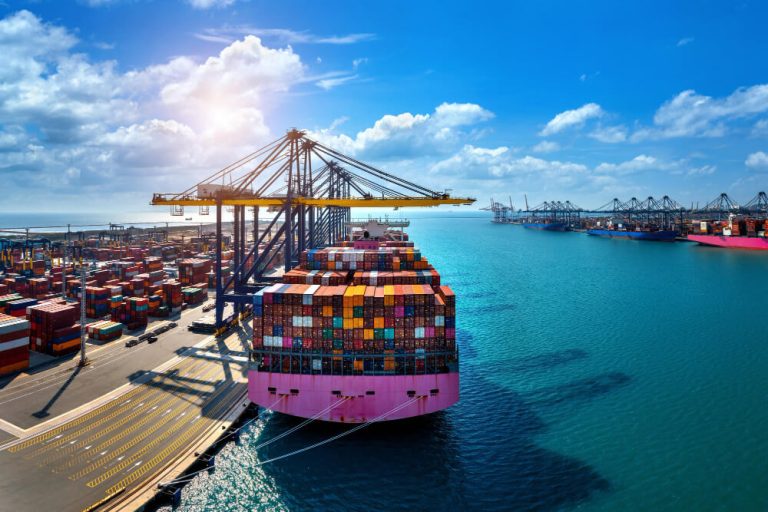
France and Canada share strong economic ties for long-term trade in technology, industrial goods, and services. France’s major sea entrances Port of Le Havre, Marseille-Fos, and Dunkirk, play an important role in managing containerized cargo, bulk shipments, and automotive exports. Air freight mainly moves through Paris Charles de Gaulle Airport and Lyon–Saint-Exupéry Airport, providing some of the lowest shipping rates for complete destinations. In Canada, the Port of Montreal, Vancouver, and Halifax are major sea entry points, while Toronto Pearson International Airport and Vancouver International Airport are leading air hubs.
The IT sector benefits from rapid cross-border logistics for valuable electronics, while the aviation industry frequently moves aircraft components and equipment through special freight forwarding services. The medical sector depends on temperature-controlled solutions for surgical and diagnostic equipment, while automotive exports and imports require precision handling and strong approval with HS codes and HTS harmonized tariff laws.

confirming agreement with harmonized system code regulations, handles customs clearance, and stops fees. This is necessary when shipping IT, medical, or aviation goods that require special permits.
Manages export agreement from France, prepares documents under correct Incoterms, and simplifies departure formalities. Beyond basic agreement, some EORs give additional services such as arranging high-value IT equipment transport, which can affect pricing.


A DDP service allows sellers to cover all duties and taxes, so buyers receive goods without extra charges, a smart approach for cheap international delivery. Therefore, the cheapest DDP shipping will depend on the overall cost calculated by the freight forwarder or carrier, taking into account all these factors
Critical for tech companies, these services ensure secure movement of servers and networking equipment with adherence to DAP and DAPS terms where applicable. Shipping data centre equipment from France to Canada requires a careful balance between cost, speed, and security.

The cheapest way to ship a package between France and Canada depends on size, weight, methods, and service type:
Small goods (up to 2 kg) through the cheapest post office box services or cheap UPS shipping can start from €25–€40 with a shipping time of 6–10 days.
Medium parcels (5–10 kg) using cheap overseas shipping can cost €70–€120, depending on whether you choose air economy or sea freight.
Large cargo (pallet loads) through sea freight can cost euros 350–500 per cubic meter, while air freight ranges from euros 5.50–8.50 per kg.
Using combined freight forwarding services often reduces per-unit costs by sharing container space.
Opting for DAP or DDP shipping may slightly raise costs upfront, but it avoids surprise customs charges later.
Using professional forwarders experienced in both French and Canadian regulations confirms smooth management and the cheapest way to mail a package while avoiding costly delays.

IT & Electronics are frequently shipped through air freight under cheap international shipping solutions with proper HS codes to prevent clearance delays.
France exports servers, circuit boards, and software-integrated devices to Canada, valued at over euros 1.2 billion annually.
Aircraft components and maintenance tools typically use expedited freight forwarding under DAP terms, confirming agreement with strong aerospace import rules.
Medical requires Cold chain shipping is key; many use DDP shipping for smooth delivery to hospitals and research centres. French exports of medical devices to Canada surpass 500 million euros yearly.
Spare parts and vehicles are shipped through sea freight for the cheapest way to ship a package in bulk, following correct harmonized system code labelling to avoid delays.
The cheapest way depends on shipment size and urgency. Small parcels can be shipped via postal or courier economy services, while bulk cargo is most cost-effective through sea freight.
Combining smaller shipments into one larger shipment can help businesses use space more efficiently and reduce the cost per shipment.
An IOR confirms agreement with HS codes, manages customs clearance, and prevents costly penalties. It is particularly critical for regulated goods like electronics, aviation parts, and medical devices.
Yes. Although DDP may appear costlier upfront, it eliminates surprise customs fees for buyers, making it one of the most reliable and cost-efficient shipping solutions.
Key industries include IT & electronics, aviation, medical, and automotive sectors, each requiring special logistics solutions like cold chain, DAP/DDP services, or bulk container freight.