Insight into Remote Import Operations
Global trade for high-tech equipment flows through major ports and airports with increasing complexity due to climate concerns and tightened regulations. Managing shipments of data center, aviation, automobile, and healthcare equipment requires precise coordination. This blog explores how non-resident importer models enable seamless port-to-port air freight shipment without a physical office, relying on technology and expert partnerships to deliver reliable and compliant supply chain solutions.
The Non-Resident Importer Model Explained
The non-resident importer fully accepts the responsibility of clearing customs, duties, and taxes in a foreign country without having a physical office there. The model transfers the importation responsibilities to the seller, and the customer has the transaction locally and ends up paying no surprises on delivery. This is essential in equipment that has to be put under significant regulation, since it promotes adherence to the customs import regulations and enables easy forwarding of freight at airports.
Are there any legal requirements for non-resident importers?
Yes, non-resident importers (NRIs) must comply with local import laws, tax regulations, and often need to appoint an importer of record or fiscal representative. Beyond this, they are typically required to register for tax purposes in the destination country—such as obtaining a VAT or GST number—so they can legally pay duties and reclaim applicable taxes.
NRIs must also ensure accurate customs documentation, including commercial invoices, packing lists, and correct HS code classification, as errors can lead to delays, fines, or shipment seizure. In many countries, compliance with regulations enforced by authorities like the World Customs Organization is essential to maintain standardization in global trade practices.
Virtual Presence and Strategic Partnerships
In the absence of physical space, non-resident importers develop credibility by using professional websites, emails, and virtual office services. The tools facilitate communications and legal requirements without incurring high overheads. Its success would require close collaboration with experts in customs broking and freight forwarding services to effectively manage the documentation of importation and exportation, management of cargo, and also clearance of customs. Such collaborations are critical to ensuring the accurate air freight delivery of vulnerable and high-priced machinery.
Technology Enabling Seamless Operations
Non-resident importers employ communication platforms like Slack and Zoom to coordinate global teams. Project management tools and e-commerce solutions help maintain supply chain visibility and pricing control. By integrating logistics management software and electronic data interchange, this model ensures shipments are tracked in real time and customs duties are calculated accurately using volumetric weight calculators and freight cost calculation tools. This enables predictable Delivery Duty Paid (DDP) pricing for customers.
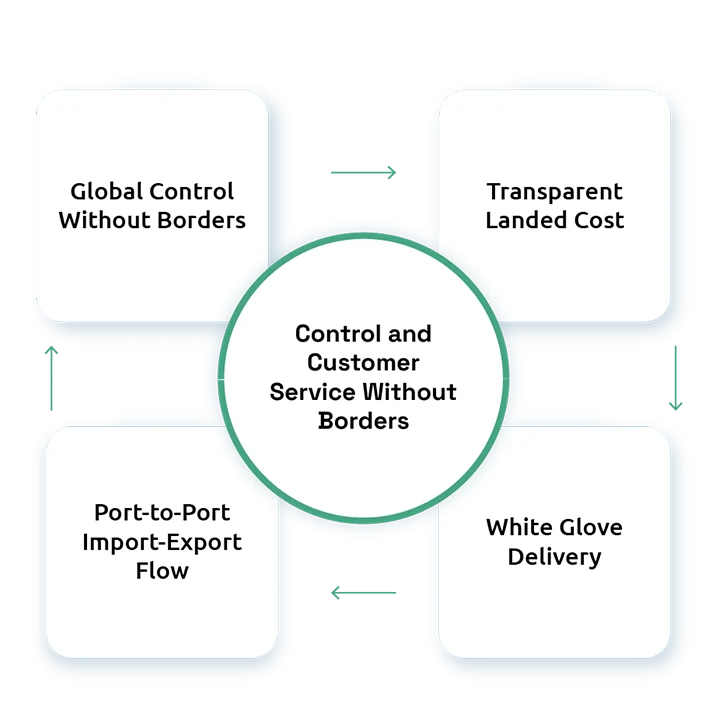
Control and Customer Service Without Borders
The complete port-to-port import-export approach permits a non-resident importer to achieve consistency in the service and transparent landed-cost pricing. This makes the customer trust them since all the duties, taxes, and shipping costs are provided in advance. White glove delivery services offer a high level of care to delicate aircraft or medical equipment, and the freight forwarding services are streamlined to avoid delays and damage. Such control is one of the major merits, as it makes it possible to compete in the difficult markets.
Opportunities, Challenges, And Solutions
The non-resident importer model saves on the cost associated with a physical office and warehousing. It introduces a new market to consumer bases in a strictly regulated market with minimum capital expenditure. Issues that must be overcome may be different customs importation and logistics remote management, as well as the knowledge of various complex taxation laws and treaties against permanent establishments and double taxation. These risks can be minimized by using such collaboration with professional customs freight forwarding companies and the use of modern logistics freight forwarding services.
Market Insights for 2025
Market research shows that warehousing and distribution services supporting import-export businesses in regulated sectors are expected to grow to over USD 140 billion by 2026. Efficient freight forwarding logistics solutions and customs clearance service models remain the backbone of this expansion. Businesses leveraging remote importer solutions can minimize risks and scale globally with confidence by adopting these advanced supply chain technologies.
Conclusion
One Union Solutions provides a specialised importer of record service that targets the unique requirements of high-value markets, including data center, aviation, automobile, and medical equipment. We handle all types of customs clearances, freight forwarding, warehousing, and white glove delivery to facilitate unhindered imports to the port. We lower costs via our technology-based approach as well as skilled local alliances, increase compliance, and control of supply chains. Select us, and it would be a smooth sail to the world market, and your business can compete and grow internationally without any troubles.
Did You Know,
The recent government statistics indicate that the air freight market of specialized high-value equipment across the world will exceed USD 430 billion in 2024. This growth is being enhanced by the increased demand for fast and compliant importing services in industries such as data centers and healthcare, which brings to the fore the necessity of effective non-resident importer models.
FAQ’s
What is non non-resident importer service?
It takes care of the clearance of customs and duties of imports without a physical office in the receiving country.
What does it do in air freight shipping?
By simplifying port-to-port operation using a trusted logistics and customs broker, we can be sure that delivery is both fast and compliant.
What is the rationale of landed-cost pricing?
It offers customers transparent total prices (duties, taxes, shipping), and they do not receive any unpleasant surprises upon delivery in the end.
What is the role of technology in this model?
Communication, project management, and cost calculation of freight allow real-time following and effective management of the supply chain.
What are the challenges that it addresses?
Virtual presence is based on navigating regulatory intricacies, lowering overhead expenses, and handling logistics risk.