
Introduction
Shipping high-value equipment across a region requires much more than simple freight management. Organizations in the IT, aviation, medical, and automotive industries depend on requiring shipping methods that ensure heavy or valuable goods remain safe from damage. This is where white glove delivery plays a vital role during shipping. It closes the gap between logistics and complete management by providing expert care, precision, and professional expertise at every step of the shipment. When a shipment involves critical goods, such as servers, aircraft components, medical machines, or automotive machinery, white glove delivery confirms the equipment arrives safely, is used exactly, and is ready to use.
What Is White Glove Delivery Service?
White glove delivery refers to a premium, high-care shipping solution given to support delicate, specialized, or high-value goods that require advanced management. As an alternative to simply dropping off a shipment at the destination, skilled experts manage every step, from safe packaging and careful loading to final placement and installation. For industries that depend on equipment integrity, such as IT data centers, aerospace manufacturers, hospitals, and automotive R&D systems, white glove service is an additional layer of satisfaction and working control.
These services frequently include indoor delivery, special equipment handling, protective packaging, debris removal, setup support, and live monitoring. The attention to detail and expertise to help confirm that businesses receive their shipments without disruptions or unexpected risks.

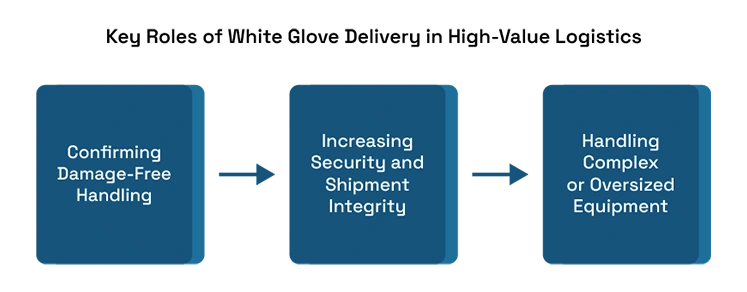
Key Roles of White Glove Delivery in High-Value Logistics
White glove delivery supports necessary functions that traditional deliveries frequently cannot accommodate. Some of its most important roles include:
- Confirming Damage-Free Handling
High-value equipment typically features complex systems and sensitive components. White glove teams use specialized tools, shock-absorbent materials, and advanced lifting equipment to stop damage during loading, logistics, and delivery.
- Increasing Security and Shipment Integrity
If it’s aviation parts, medical equipment, or IT server racks, high-value equipment requires strong security. White glove delivery adds an extra stage of protection, such as logistics, secure tracking, and supervised unloading, reducing risks of loss.
- Supporting Specialized Installation and Placement
Many high-end machines cannot simply be dropped at a loading bay. White glove experts position, assemble, or stage equipment exactly where the client needs it. Also, medical devices may require placement in protected environments, while IT equipment must be installed in server rooms with precision.
- Handling Complex or Oversized Equipment
Certain industrial goods are difficult to move because of their size, weight, or working fragility. White glove teams are experts in safe raising, guiding through compact spaces, and using precision tools to avoid impact or vibration.
- Providing an Expert Customer Experience
High-value deliveries require dependability and clarity. From shipping scheduling to final configuration, businesses benefit from a service that prioritizes logistics scheduling and responsibilities.
What to Expect from White Glove Delivery in High-Value Equipment Logistics
Businesses that use white glove delivery can expect huge benefits, including:
- Reduced Risk and Shipping Delays
When transporting expensive equipment, delays or damage can result in costly maintenance. White glove services reduce these risks through attention to detail, work, and dependable timelines.
- Trained Specialists for Sensitive Machinery
Industry experts know the different requirements of industries such as IT and aviation. They follow precise guidelines to confirm safety, accuracy, and agreement at every stage.
- Complete Visibility
Advanced tracking and communication keep businesses informed throughout the delivery process. From dispatch to final installation, they receive live updates and confirmation upon shipping completion.
- Smooth Work Across Borders
For organizations handling imports of valuable equipment, white glove delivery removes the logistical load of logistics goods through global routes and last-mile environments. It helps confirm the shipment has combined throughout its journey.
Conclusion
White glove delivery service plays a vital role in shipping high-value equipment safely and effectively, mainly for industries such as IT, aviation, medical, and automotive. As businesses continue growing globally, the demand for dependable, valuable shipping solutions increases across the region. Expert handling, secure logistics, and expert installation, white glove delivery confirm that every valuable shipment reaches its destination in perfect condition, supporting smoother work, greater efficiency, and long-term business.
DID YOU KNOW?
Detailed vehicle inspections with photo documentation from 20+ angles, custom security systems for ultra-rare vehicles, climate-controlled enclosed shipment for weather-sensitive classics, and special insurance coverage up to $1 million+ for high-value vehicles.
FAQs:
- What type of equipment typically requires white glove delivery?
White glove delivery is commonly used for IT servers, medical devices, laboratory tools, aerospace parts, industrial machinery, and automotive components that need expert handling.
- How is white glove delivery different from standard shipping?
Standard shipping drops cargo at the door, while white glove delivery includes secure packing, careful loading, indoor placement, installation support, and debris removal.
- Does white glove delivery reduce the risk of equipment damage?
Yes. Specialized tools, expert teams, protective materials, and controlled handling significantly reduce the risk of damage during transport.
- Is white glove delivery available for international shipments?
Absolutely. Many providers offer cross-border white glove logistics, ensuring secure handling, customs coordination, and smooth last-mile delivery.
- Who should consider using white glove delivery services?
Organizations handling high-value, delicate, oversized, or technical equipment, such as hospitals, data centers, manufacturers, aviation firms, and research labs, benefit the most.