
Importing Aircraft Parts
Aircraft parts imports are a complicated process that goes above and beyond making international orders. Each section between the first purchase and the finished customs clearance is highly controlled based on safety, airworthiness, and global trade requirements. To companies whose operations depend on the need to deliver aviation parts on time and abide by laws and regulations, it is vital to know how to do this because this makes their operations smooth and allows them to grow over time.
The necessity to import aircraft devices never abated in the market, as nowadays, urgent repairs and the need to turn to the original parts appear. Regardless of the location, every single shipment has to pass the most up-to-date certification procedures, pass specific documentation standards, abide by licensing procedures, and pass through the airworthiness regulations, which are strict indeed. The guiding principle is to ensure that each stage stays safe in operational and regulatory terms.
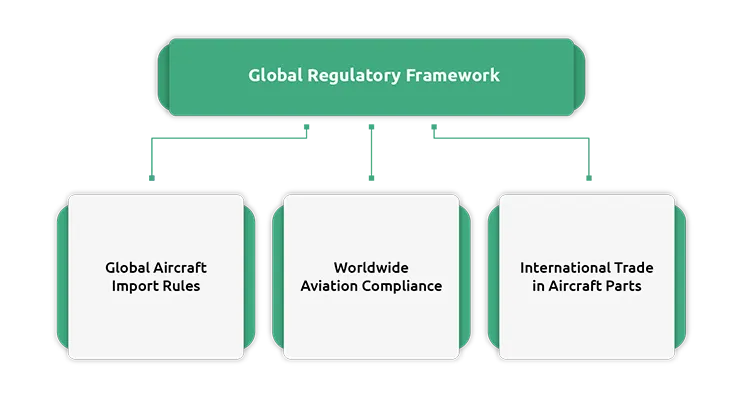
Global Regulatory Framework
Aircraft parts are imported by law and their respective agencies in each country. However, they are pretty much similar to each other, thanks to international agreements on aviation. At the heart of import control are the national aviation authorities, the FAA in the US, EASA in Europe, DGCA in India, and CAAC in China, who set and implement airworthiness standards and certification for airworthiness to maintain safety. Moreover, such authorities implement international standards set by companies, such as the International Civil Aviation Organization (ICAO), which sets minimum requirements regarding parts’ safety, documentation, and traceability. Aircraft parts imported with valid manufacturer certifications, full records of traceability, and acceptable type certificates must satisfy such regulations to be imported. Importing countries consider recommendations of importation documentation to ensure accuracy, eliminate affected equipment being supplied in the supply chain, and correct tariff codes as per their schedules, aiding in the backbone of the aviation industry worldwide.
Key Import Regulations and Procedures
In top markets, the aircraft parts importation process involves the identification of the items as well as their adequate supporting documents that would support their correspondence to the stipulated airworthiness and safety requirements. The importers should also have the approval of the aviation sector’s national authorities, and this is especially required in the case of parts that are crucial to flight safety. All consignments should be complemented by accurate customs documentation such as commercial invoices, detailed and comprehensive packing lists, certificates of origin, and documents that show compliance with the regulations. When it comes to re-imported parts that have been repaired or maintained elsewhere, lines can be smooth, especially when they have original certifications and fulfil all established standards, facilitating easier customs clearance without compromising safety standards.
Taxation and Customs Duties
Differences exist among countries in the tax treatment of the importation of aircraft parts. However, a present trend around the world is simplicity and standardization. One such area is the importation of parts that make up an aircraft, as the United States usually provides zero or low tariff rates on many of these parts with special Harmonized System (HS) codes, and this means that certain parts are under free-trade agreements, which relieves importers of the burden of cost. The European Union, on the other hand, tends to use a zero percent tariff on most aircraft parts, which allows the movement of goods across the borders to be easier between the member states.
In addition to these areas, some nations have recently moved towards harmonizing and standardizing the rates at which aviation equipment is imported. This transition to more standard and predictive tariffs decreases the amount of confusion and delayed customs processing, giving importers a more certain future. It thus helps businesses plan their budgets better, increases the rate of maintenance tasks, and facilitates investing more in maintenance, repair, and overhaul (MRO) services to ensure the efficiency & safety of aviation operations.
Compliance Requirements
There is much more than paying the right duties to ensure no violation when importing aircraft parts. Replacement parts must be certified and accompanied by full provenance to ensure that licensed suppliers have supplied them. All imported products should be equal to type-certified ones and have detailed documentation, including the papers that prove the authenticity of those products and their compatibility and applicability in use in particular aircraft. Important documents entail Certificates of Airworthiness, import formalities, comprehensive technical records, and customs declarations, which should be correct and timely. In the case of re-imported parts, i.e., parts that have been exported to be repaired, accurate classification on re-importation is critical to prevent the payment of any new duty and make the process through customs painless.
Strict compliance helps prevent the entry of counterfeit or unapproved aircraft parts into the supply chain. It also reduces the risk of shipment delays, penalties, or regulatory action. Proper coordination between customs, aviation authorities, and logistics partners is essential. Overall, following these requirements ensures safety, reliability, and uninterrupted aircraft operations.
Conclusion
Importing aircraft parts is a smooth process that requires a thorough knowledge of the changing international regulations, accuracy of documentation procedures, and strict adherence to regulations. At One Union Solutions, we have the most advanced knowledge on resolving these intricacies, ensuring your imports are cleared at all checkpoints and your operations are moved.
Did You Know,
According to recent data, the global commercial aircraft parts market is set to cross $80 billion by 2026, propelled by market-driven regulatory reforms and the worldwide increase in commercial airline fleets.
FAQ’s
What certifications are required to import aircraft parts?
Aircraft parts usually need airworthiness certificates, manufacturer approvals, and proper traceability documents to confirm they meet safety standards.
Do customs duties and taxes differ when importing aircraft parts?
Yes. Duties and taxes vary by country, though many major markets offer reduced or stable rates for aviation components.
How are aircraft parts treated when re-imported after overseas repair?
Parts that are properly documented and certified are often eligible for reduced duties when re-imported after repair or maintenance abroad.
Which authorities regulate aircraft part compliance and airworthiness?
Aviation authorities such as the FAA, EASA, CAAC, and DGCA are responsible for certifying compliance and airworthiness in their respective regions.
Why is strict compliance with import regulations important?
Following import rules ensures flight safety, avoids legal issues, and maintains the reliability and performance of aircraft operations.