The location of your warehouse affects delivery time, shipping costs, and how fast you can serve customers. For small or medium businesses, handling fulfillment on your own might seem easier, but during holidays and busy seasons, your location can slow you down. To grow, you need to offer faster and cheaper shipping, which makes choosing the right warehouse location very important. Your warehouse location directly impacts the factors below.
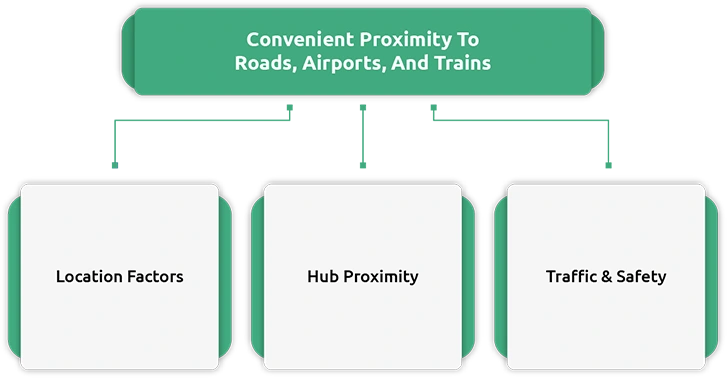
Convenient Proximity To Roads, Airports, And Trains
Choosing a warehouse facility to call home involves many considerations, much like picking a place to raise a family. The price tag is only one consideration. Logistics experts recommend placing your warehouse near major transportation hubs, including airports, train lines in excellent operating order, and well-maintained roads and highways.
Accidents, fuel loss, and lost time may all come from picking a site without first considering highway congestion patterns, exit ramp layout, peak traffic hours, and road safety conditions. These factors may raise transportation costs and make it harder to compete.
Understanding that warehouse location is crucial can allow your company to improve its processes, spend less and make customers happy. Selecting the right location for your business can impact your speed of shipping, quality of deliveries and well-functioning supply chains, apart from the building cost. The place where a facility is located is important because it affects how smoothly products are moved to customers. Nowadays, when online purchases and quick shipping are popular, the location of warehouses for logistics is essential. Selecting the right location can save you time and avoid major delays.
Sustainability
You may reduce petrol and money spent by staying closer to the activity. Customers now are more informed than ever before about how businesses affect the planet. They have a greater awareness of the need to conserve energy and materials. By minimizing the distance your transportation trucks travel to bring customers’ orders to them, you will not only save money and time but also participate in a cleaner, greener supply chain.
Structure and Organisation
It is not only about where you put your warehouse; the location is crucial. Your organization has unique space, technology, and capacity needs; the location and building must accommodate those. When picking your warehouse, consider the number of items moving through each week, month, and year, and create provisions for any seasonal adjustments. Finding a warehouse with storage infrastructure in place greatly facilitates your operations.
Needs for Long-Term Storage
One of the first things you should do when organizing a warehouse move is to consider your storage needs. Choose a location with sufficient room for warehousing and manufacturing, as well as packaging and shipping locations. Cold/warm storage, fireproofing, increased security measures, and so forth may also be necessary.
Transportation Providers & Networks
Any storage facility needs a reliable shipping system and reliable carrier services. It may not be simple to find a warehouse site with an excess of them, but doing so will be valuable and will pay for itself in the end.
You should consider rail connections and ports if you run a firm that delivers goods worldwide or within Europe. Having long-term and short-term alternatives for the intake and distribution of commodities is made possible by picking a site with diverse transportation options.
Supplier Proximity
The key to efficient inbound logistics in the supply chain is finding ways to save costs on raw materials without compromising on quality. Transporting products from your source might be expensive, mainly if you make large purchases. Choosing a warehouse site near your supplier minimizes transportation expenses and any interruptions due to airplane delays or road accidents. If your warehouse is near your supplier, you can handle delivery concerns far more swiftly and cheaply than if, you were thousands of miles away.
Costs
Although location is crucial, you need also to think about the price. The warehouse’s rent and lease terms may prevent you from moving in despite the location’s usefulness. The warehouse’s ability to accommodate your activities during busy seasons and the available storage space are other important factors. The availability and cost of utilities and communication services should be considered while searching for the ideal warehouse. With the proper third-party logistics (3PL) fulfillment in Florida, your business may expand without breaking the bank.

Warehouse Locations: What to Think About
Finding a happy medium between a convenient location and affordable rent is essential when choosing a warehouse for your eCommerce company.
Make Sure Storage Facilities Are Near Transport Companies
Think about how close your warehouse is to transport options. If your warehouse is near carrier facilities, it will speed up sending your product(s) to your client. The trick is to locate a spot that is easily accessible by your ideal clients and has easy access to a reliable transport network. Furthermore, picking a site conveniently close to the factory, the warehouse, and the client will streamline the shipping process and save transportation costs.
Think About The Available Labour Force In The Area Around The Warehouse
In places with low unemployment, high turnover, and poor productivity, rates are expected. Think about how technologically advanced a warehouse is/wants to be. How much rote, mechanical labor is done robotically or how technologically advanced are pick, pack, and store practices? You need a collaborator who can assist with expansion and adaptation in both physical locations and the use of ever-more-effective automated procedures.
Conclusion
Having the finest service, access to the best infrastructure, improved accessibility, and cheaper costs all stem from a well-thought-out placement strategy. If you are struggling with demand, consider outsourcing your storage to a fulfillment center.
FAQ
Why is warehouse location so important?
The right location reduces transportation time and costs. It also helps businesses deliver goods faster and serve customers more efficiently.
How does proximity to customers and suppliers matter?
Being close to customers speeds up delivery, while proximity to suppliers reduces inbound shipping time. Both improve supply chain reliability.
Why is access to transportation important when choosing a warehouse?
Easy access to highways, ports, railways, and airports ensures smooth movement of goods. This helps avoid delays and lowers logistics costs.
How do labor availability and costs affect warehouse location?
A location with skilled labor at reasonable costs supports smooth daily operations. It also reduces hiring challenges and training expenses.
What role do costs and regulations play in warehouse selection?
Rent, taxes, utilities, and local regulations directly impact operating costs. Choosing a compliant, cost-effective location supports long-term business growth.