As global trade keeps growing, the role of the importer of record (IOR) is becoming more important. Many industries, like medical equipment, automotive, aviation, IT, & technology, now depend on IOR services to manage their cross-border trade easily. In the future, IOR shipping will need more focus on rules such as the HS code, correct use of Incoterms, & better logistics planning. Companies that get ready for these changes will be able to avoid risks, minimize delays, & take advantage of new business chances.
What is the future of Importer of Record (IOR) services?
The future of Importer of Record services is becoming more technology-driven, compliance-focused, and globally integrated. As customs regulations grow more complex, businesses are increasingly using specialized IOR partners to manage imports, duties, and documentation without setting up local entities. This trend is expected to accelerate as cross-border trade expands and enforcement becomes more digital.

Why Businesses Need a Future-Ready IOR Strategy
As global trade requirements continue to change, businesses need a prepared approach to managing global imports. A future-ready IOR strategy helps companies prepare for evolving customs requirements, complex documentation needs, and growing compliance expectations. By working with experienced IOR partners, organizations can improve shipment planning, reduce operational risks, & maintain smoother cross-border operations across global markets.
Emerging Trends in the Importer of Record Industry
Shaping the Landscape: Current and Emerging Trends in IOR
To succeed in the future, companies must understand the key trends shaping the Importer of Record (IOR). Today’s supply chains are more difficult, e-commerce continues to grow, & compliance requirements, including HS codes , play a big role in the import process.
This section highlights the most important trends so businesses can accept, stay competitive, & thrive in a fast-changing global environment.
Technological Advancements and IOR
Tech-Driven Future: How Innovation Is Transforming IOR
Technology is reshaping the Importer of Record. Developments like blockchain & the Internet of Things (IoT) are improving visibility, speeding up processes, & making logistics more efficient. By adopting these technologies, businesses can stay competitive, ensure compliance with Incoterms, & improve transparency throughout the supply chain.
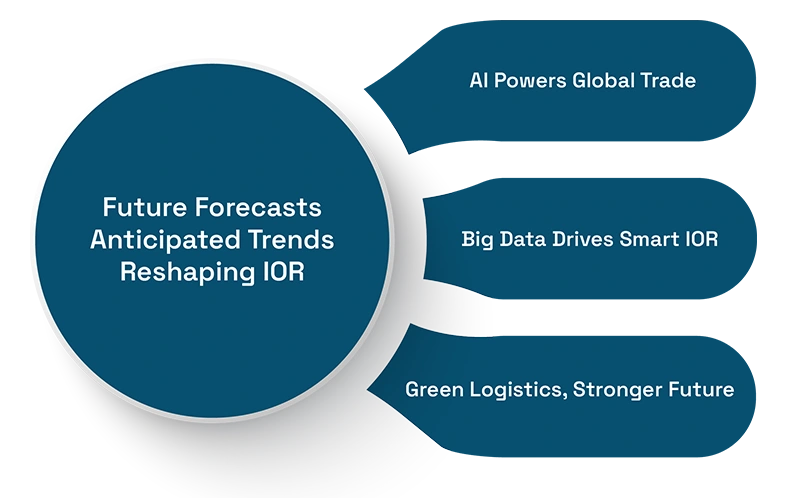
Data-Driven Operations: Using Big Data & AI in IOR service
Big data & AI give major benefits for IOR operations. These tools support predictive analytics, minimise risks, & improve efficiency. With data-driven decision making, companies can optimize their processes, maintain compliance, & avoid challenges related to international trade, ensuring smooth movement of goods & items from origin to destination.
Sustainability in IOR: Environmental Considerations
In today’s environmentally aware world, businesses in every are focusing more on sustainability & the Importer of Record (IOR) sector is no different. Companies are now adopting eco-friendly practices such as using sustainable packaging, minimizing carbon use, & selecting ethically sourced materials. By aligning these efforts with Incoterms, organizations can create a cleaner & more responsible supply chain while meeting growing customer demand for sustainable services.
Consideration for Businesses
Strategic Planning: Adapting Your Business to Future IOR Trends
The Importer of Record is changing, and businesses need to strategize to adapt. This section will highlight important aspects to consider for future importation, including employing skilled personnel, streamlining processes, and staying updated with international trade risk management. By planning for these changes, organizations can situate themselves for progress in the advancing IOR scene.
Planning for Change: Key Points for Organizations
To stay strong in the future, IOR businesses must be ready for change. This needs smart planning & the ability to accept quickly. Companies should focus on developing reliable supply chains, using new technologies, & improving the way they work through digital tools.
By preparing early, understanding upcoming changes, & following all rules, including correct HS codes, businesses can improve their operations & succeed in the changing IOR environment.
How Can Businesses Stay Ahead of Future Import Challenges?
As global trade continues to change, businesses should prepare for changing customs rules, documentation requirements, & import processes. Regularly reviewing import processes & keeping up with regulatory updates helps reduce compliance risks & shipment delays. Partnering with an experienced Importer of Record provider also simplifies cross-border imports & supports smoother customs clearance. A well-planned import strategy helps businesses maintain efficient global operations and support long-term global growth.
Conclusion
As we close this investigation of future patterns in the Importer of Record (IOR), obviously, huge changes are not too far off. The IOR scene is going to encounter significant movements driven by innovations and sustainability drives. By embracing these trends and adapting processes to meet new demands, businesses can navigate the future with confidence, managing import-export risks effectively and seizing growth opportunities. One Union Solutions provides comprehensive IOR services to over 190+ countries, ensuring businesses stay competitive in this rapidly evolving field.
DID YOU KNOW
Over 98% of global trade relies on accurate HS code classification—mistakes can lead to serious consequences in customs clearance. You can find more details on this at the Observatory of Economic Complexity (OEC)
FAQ
What does IOR stand for, and why is it important?
IOR stands for Importer of Record. It is the legal entity responsible for ensuring imported goods comply with local laws, including duties, taxes, and customs regulations.
What are the emerging trends in IOR services?
Trends include digital customs processing, AI-powered compliance checks, automated documentation, and global expansion support for businesses without local entities.
Why are businesses increasingly outsourcing Importer of Record services?
Businesses outsource IOR services to manage country-specific import requirements without establishing a local entity. This helps reduce customs delays and supports smoother international shipments.
Which industries will benefit most from future IOR trends?
IT, telecom, medical devices, electronics, and high-value manufacturing sectors benefit due to strict regulations and complex import requirements.
How are changing customs regulations affecting global imports?
Changing customs regulations require businesses to ensure accurate documentation & correct product classification. Meeting these regulations helps avoid customs delays, penalties, & clearance issues.