Understanding the Roles of Importer of Record and Freight Forwarder
In multinational trade, the Importer of Record (IOR) and the Freight Forwarder are necessary players in guaranteeing a seamless procedure. Although both have indispensable roles in importation, it is crucial to comprehend their distinctions to make informed industry judgments.
The Importer of Record (IOR) is the individual or organization that assumes lawful and economic accountability for guaranteeing customs requirements are fulfilled when importing commodities. This incorporates providing accurate data, paying duties and surcharges, and complying with statutes.
On the other side, A Freight Forwarder is a corporation or individual that oversees the logistics of transporting equipment from one place to another. They act as mediators between shippers and transportation providers, coordinating the movement of items by air, ocean, or ground. Their duties include booking cargo areas, readying shipping papers, arranging customs clearance, and tracking cargoes. Freight Forwarders emphasize the physical movement of items rather than the legal and financial aspects.
How IOR and Freight Forwarder Work Together in Global Trade?
An Importer of Record and a Freight Forwarder manage separate duties during global shipping but coordinate to keep shipments moving smoothly. The Freight Forwarder handles shipping arrangements, cargo movement, & logistics processes, while the IOR manages customs processes, import paperwork, duties, & regulatory obligations. Together, they help businesses simplify global shipments, reduce clearance issues, & maintain better control over cross-border deliveries.
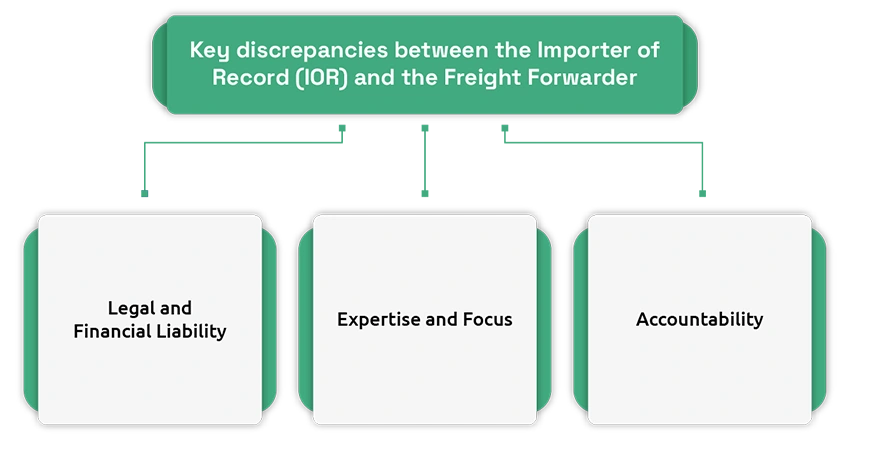
Key discrepancies between the Importer of Record (IOR) and the Freight Forwarder
The Importer of Record (IOR) and the Freight Forwarder both play roles in the importation procedure, but they have different discrepancies.
1. Legal and Financial Liability: The Importer of Record is lawfully and financially accountable for the imported items, guaranteeing compliance with customs laws, accurate documentation, and payment of duties and tariffs. The Freight Forwarder, on the other side, is not accountable for the commodities but rather facilitates transportation and coordinates with diverse parties involved.
2. Expertise and Focus: The Importer of Record specializes in customs compliance and statutes, whereas Freight Forwarders focus on logistics and carriers. The Importer of Record has a comprehensive understanding of import provisions, tax categories, valuation methodologies, and additional lawful facets. Meanwhile, Freight Forwarders excel at harmonizing the movement of items, negotiating rates with transportation, and ensuring convenient delivery.
3. Accountability: The Importer of Record is accountable for providing accurate data to customs administrations and providing all needed papers are submitted accurately. Freight Forwarders, on the other hand, arrange transport and coordinate with additional parties in the logistics chain.
Deliberations when appointing an Importer of Record or Freight Forwarder
When determining between an Importer of Record and a Freight Forwarder, it is essential to evaluate diverse characteristics. Here are some key facts to remember:
Legal and Compliance Requirements: If your business imports commodities globally, it is necessary to comply with customs statutes. To avoid lawful difficulties and liabilities, working with a professional Importer of Record who comprehends customs provisions is vital. They ensure all import documents are correctly filled and meet country-specific regulations. This helps prevent delays at customs and reduces the risk of penalties. It also makes international trade more secure and compliant.
Logistics and Transportation Needs: If you require assistance with the transportation of items, consider employing a Freight Forwarder. They will deal with tasks like booking shipment space, negotiating rates, and coordinating with transportation for punctual delivery.
They also manage cargo tracking and ensure smooth movement across different transport modes. Their expertise helps in reducing delays and improving delivery efficiency. This makes the shipping process more organized and reliable.
Cost Considerations: When importing items, it is vital to evaluate the expenditures involved, such as customs obligations, surcharges, transportation expenses, and service expenses.
Conclusion
In summary, Comprehending the difference between an Importer of Record and a Freight Forwarder is essential for knowledgeable decision-making during the importation procedure. The Importer of Record assumes lawful and economic accountability for the commodities, while the Freight Forwarder focuses on physical transport and logistics coordination.
Partnering with a corporation like One Union Solutions Company, offering Importer of Record and Freight Forwarding services, can facilitate your multinational trade procedures. Consider your alternatives carefully to select the best solution for your industry prerequisites.
Did You Know
Global trade continues to skyrocket. As of 2025, the global logistics market was valued at USD 11.23 trillion.
FAQs
Is cost a key factor when appointing an Importer of Record (IOR) or a freight forwarder?
Yes, cost is an essential consideration, but it should not be the only deciding factor. Businesses must also evaluate compliance requirements, risk exposure, industry regulations, and service reliability. A lower-cost provider may result in hidden expenses related to delays, penalties, or non-compliance.
What hidden costs should businesses watch for when choosing an IOR or freight forwarder?
Hidden costs may include customs penalties, compliance violations, unexpected storage fees, delayed clearance charges, documentation errors, and demurrage costs. Evaluating pricing transparency and service scope helps prevent unforeseen expenses.
What documents are handled by an Importer of Record?
An Importer of Record manages key import documents such as customs records, commercial invoices, packing lists, permits, and compliance records. Correct documentation helps make sure correct customs procedure & reduce the risk of shipment delays.
Can a Freight Forwarder work as an Importer of Record?
A Freight Forwarder mostly manage shipping or logistics processes, while an Importer of Record manages legal duties related to import compliance, duties, & rules. Some service providers may offer both solutions, but each role has different functions in the import process.
Which industries benefit from One Union Solutions’ services?
One Union Solutions serves companies in the medical, automotive, aviation, and technology sectors. These industries benefit from cost-effective, compliant, and scalable trade solutions that allow them to focus on core business operations while managing global trade efficiently.