Introduction
Global transport becomes more complicated when industrial equipment tops the standard dimensions or weight accepted by regular freight services. Large server racks, aircraft components, automotive production equipment & medical scanning systems commanly require specific shipping plans. Their physical size affects more than loading & delivery. It can also shift how cargo is declared, inspected, classified & moved across customs.
Understanding customs requirements before dispatch helps companies select the correct shipping method, prepare correct declarations & avoid problems at global borders.
Why Oversized Equipment Requires Different Customs Planning
Large-scale equipment cannot always be processed across the same logistics arrangements used for standard commercial cargo. Its dimensions, weight, lifting requirements & packaging can affect the complete shipment process.
For example, MRI scanners are large and very delicate & may require crates and special handling per their specifications. Another example is a large portion of an aircraft engine might need special crates to ensure the engine doesn’t get crushed during transport.
Organization should establish the final cargo dimensions, gross weight, net weight and packaging configuration before preparing export & import declarations.
HS Classification and Accurate Equipment Identification
Correct Harmonized System (HS) classification is an important part of oversized equipment shipping. Customs duty & import requirements rely on the product’s classification, details & applicable national tariff rules, not simply on its physical size.
Industrial equipment can includes numerous accessories, controls, & parts. If you choose a general description for a whole shipment, you will have problems with classification by customs.
For example, an imported medical imaging system may include a scanning unit, control console, dedicated accessories & supporting components. Depending on the applicable tariff rules & shipment configuration, these items may require separate classification or treatment as parts of a complete system.
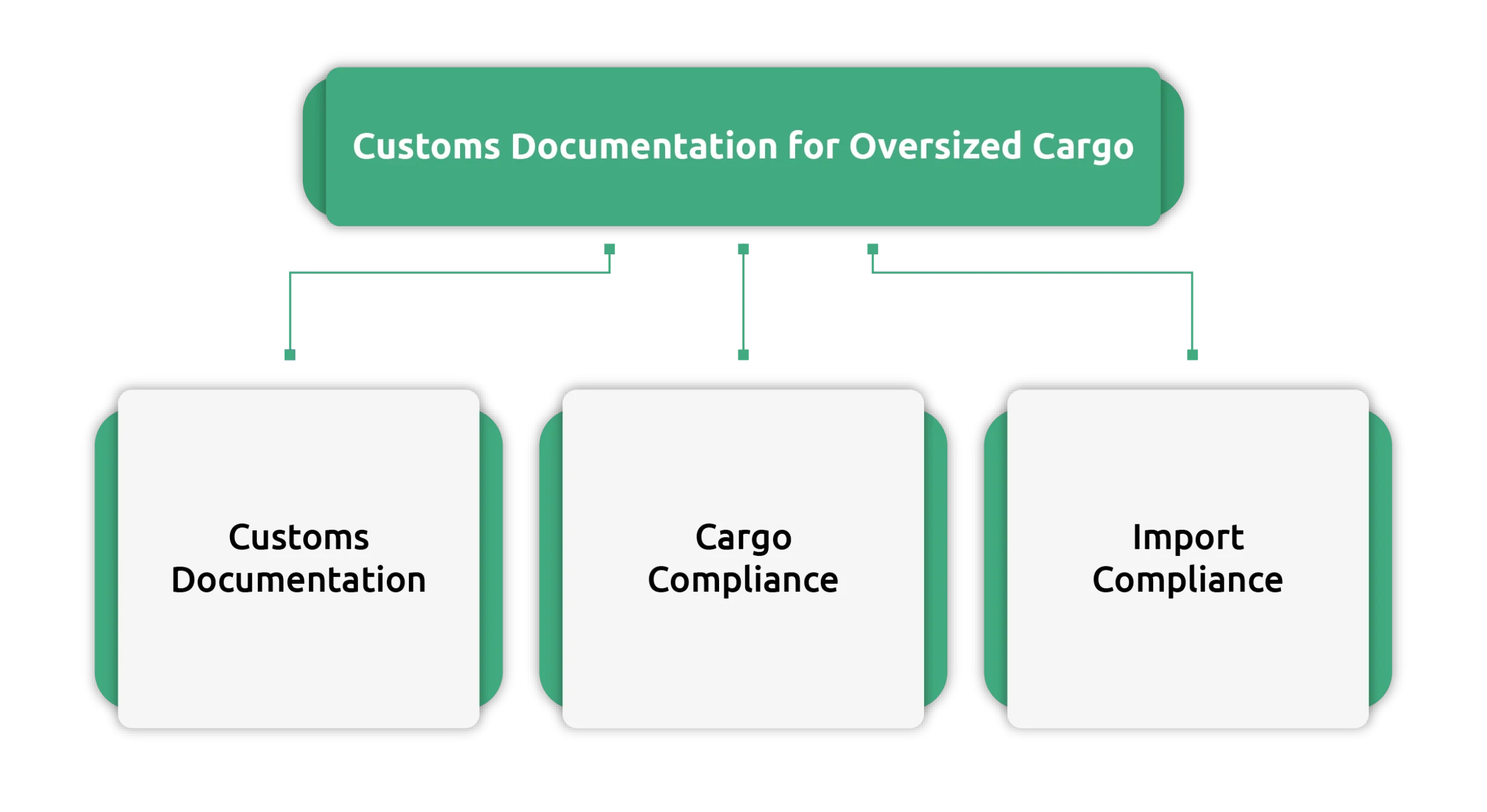
Customs Documentation for Oversized Cargo
If you are shipping in large quantities, offer information about the commercial aspects & physical characteristics of the cargo. Standard bills & packing lists may not be enough when large equipment is shipped in several large packages or shipping frames.
An correct commercial invoice should determine the equipment, quantity, transaction value, currency, seller & buyer. The packing list should offer package-level details, includes dimensions, gross weight ,net weight or packaging type
Other documents may include:
Bill of Lading or Air Waybill: Determine the shipping arrangement, shipper, recipient & cargo details.
Technical Specifications: Explain the equipment’s purpose, working function, model & format.
Certificate of Origin: Helps established origin where necessary for customs audit or special tariff treatment.
Product Approvals and Import Permits: Relying on the country you are importing your product into, you may require some regulated equipment.
Insurance Documents: Offer details of cargo insurance coverage & declared shipment value.
A specifically important step is checking that the equipment details & package dimensions remain stable across the invoice, packing list & shipping documents.
Transport Permits and Route Restrictions After Customs Release
Customs clearance does not automatically mean that oversized equipment can travel on every road or be delivered using standard transport vehicles.
After release, the cargo may still require special road movement arrangements. Rely on local shipping rules, businesses may need an large-load permit, an approved route, security vehicles or movement during specified hours.
For instance, an industrial production machine arriving at a production facility may outstrip the height clearance of certain roads. The transport operator must identify a suitable route before arranging the final movement.
This is why customs planning and inland transportation planning should be carried out together rather than treated as separate activities.
Customs Valuation and Additional Shipment Costs
Oversized equipment often involves extra cost that need to be viewed during customs valuation & landed-cost calculations.
These may involves specialised packaging, loading arrangements, freight charges , cargo insurance and handling fees. However, not every logistics costs is automatically involves in the customs value. The treatment depends on the destination country’s valuation rules and the terms of sale.
For example, where the import is of a large medical-imaging system, the transaction value declared should reflect the commercial agreement and supporting cost information. If the additional shipping & other service charges are offered separately, they may be treated separately under the applicable customs valuation rules and additional labor charges.
Importers should handles invoices, freight statements, insurance details or supporting agreements to explain how the declared customs value was calculated.
Valuation error may result in re-assessment, demand of differential duty or penalty, as the case may be.

Choosing the Right Customs Procedure for Equipment Movements
Oversized equipment may cross borders for permanent import, temporary projects, testing, exhibitions or repairs. Each purpose may require a different customs procedure.
For example, components of aircraft sent overseas for repair services might become eligible for a repair / re-importation reduction. Equipment for use on a project, for example, may also be eligible for temporary admission.
Organization should verify documentation, permitted timelines, security requirements & re-export conditions before dispatch to avoid unnecessary duty risk & clearance complications.
Conclusion
Shipping to industrial equipment will require compliance with customs processing & documentation, shipping sizes, and transport permits. An organization has to verify these requirements in advance of the dispatch to avoid unnecessary delays & extras cost.
One Union Solutions supports international equipment shipments through IOR services and customs compliance coordination, helping businesses manage import requirements across global markets.
Did You Know?
According to India’s Ministry of Ports, Shipping and Waterways, major Indian ports handled 915.17 million tonnes of cargo in FY 2025–26, recording a 7.06% increase over the previous year.
Frequently Asked Questions
Does oversized cargo have a different customs clearance process?
Not necessarily. The cargo needs special customs clearances or management or technical support information about the cargo in order to reach the country.
Which documents are required for global oversized equipment shipping?
Common documents involves a commercial invoice, full packing list , Bill of Lading or Air Waybill, technical specifications & certificate of origin where applicable. Certain equipment may also require import permit.
Can oversized industrial equipment be inspected at its delivery location?
In some countries, customs offcials may allow inspection at an validated off-site facility or another authorised location. This rely on local customs processes, the cargo type and approval from the related authority.
Are special permits required to shipping oversized cargo after customs clearance?
Yes. For load size and weight and for local overland transport rules in the destination country. May need oversize-load permits, narrow routes, pilot cars, or time-limited movement.
How can businesses reduce customs delays when shipping oversized equipment?
Prior to transport the company should check the HS classification, dimensions, declared value, import permits, & documentation. This also helps to offer your customs broker with technical specs and inspections in advance, so you don’t cause unnecessary delays.