Understanding the Role of Tariffs in the Electric Vehicle Industry
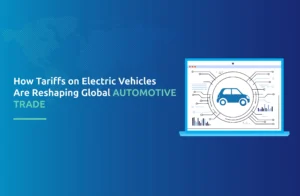
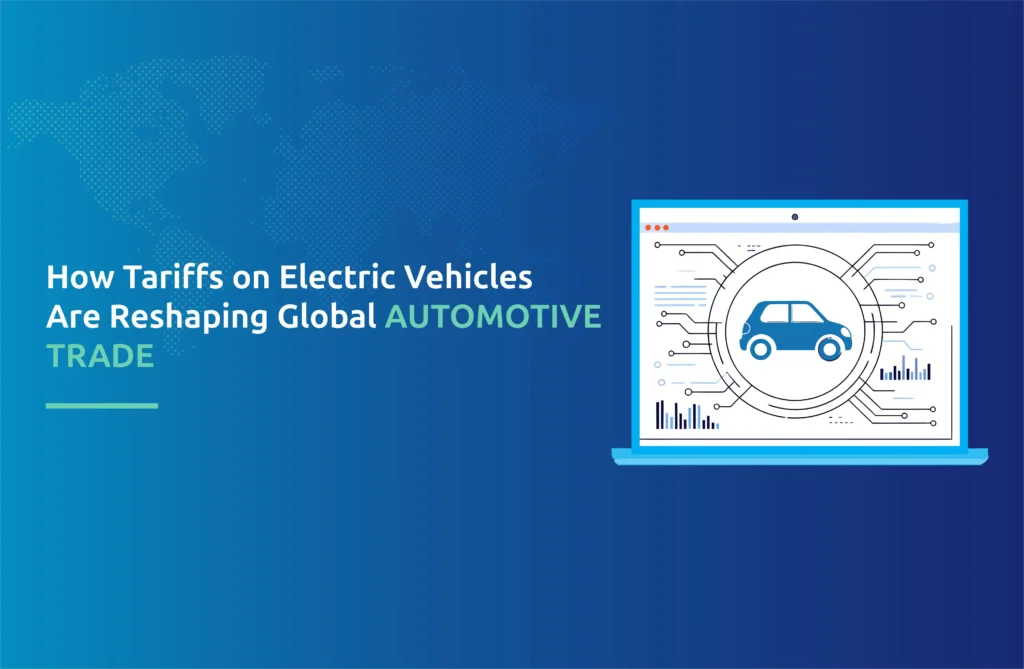
The demand for international automotive trade is increases as electric vehicles (EVs) grow need globally. To fulfill market needs, multiple countries import electric vehicles and their parts. But governments use import taxes to control global rivalry, support local manufacturing, and protect local companies.
EV import tariffs are charged on electric vehicles imported into a country from a different market. The cost of imported cars is increased by these tariffs, which can have an affect on market value. Trade rules include larger rules, like import limits and specific approval rules, but import taxes and customs tariffs mainly apply to these costs.
These tariffs have an affect on how automobiles handle purchasing, producing, and global shipping. Companies can transfer production to other countries or find out local suppliers when import taxes increase. Global auto trade, supply chains, and auto costs can all be affected by this.
Why Countries Are Increasing Tariffs on Electric Vehicles
To allow to secure their local automobile industry and control the growing rivalry in global markets, many countries are increasing tariffs on electric vehicles. Local producers can find it difficult to work and grow in a market of lower imported EVs.
Reduced depend on imported automobiles and supporting local production is another reason. Countries help companies to produce batteries, electric cars, and other parts locally. This has a chance to help the local automotive sector and create companies.
Some countries also raise EV import duties because of concerns about foreign government subsidies. When overseas manufacturers receive financial support from their governments, they may sell vehicles at lower prices. Other countries may consider this unfair competition and introduce higher tariffs to protect local businesses.
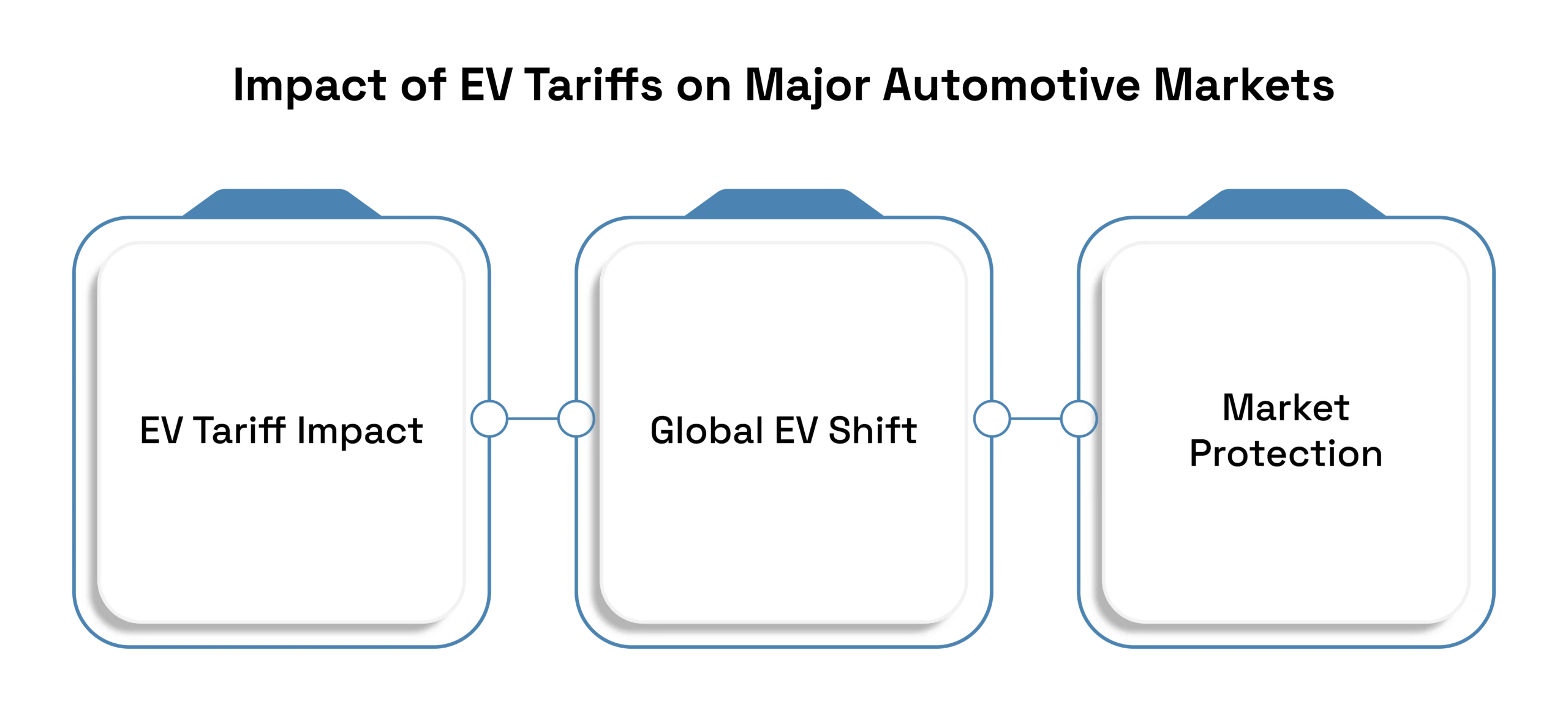
Impact of EV Tariffs on Major Automotive Markets
Import and export rules for electric vehicles can be changed by EV tariffs. To secure local automotive industries and control global problems, the US, China, India, and EU countries are following different trade rules.
In 2024, the US increased its higher tariff on Chinese EVs to 100%, increasing the cost of Chinese EVs in its market. In the same way, the EU placed extra taxes on Chinese electric vehicles due to problems about government support provided to their producers.
China is responding to these trade restrictions by expanding its EV business in other countries and exploring overseas manufacturing. whereas India uses import duty rules to get companies for investing in local production and produce electric vehicles.
International automotive trade is being affected by these changing rules. To control import costs and reduce depend on a single country, companies are looking into different suppliers, markets, and production locations.
How EV Tariffs Are Reshaping Global Automotive Supply Chains
Rising EV tariffs are changing how automotive companies source, manufacture, and ship electric vehicles. Many manufacturers are finding new suppliers and production locations to manage higher import costs.
Some companies are moving factories to countries with lower tariffs. They are also looking for alternative suppliers for batteries, semiconductors, and other EV components. As a result, regional manufacturing is growing, helping companies reduce import costs and manage international supply chains more easily.
How Automotive Companies Are Adapting to Changing Tariff Policies
Automotive companies are changing their business plans to manage rising EV tariffs and import costs. To produce electrical vehicles near to their target market and reduce import taxes, some producers plan to build places in other countries.
Also, companies are looking into new supply locations for semiconductors, batteries, and other EV parts. Trying to reduce depend on a single country for important parts, they are building global supply networks.
Many manufacturers are increasing local production and vehicle assembly to meet country-specific requirements. They are also reviewing their international distribution strategies to find better ways to move and sell electric vehicles in different markets.
Conclusion
Global automotive trade is being majorly affected by changing electric vehicle taxes. EV prices can increase as the result of higher import taxes, which can also have an impact on how makers build their cars and get their parts. Trying to control costs and keep current supply chains, companies also look into new markets and suppliers.
Moving electric vehicles and their parts across borders requires an understanding of international trade rules, import duties, and customs processes. Companies can handle trade problems and have smooth international trade with the help of proper planning and import compliance.
Did You Know
The global electric vehicle market size was valued at USD 927.69 billion in 2025 and is projected to grow from USD 1023.81 billion in 2026 to USD 2190.37 billion by 2034, exhibiting a CAGR of 9.97% during the forecast period.
FAQ
Why are countries placing higher tariffs on Chinese electric vehicles?
Some countries believe Chinese EV manufacturers receive government subsidies that give them a price advantage. Higher tariffs are introduced to protect local manufacturers and support fair competition.
How do EV tariffs affect automotive manufacturers?
Higher tariffs can increase production and import costs. Manufacturers may need to change their suppliers, move production to other countries, or increase local vehicle assembly.
Do EV tariffs affect the import of batteries and vehicle components?
Yes. Some countries also apply duties to imported EV batteries and components. This can increase sourcing costs and affect the supply of important parts used in electric vehicle manufacturing.
How can automotive companies manage changing EV tariffs?
Companies can explore new sourcing countries, build local supplier networks, and set up manufacturing facilities in different markets. These steps can help them manage import costs and reduce supply chain risks.
Why is customs compliance important when importing electric vehicles?
Customs compliance helps companies follow country-specific import rules, submit correct documents, pay applicable duties, and meet vehicle import requirements. This helps reduce the risk of customs delays and other import problems.