Introduction
Mundra Port is a key gateway for international container trade in the country, and any disruption in container movement can immediately affect exporters, shipping lines, transporters, and manufacturers. Operations around empty-container yards at Mundra were disrupted in late August and September 2026 due to a new arrangement for handling empty containers.
The issue was not simply a vessel or terminal closure. The immediate pressure was around the availability, release, pickup, and return of empty containers used for export and import operations. Shipping lines involving CMA CGM & Hapag-Lloyd issued advisories about the delays, while exporters were asked to review container pickup and shipment plans.
What Happened at Mundra Port?
The disruption followed an APSEZ decision to move empty EXIM container handling toward designated yards within the Mundra Port and SEZ area from September 1, 2026. External empty-yard codes were to be frozen under the new arrangement. APSEZ said the move was intended to improve security, reduce road congestion, improve vehicle turnaround, and make better use of port infrastructure.
Empty-container operators opposed the change and temporarily suspended operations. As a result, some exporters faced difficulties obtaining empty containers for factory stuffing, while importers also faced restrictions on returning empty containers at affected yards. CFS stuffing and CFS gate-in operations continued, according to shipping-line advisories.
Industry reports estimated that thousands of containers were being held up each day during the disruption. The situation affected the wider EXIM movement because empty containers are an important part of the export cycle.
Why Are Empty Containers So Important for Exporters?
An export shipment does not begin when a loaded container enters the port. Usually the process begins with obtaining an empty container, placing it at the factory, loading and securing the cargo, arranging inland transport, completing documentation and delivering the loaded container prior to the vessel cut-off.
If the empty box is unavailable, the exporter may not be able to start stuffing on schedule. Even when the cargo is ready, a delay in container positioning can push the shipment closer to the vessel cut-off.
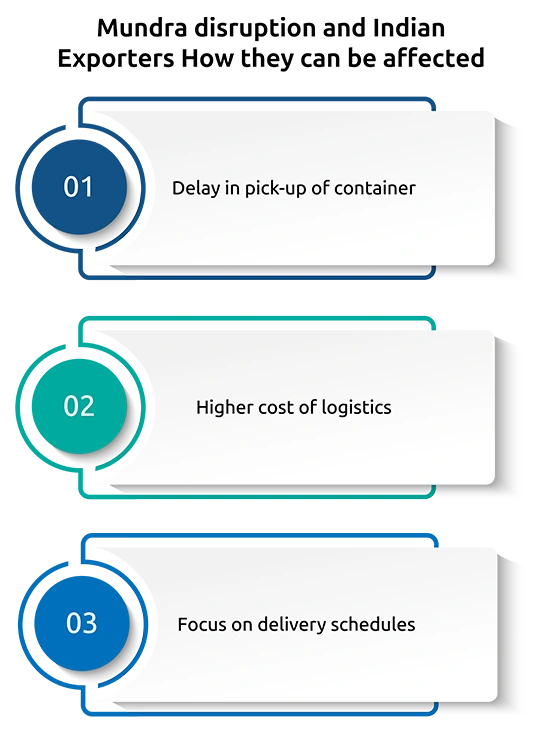
Mundra disruption and Indian exporters: How they can be affected
1. Delay in pick-up of container
In case of delay in releasing or depositing of empty containers, the empty containers cannot be released in time. For exporters doing factory stuffing, This is particularly important for businesses working with fixed vessel schedules or time-sensitive cargo.
2. Risk of Missing Cargo Cut-Off Times
Delay at empty container stage may reduce time for cargo loading & inland movement. If the loaded container does not arrive at the terminal within the cut-off period, the exporter may have to transfer the shipment to another departure.
3. Higher cost of logistics
Also, delay in shipment can cause extra costs such as trucking, container handling, storage, detention, demurrage, rebooking, paperwork. The actual cost depends on the shipping line, cargo, container type, route, and length of the delay.
4. Scheduling problems in factories
Manufacturers plan production and packing to coincide with their anticipated availability of containers. When the empty container arrives late, loading teams, warehouse space, labour, and transport vehicles may need to be rescheduled.
5. Focus on delivery schedules
If you miss a vessel you may have to wait for the next available sailing. For exporters with connecting services or strict customer delivery commitments, this may create additional planning pressure.
Which Exporters May Feel the Impact More?
The effect can vary by cargo type and shipping arrangement. Exporters using factory stuffing and regular containerized ocean freight through Mundra may need to pay particular attention to empty-container availability.
Companies that ship IT equipment, telecom equipment, automotive parts, aviation parts, medical devices or other commercial equipment should also think about the effect of a port-side delay on customer delivery schedules, installation projects or onward transportation.
The impact is not necessarily the same for every shipment. CFS-based operations may continue under different arrangements, and the availability of containers depends on the shipping line, equipment type, destination, and current operating conditions.
What Should Indian Exporters Do During a Port Disruption?
Exporters should not wait till cargo is packed to check container availability. The shipping line should be contacted early to confirm the empty-container release point, equipment availability, pickup instructions, and applicable cut-off times.
Transport planning should also be flexible. If the usual empty-yard arrangement is unavailable, exporters may need to coordinate with the shipping line, transporter, CFS, freight forwarder, and factory team to identify an operational alternative.
Documentation should be completed as early as possible so that a container delay does not create a second problem when the cargo is finally ready to move.
How One Union Solutions Can Support Exporters
One Union Solutions helps businesses coordinate international logistics and cross-border trade requirements for equipment shipments. Depending on the shipment structure and destination, support can include freight forwarding, customs coordination, Exporter of Record (EOR), Importer of Record (IOR), DDP, and related logistics services.
If a major gateway is under pressure, it can be helpful for a business to have the shipment documentation, customs requirements, transport plan and destination-side responsibilities reviewed in advance so they can respond to changes more effectively.
Conclusion
The Mundra Port container-yard disruption demonstrates how a change in empty-container operations can affect the wider export chain. For Indian exporters, the issue goes beyond container availability; delays can influence factory loading, inland transport, vessel cut-offs, shipment costs, and customer delivery schedules.
As Mundra moves toward a dedicated empty-container yard model, exporters need to watch out for operational updates, and check container arrangements when their cargo is ready to be dispatched. Companies can manage disruption and keep international shipments moving by better shipment planning, advance documentation or managed logistics support.
Did You Know?
In 2026, Mundra Port handled over 0.5 million TEUs of container cargo, according to the Ministry of Ports, Shipping and Waterways.
FAQ
What caused the Mundra Port container delays in 2026?
The disruption followed a change in the handling and movement of empty EXIM containers at Mundra. Empty-container operators suspended services after APSEZ announced that empty containers would be handled through designated yards within the port and SEZ area.
How does an empty-container shortage affect exporters?
An exporter unable to get an empty container on time may have to delay stuffing of his factory. This may affect inland transport, customs processing, terminal delivery and cargo cut-off and may necessitate a later sailing.
Can exporters still use CFS facilities at Mundra?
Shipping-line advisories stated that CFS stuffing and CFS gate-in operations remained available during the disruption, although empty-container movements at affected yards were suspended. Exporters should confirm the current arrangement with their shipping line before planning a shipment.
Should exporters shift shipments from Mundra to another port?
Not automatically. Exporters should compare vessel availability, container supply, inland shipping and managing charges, Transit time and destination connectivity before shifting the port of loading, as alternate port may be suitable for some shipments.
How can exporters minimize the impact of future port delays?
Exporters should secure empty container availability early , be flexible on transportation options, prepare their documentation in advance, monitor cargo cut-offs & handles communication with their shipping line and logistics provider to control working risk.