Introduction
As the EU moves to a more digital and data-driven customs system in 2026, compliance with EU rules will change. Planning between EU countries, risk analysis, and the transfer of customs data will all be improved by the new EU Customs Reform. This means that importers require more focus to product details, customs data, duties, and reporting.
What Is EU Customs Compliance?
EU customs compliance involves following to EU import rules while importing goods into an EU country. Importers must provide correct shipment details and fulfill the required customs declaration criteria. Declaring the customs value, identifying the country of origin, and using the proper HS/CN classification are all part of this. Also, importers must get any required permits or product permits and pay the required VAT and customs taxes.
To support the details provided to customs, proper documents and records should be maintained. Businesses may keep EU import compliance and reduce their risk of delays, extra charges, or other customs issues by following to certain EU customs standards.
Three EU Customs Regulatory Changes Importers Should Watch in 2026
EU Customs Reform and the Move Toward a More Centralized Digital Customs System
The EU customs reform 2026 is making customs processes more digital. The EU Customs Data Hub will help bring customs information together and support better customs risk management. This will support digital customs clearance and electronic customs declarations. Importers should keep their EU customs data accurate and up to date.
Changes Affecting Customs Duties, Tariff Classification and Import Data
In order to compare customs charges and other import processes, correct CN codes and HS classification are important. The EU Combined Nomenclature 2026 takes impact on January 1st, 2026. Before importing, importers should check TARIC, customs valuation, and rules of origin. The EU tariff classification should also be checked when a product or features change.
Stronger Product, Safety and Sustainability Compliance at the Border
Customs compliance can also involve EU product compliance and environmental rules. Depending on the goods, importers may need to check CBAM customs compliance, EU product safety requirements, battery rules, and restricted goods. Checking these requirements before shipment can help importers meet EU environmental import rules, battery import requirements, and other border compliance requirements.
How the 2026 Changes Affect EU Importers
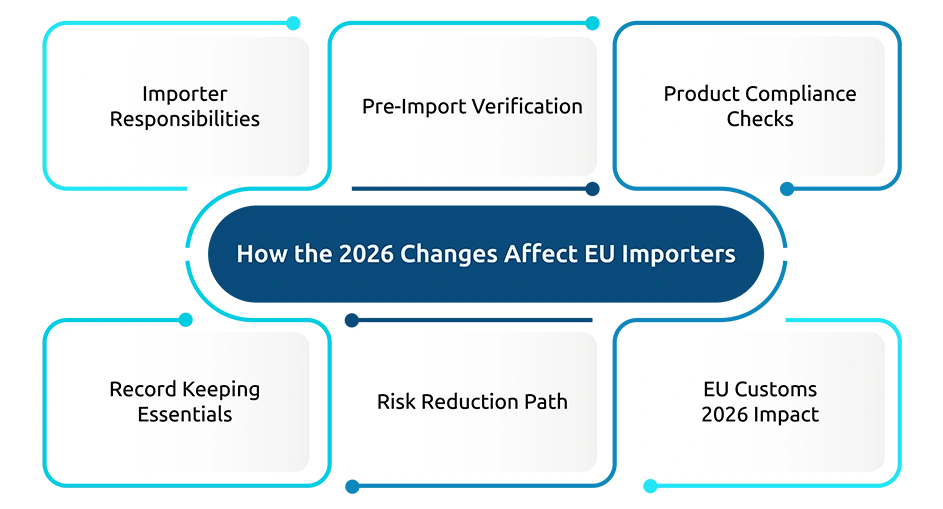
The way companies plan and handle imports is one method to follow the impacts of EU customs changes. Importers must apply the proper product classification, provide correct customs papers, and maintain complete EU import documents. Before importing goods, importers should also verify the country of origin, customs value, any charges, and VAT. Depending on the product, additional product compliance checks may also be required.
Good record keeping is becoming more important. Businesses should keep customs documents and supporting information so they can respond to questions or checks from customs authorities. This also supports customs audit preparation and helps reduce customs compliance risks. These changes make clear importer responsibilities in the EU and encourage businesses to improve their internal compliance processes.
Role of an Importer of Record in EU Customs Compliance
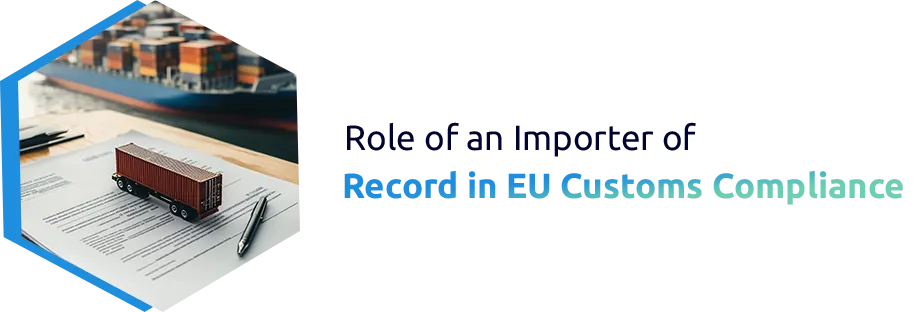
An Importer of Record EU is responsible for meeting the agreed import and customs requirements for a shipment. An IOR can support EU import clearance by helping with import documents, customs information, and required checks. An IOR and customs broker have different roles. A customs broker may prepare and submit the customs declaration, while the IOR holds the agreed importer role. The declarant submits the declaration, while the consignee receives the goods.
For cross-border equipment imports, an IOR can review the shipment before import, including classification, duties, VAT, customs value, origin, and applicable regulations. EU IOR services can support businesses that need an import structure in the destination country. The responsibilities should be agreed before shipment. An IOR does not automatically handle every customs or logistics function, so the roles of each party should be clear during EU customs clearance services.
Conclusion – Preparing for EU Customs Compliance in 2026
EU customs compliance is becoming more digital and connected with product and environmental rules. Importers should keep their EU customs data accurate and check tariff, classification, and product requirements before shipping. Clear roles for the importer, declarant and customs broker can also support smoother EU import compliance and help avoid customs issues.
Did You know
In June 2026, the euro area balance registered a surplus of €8.6 bn, following a deficit of €9.0 bn in May 2026. Compared with June 2025, when the balance stood at a surplus of €4.8 bn, the latest figure represented an improvement of €3.8 bn
FAQ
What are the main EU customs changes to watch in 2026?
The EU’s 2026 customs change, more digital customs data, improved tariff classifications, and stricter rules for environmental and product compliance are the main issues.
How does the EU Customs Data Hub affect importers?
The EU Customs Data Hub is part of the move toward more centralised customs information. Importers will need to keep product and shipment data accurate and complete.
What should importers check before shipping goods to the EU?
It is required to check the product classification, customs values, country of origin, tariffs and VAT, required documents, and any demands for EU product conformity.
Why should businesses review customs information before shipment?
A pre-shipment review can identify incorrect classification, missing documents, or product requirements early and help reduce customs compliance risks.
Can a change in product specifications affect customs classification?
Yes. A change in a product’s material, function, technical features, or use may affect its CN code classification. Importers should review the classification when a product changes.